



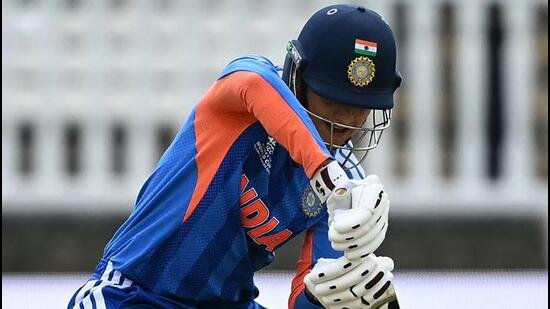
Mumbai: Smriti Mandhana is by far the most followed woman cricketer on social media. The Indian vice-captain’s 15 million-plus Instagram following amplifies her brand value. The flip side? Scores of these followers are faceless. It doesn’t take much for them to turn into trolls.
While invasion into private life is a common curse on social media, sporting bodies are doing their bit to provide athletes with social media protection during major competitions. The International Cricket Council (ICC) has been running a dedicated protection program against online abuse in partnership with Freedom2hear over two ICC T20 women’s World Cups. 60 players had agreed to participate during the 2024 World Cup. In the ongoing edition, the list of participants has gone up to 100 from seven of the 12 competing teams.
As per ICC findings, harassment on social media (41.4%) is the highest form of abuse, followed by racism (12.5 %), misogyny (3.9%), adult-content (3.8%) among others, HT learns.
Freedom2hear’s technology operates across the major social platforms including Facebook, Instagram, TikTok, X and YouTube. The programme helps reduce harmful content while preserving genuine interaction with fans.
Where detecting abuse from simple keyword filtering fails, the sophistication of technology helps. In the first week of the World Cup alone, more than 244,000 interactions were reviewed, and harmful content was removed where required.
“We have seen more players sign up as awareness and trust in the programme has grown, while the technology has continued to improve as it learns from more interactions across different languages and contexts,” ICC Head of Digital, Finn Bradshaw told HT.
“The technology helps identify content that is likely to cause harm, including targeted abuse, harassment, threats, intimidation, discrimination, bullying and sustained hostile behaviour. It also considers the context in which language is used.”
Last year, Smriti was body-shamed on social media when her dressing style at a public event did not appeal to the virtual world. Teammate Jemimah Rodrigues had come out in her support publicly. Indian player Bharti Fulmali too has experienced the dark side of social media. “It feels really bad when people question you based on your looks and your personality,” she told Gujarat Giants media.
There was a time when players were advised to stop reading newspapers and stay away from news TV during major events. Shutting oneself away from the digital world has become much more difficult.
“I use social media quite deeply because I genuinely like knowing what people are saying about me, whether they’re saying good things or not. That curiosity is natural, everyone has it,” Fulmali said.
Social media’s direct nature and mass reach draws professional athletes towards it. When the RCB women’s team won the WPL, a number of players saw their social media following skyrocket, thanks to the popularity of the franchise. RCB and England bowler Lauren Bell said her Instagram following shot up from 8,00,000 to 2.2 million.
“We have a great relationship with the vast majority of our fans, and we love interacting with them in person and on social media,” said England wicket-keeper batter Amy Jones. “But the downside is that there are people who choose to abuse you instead. So it is great that there are companies who are trying to clean things up and the ICC to be supportive.”
Other sporting bodies like FIFA have such a protection service in place for both women and men. With players of diverse nationalities and ethnicities participating in football, and politics and sports becoming more deeply intertwined than ever, in-tournament social media backlash is more frequent.
As per FIFA findings from the 2023 women’s World Cup, American players were targeted the most, with 2-3 key players facing predominantly politically-motivated abuse.
ICC may look to extend the protection service to men’s cricket in the future. “The programme was prioritised for women’s cricket because research and player feedback showed that online abuse can have a serious impact on women and girls in sport, including as a deterrent to participation and progression,” Bradshaw said.


