



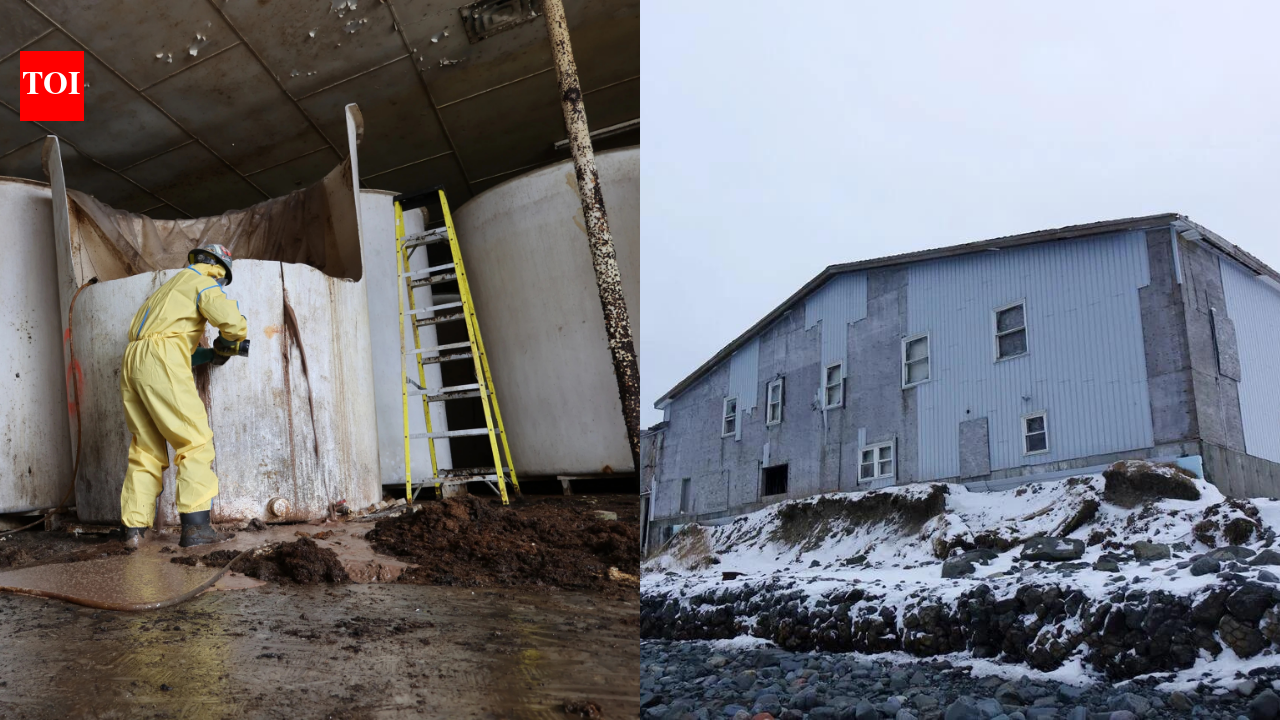
For more than two decades, residents of the small Canadian town of St. Mary’s in Newfoundland and Labrador have lived with an overwhelming smell caused by an abandoned fish sauce factory. The site, once operated by the Atlantic Seafood Sauce Company, was left with more than 330,000 gallons (1.25 million litres) of fermenting fish sauce stored in 110 tanks after it shut down in the early 2000s. As the contents continued to decompose over the years, the foul odour became a constant nuisance for the community. Now, after years of delays and funding challenges, a large-scale cleanup operation has finally begun, bringing hope that one of the town’s longest-running environmental problems will soon come to an end.
The abandoned fish sauce factory behind the decades-long odour
The Atlantic Seafood Sauce Company once produced fermented fish sauce at its facility in St. Mary’s, a coastal community with a population of around 300 people. When the business closed more than 20 years ago, it left behind 110 large storage tanks filled with fish sauce that continued fermenting inside the abandoned building. Along with the tanks, the site also contained sludge, bags of sugar, rusted cans of pineapple and bottles of finished fish sauce, turning the factory into an environmental eyesore.
The smell become so unbearable
Fish sauce is traditionally made by fermenting fish with salt under carefully controlled conditions. However, after the factory was abandoned, the fermentation process continued unchecked inside deteriorating tanks. As bacteria broke down the fish over the years, they released strong-smelling compounds that spread across the surrounding area, particularly during warmer weather. Residents frequently described the odour as one of the worst smells they had ever experienced, with St. Mary’s Mayor Steve Ryan comparing it to “the worst rotted fish you ever smelled in your lifetime, times 100.”
Why did it take more than 20 years to begin the cleanup?
Local residents and municipal officials had repeatedly called for the abandoned factory to be cleaned up, but the project faced years of delays over responsibility and funding. After the company ceased operations, the deteriorating site remained untouched while government agencies considered options for addressing the environmental problem. It was only after the Newfoundland and Labrador government approved funding that the long-awaited cleanup could finally move forward.
How are workers removing the rotting fish sauce?
The cleanup involves draining more than 330,000 gallons of fermenting fish sauce from the 110 storage tanks. Because the liquid cannot simply be transported to a landfill, workers are first mixing it with peat moss to absorb the moisture and create a material that can be safely handled. The waste is then transported using specialised equipment to a specially engineered landfill cell lined to prevent contamination before being covered with soil.
How much is the cleanup expected to cost?
The provincial government has committed approximately CA$1.7 million (US$1.21 million) to the cleanup project. The operation requires specialised handling because the material has been classified as “special waste”, meaning it must be managed under strict disposal guidelines. Local officials say the investment will finally eliminate an environmental nuisance that has affected the town for a generation.Removing the fish sauce is only the first phase of the project. Once the tanks have been emptied and the waste safely disposed of, authorities plan to demolish the abandoned factory. Officials hope the site can eventually be redeveloped for future community or commercial use instead of remaining a symbol of the town’s long-running environmental challenge.
The story captured global attention
The extraordinary scale of the abandoned fish sauce, combined with the fact that residents endured the smell for more than 20 years, has made the story widely shared online. While the situation has attracted attention because of its unusual nature, it also highlights the long-term consequences of abandoned industrial sites and the importance of timely environmental remediation. The cleanup marks the end of an issue that has shaped daily life in St. Mary’s for more than two decades and offers a fresh start for the small coastal community.


