


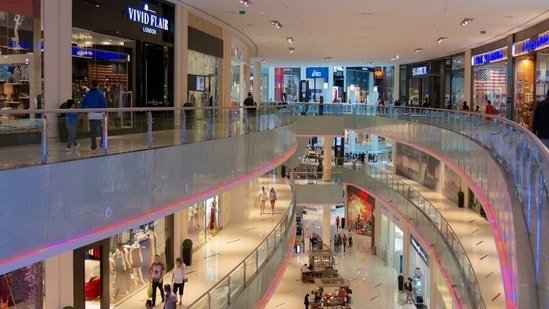
Delhi is expected to account for more than half of the upcoming mall supply in the National Capital Region (NCR) between 2026 and 2028, according to Cushman & Wakefield.
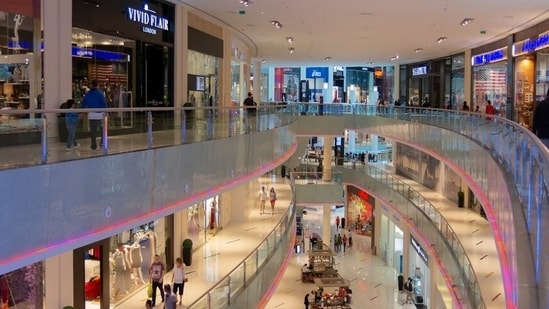
The NCR is expected to add around 7.1 million sq ft of organised retail space during the period, of which Delhi alone will contribute about 3.7 million sq ft (52%), followed by Gurugram with 2.6 million sq ft (37%) and Noida with 0.8 million sq ft (11%), the consultant noted.
“Delhi is expected to account for the largest share of upcoming retail supply in NCR, largely driven by the completion and operationalisation of a sizable retail development of nearly 3 million sq ft. Beyond the quantum of supply, the project is expected to further strengthen Delhi’s organised retail landscape and provide retailers with additional high-quality retail space in a market where quality supply remains limited despite strong consumer demand,” said Gautam Saraf, Executive Managing Director, Mumbai and New Business, Cushman & Wakefield.
A report by Cushman & Wakefield said India’s retail real estate sector continued its growth momentum in the second quarter of 2026, with gross leasing volume (GLV) rising to 2.4 million sq ft across the top eight cities. This represents a 23.2% quarter-on-quarter (QoQ) and 17.6% year-on-year (YoY) increase, reflecting robust occupier demand despite a constrained supply pipeline.
During the first half of 2026, total retail leasing reached 4.35 million sq ft, up 3.1% from the same period last year, underscoring the sector’s steady growth across major retail markets.
At the national level, Delhi NCR, Mumbai and Hyderabad emerged as the top retail leasing markets in the second quarter, together accounting for 64% of the total leasing activity. Delhi NCR led with 0.67 million sq ft (28%), followed by Mumbai with 0.50 million sq ft (21%) and Hyderabad with 0.37 million sq ft (15%). Bengaluru and Pune each recorded 0.25 million sq ft, followed by Chennai (0.20 million sq ft), Ahmedabad (0.11 million sq ft) and Kolkata (0.05 million sq ft).
Notably, no new Grade A malls became operational for the second consecutive quarter. Despite the lack of fresh supply, mall leasing remained strong, driven by continued absorption in projects completed during the second half of 2025, highlighting retailers’ sustained preference for organised retail destinations, the report showed.
Malls account for over half of retail leasing, driven by international brands
Malls accounted for 51.3% of India’s total retail leasing during the second quarter, with 1.23 million sq ft of space leased, registering a 33.4% quarter-on-quarter (QoQ) and 21.9% year-on-year (YoY) growth. The strong performance came despite limited availability of premium mall space and rising rentals, prompting some retailers to also explore select Grade B retail developments, the report showed.
Main streets continued to witness healthy occupier demand, accounting for the remaining 48.7% share, or 1.17 million sq ft, of leasing activity. Although their share moderated slightly, leasing volumes still grew 14% QoQ and 13.3% YoY, supported by demand for high-footfall, consumption-driven locations.
Domestic retailers remained the biggest occupiers, accounting for 82.4% of total leasing (1.98 million sq ft), with over half of their transactions taking place on main streets. In contrast, international brands contributed 17.6% (0.42 million sq ft) of total leasing, with nearly 76% of their space uptake concentrated in malls, underscoring their preference for institutionally managed, high-quality retail destinations offering curated consumer experiences, the report noted.
