



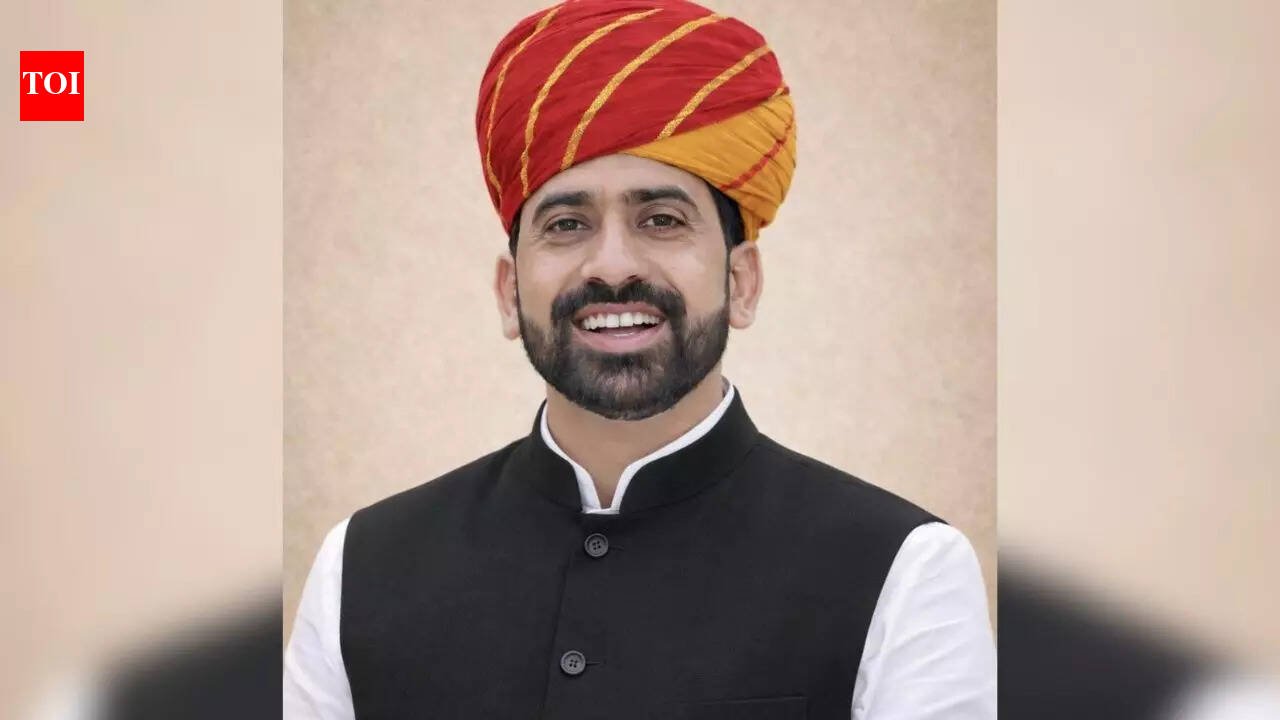
JAIPUR: A blend of humour and seriousness found its way into legislative discourse as Rajasthan Assembly Monday debated the rising monkey menace in Jaipur and across the state. The issue was raised by Congress MLA from Shahpura, Manish Yadav, and what followed was a mix of concern, levity, and nostalgia.Urban development and housing minister Jhabar Singh Kharra, responding to the Calling Attention motion, began with an unexpected lesson. “There are two kinds of monkeys—one is Hanuman monkey, and the other is red-faced. Biology considers both of them to be ancestors of humans,” he said, drawing smiles across the House.Kharra went on to recall earlier times. “50 to 60 years ago, a madari would come a few times a year to show children monkeys. Today, the situation has changed.”The minister then turned serious, noting that monkeys increasingly enter homes, damage property, and occasionally attack children and elderly residents. “These former ‘ancestors’ have become quite mischievous. They enter kitchens, break utensils, tear clothes, and create panic in neighbourhoods,” he said, triggering light laughter even as members acknowledged the problem.Yadav underlined the seriousness of the issue with data from his constituency. “In my constituency alone, around 4,200 anti-rabies injections were administered in the last one year, and nearly 4,000 of those cases were due to monkey bites. This shows how grave the situation has become,” Yadav said, urging the govt to adopt a permanent and scientific solution rather than temporary relocation drives.Kharra explained that traditional monkey habitats such as Galta Ji in Jaipur, Samod, Sariska, and Sawai Madhopur are under pressure due to rising monkey populations and shrinking food sources. “Earlier, devotees would feed them gram and bananas. But their numbers have grown, and food has not kept pace. Human intrusion into forests has also pushed them towards towns and cities,” he said.Local bodies, he added, often capture monkeys and release them in other areas, only for them to return within a week. “We release them in forests, and they come back as if they know the address,” he quipped.The minister noted that monkeys are no longer classified strictly as protected wildlife, creating administrative complications. He said the govt has authorised district collectors to oversee action, but he suggested that the forest department should identify designated areas and arrange proper feeding systems as a more sustainable solution.Forest minister Sanjay Sharma briefly responded, saying the suggestions would be examined.


