






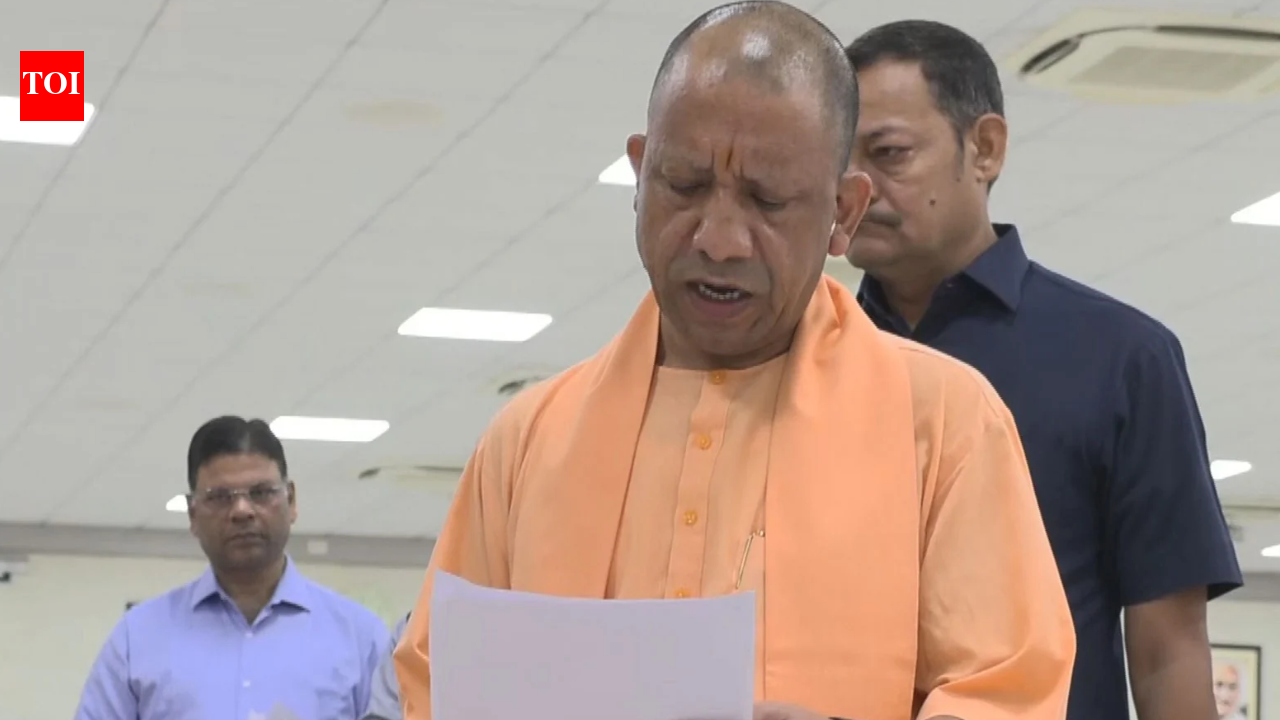
Women’s safety, dignity and empowerment have emerged as important priorities in Uttar Pradesh over the past nine years. Under the leadership of Chief Minister Yogi Adityanath, the state government has pursued a multi-pronged strategy combining law enforcement, accessible complaint mechanisms, public awareness, victim assistance and opportunities for women’s economic independence. Mission Shakti has become a key platform for bringing these efforts together, extending the reach of government services from urban centres to villages, gram panchayats and local communities.The latest phase, Mission Shakti 5.0, builds on this foundation through intensive security checks, awareness programmes, direct engagement with women and coordinated action by the police and other departments. The second phase of the campaign, conducted from March 19 to April 17, 2026, recorded extensive state-wide activity. Officials inspected nearly three lakh schools, colleges and public places, while millions of people were reached through awareness initiatives and women beat officers visited thousands of villages and urban wards.These efforts reflect a broader understanding of empowerment: women must not only be protected from violence and harassment but also be aware of their rights, able to access justice, confident in public spaces and equipped to participate independently in social and economic life.
Mission Shakti 5.0: Safety backed by enforcement
The second phase of Mission Shakti 5.0 brought together the police, district administration and concerned departments to strengthen security arrangements and improve awareness of government schemes and support services. Educational institutions, markets, shopping centres, parks, intersections and other crowded locations received particular attention.The actions taken by the Yogi government make it quite evident that it considers women’s safety an integral component of law and order. The campaign combines awareness, dialogue and strict action, recognising that effective prevention requires both visible policing and a responsive system for addressing complaints.During the campaign, police inspected 2,90,153 locations and checked 38,64,614 individuals. The police registered 1,841 cases, arrested 6,276 accused persons and issued warnings to 16,85,263 individuals.Police patrolling and foot patrolling were conducted at 59,897 locations, while 39,454 cameras were installed at sensitive locations and identified hotspots associated with crimes against women. Together, these measures were intended to increase police visibility, deter harassment and strengthen monitoring in places frequently visited by women and girls.The figures demonstrate the scale of enforcement undertaken during the campaign. The long-term test, however, is whether such measures translate into sustained improvements in safety, timely responses to complaints and greater confidence among women using public spaces.
Nine years of strengthening women’s security
The efforts undertaken through Mission Shakti since its launch in 2020 build on a wider evolution of women’s safety mechanisms in Uttar Pradesh since 2017. Over this period, the state has emphasised dedicated helplines, women-focused complaint facilities, emergency response and greater coordination between police units and welfare departments.The Women Power Line 1090 has provided a dedicated channel for women seeking assistance with harassment. Emergency response service 112, Women Helpline 181 and Child Helpline 1098 form part of the wider support network for people requiring urgent intervention or specialised assistance.Women’s help desks at police stations have also been an important step towards making the complaint process more accessible. In March 2021, the state government reported that women’s help desks had been established in 1,535 police stations and 350 tehsils. Initiatives to integrate helpline services and strengthen specialised responses to crimes against women and children further supported this institutional approach.These mechanisms address different aspects of the problem. Emergency services facilitate rapid intervention, dedicated helplines provide channels for seeking assistance, and help desks can make it easier for women to approach authorities. Specialised police units and coordination among departments can support the handling of cases requiring focused attention.Mission Shakti brought these elements together under a wider public campaign. Its successive phases have sought to take information beyond government offices and police stations, reaching women in educational institutions, residential communities, workplaces and public gatherings.
Awareness reaches millions
A defining feature of Mission Shakti 5.0 is its emphasis on awareness. Women need to know their rights, the remedies available under the law, the government schemes for which they may qualify and the helplines they can contact in an emergency.During the second phase, 66,441 women and girls participated in district-level runs organised to promote women’s safety. The events distributed 49,437 publicity materials and involved 1,930 public representatives, officials and inspirational women.Women’s chaupals organised at religious places, fairs and other public locations disseminated information about welfare schemes and helpline services to 15,55,219 people. Such community gatherings provide opportunities to discuss safety concerns directly and explain how women can access institutional support.At 1,593 Mission Shakti centres, awareness programmes reached 12,51,777 women. Another 10,05,926 pamphlets containing information about government schemes and helplines were distributed.These activities seek to make information accessible to women who may have limited access to formal guidance. By explaining where to report harassment, how to seek assistance and which services are available, the campaign aims to convert awareness into practical action.
Taking policing to villages and wards
Mission Shakti’s grassroots approach recognises that women facing domestic violence, harassment or family disputes may hesitate to approach a police station. Direct engagement at the community level can help them understand their options and connect with the relevant authorities.During the second phase, women beat officers visited 99,377 villages and wards, with particular attention to identifying women and girls affected by domestic violence and facilitating access to appropriate assistance.The campaign also addressed issues involving domestic disputes, maintenance and other legal concerns. Where necessary, officers coordinated with the relevant departments to help victims obtain support and legal assistance.Meanwhile, beat police personnel organised 45,040 programmes across gram panchayats and urban wards. Anganwadi workers, BC Sakhis, lekhpals, ANMs, ASHA workers, gram panchayat officers, employment assistants and other local representatives participated in the outreach.These frontline workers have regular contact with families and communities. Their involvement can help disseminate information about welfare schemes, identify people who need assistance and direct women towards the appropriate services. During these activities, information about government schemes was also provided to 72,820 people, according to the campaign figures.The importance of this approach lies in the possibility of early intervention. Regular contact with local communities can help bring hidden problems to the attention of authorities and make support systems more approachable for women who might otherwise remain isolated.
From protection to dignity and self-reliance
Women’s empowerment extends beyond immediate protection from violence. It also requires access to healthcare, legal assistance, education, livelihoods and financial independence.The broader Mission Shakti framework reflects this understanding through two complementary dimensions: Sambal, focused on safety and security, and Samarthya, focused on empowerment. Support mechanisms associated with the wider framework include One Stop Centres, women’s helplines, working women’s hostels, maternity-related assistance and childcare facilities.One Stop Centres are designed to provide coordinated assistance to women affected by violence, including access to medical, legal, police and psychological support, along with temporary shelter where required. Such services are important because women experiencing violence may need several forms of assistance at the same time.Mission Shakti’s awareness activities help women understand the support available and how to access it. Entrepreneurship development, self-defence training and livelihood-oriented initiatives further reflect the broader objective of strengthening confidence and independence.Economic self-reliance can be particularly significant for women facing abusive or controlling circumstances. Access to skills, employment and income can expand their choices and improve their ability to make independent decisions. Safety, therefore, is not merely the absence of violence; it also involves the freedom to study, work, travel and participate in public life without intimidation.
Extending safety to railways and public transport
The campaign has also focused on women’s security while travelling. During the second phase, the Government Railway Police distributed 1,69,201 publicity materials relating to Mission Shakti at 4,893 railway stations and across 11,226 trains.Railway stations and trains are important public spaces for students, workers, traders and women travelling for personal or professional reasons. Making information about safety and assistance available at these locations can help passengers understand where to seek help when necessary.The railway outreach complements inspections of educational institutions, markets, malls, parks and other crowded locations. Together with police patrolling and surveillance at sensitive spots, these activities seek to reinforce the message that women should be able to access public spaces with confidence.
Sustaining the gains
The figures from Mission Shakti 5.0’s second phase demonstrate the scale of the campaign’s activities: nearly three lakh locations inspected, more than 38.6 lakh individuals checked, millions reached through awareness programmes and nearly one lakh villages and wards visited by women beat officers.These achievements provide evidence of extensive administrative mobilisation. Yet the lasting success of women’s safety initiatives must ultimately be measured by their effect on everyday life. Timely complaint resolution, effective investigations, assistance for victims, prevention of repeat offences and women’s confidence in seeking help are equally important indicators.Sustained follow-up is essential to ensure that awareness translates into accessible services and that women who report abuse receive appropriate support. Surveillance infrastructure must remain operational, community outreach must continue beyond individual campaign phases, and the coordination between police and welfare departments must remain effective.The participation of local representatives and frontline workers offers a practical means of maintaining this connection between government services and communities.
Towards a safer and empowered Uttar Pradesh
Over the past nine years, Uttar Pradesh has strengthened the institutional framework for women’s safety through dedicated helplines, complaint facilities, emergency response mechanisms and coordinated public outreach. Mission Shakti has provided a common platform for these efforts, bringing law enforcement and empowerment-related initiatives into a sustained state-wide campaign.Mission Shakti 5.0 carries this commitment forward through intensive inspections, action against accused persons, awareness programmes and direct engagement with women in villages, wards, educational institutions and public spaces.Its larger objective is to ensure that women can exercise their rights, access justice, obtain assistance during a crisis and pursue education, employment and entrepreneurship with confidence. The next measure of success will be the consistency with which these efforts improve women’s experiences in everyday life.When a woman can report harassment without fear, travel safely, obtain timely assistance and pursue opportunities independently, the goals of security, dignity and empowerment begin to reinforce one another.Mission Shakti 5.0 represents the continuation of this nine-year effort to make women’s safety a shared responsibility of government and society, while working towards a Uttar Pradesh in which every woman can live with greater security, dignity and self-reliance.


