






Opening summary
Welcome to our live coverage of the latest developments in the US-Iran war, and its regional and global ramifications.
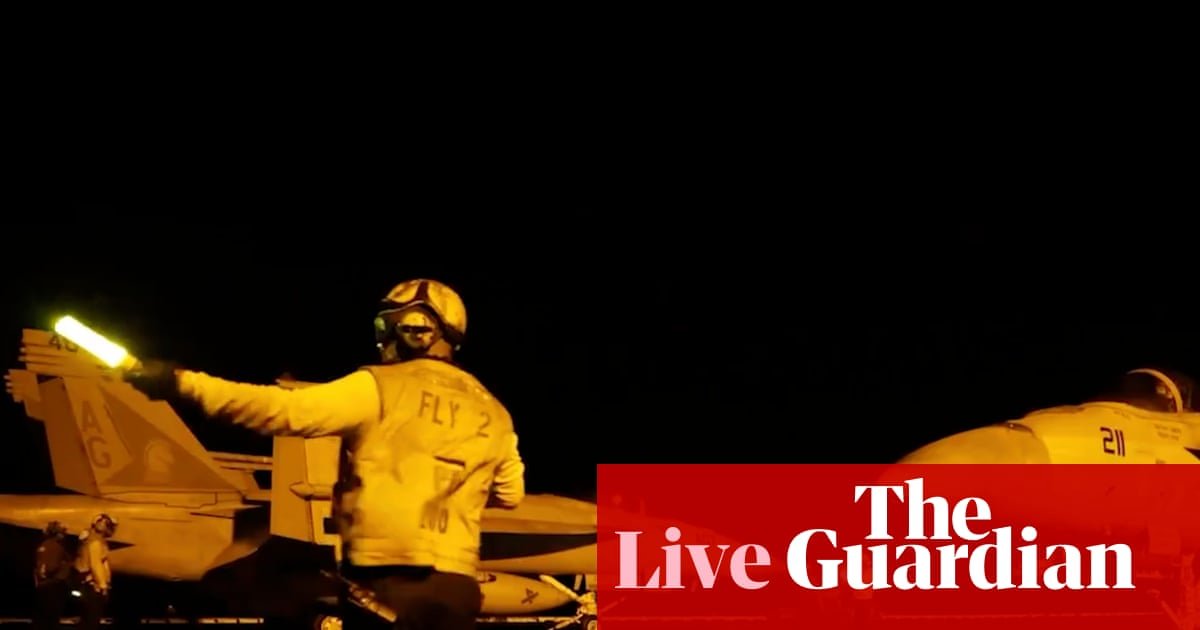
The US military completed its 11th night of strikes on Iran, including on aircraft hangars and drone storage sites, as the renewed conflict continues to undermine diplomatic efforts to salvage an interim ceasefire deal.
In what could open up a potential new front in the war, Yemen’s Iran-aligned Houthis, who control the coast at the mouth of the Red Sea, announced a naval blockade on Saudi Arabia. With the strait of Hormuz blocked, Saudi Arabia has been relying on a pipeline to the Red Sea to get millions of barrels of oil out to market.
The latest US barrage came as Donald Trump warned strikes would intensify.
The US leader also declared the US would “soon” target “very heavily” the area near Pickaxe Mountain – a fortified underground site near one of Iran’s primary nuclear enrichment facilities, which Iran’s military leaders said would be considered a major escalation.
Before the latest strikes, Iranian interior minister Eskandar Momeni visited Pakistan, a key mediator in the conflict. But it was unclear what new arrangement might be reached to end the war, which is now centered on a battle for control over the strait of Hormuz.
In other news:
-
The US war in Iran has cost $37.5bn so far, US defence secretary Pete Hegseth said, an increase of nearly $8bn since the last public estimate.
-
The number of wounded US personnel in the Iran war has grown to well more than 500 troops, a US official told the Associated Press.
-
Brent crude was trading up 1.2% at $92.09 a barrel at around 0130 GMT, its highest intraday price since 11 June. West Texas Intermediate (WTI), the main US oil benchmark, climbed 1.1% to $85.23.
-
The US secretary of state Marco Rubio told South-east Asian foreign ministers on Wednesday that Iranian control of the strait of Hormuz would set a dangerous precedent with repercussions beyond the Middle East.
-
Trump said he would authorise the resumption of direct flights by US airlines to Lebanon, which have been suspended since the 1985 hijacking by Lebanese Islamist militants of a TWA flight with many Americans aboard.
Key events
What is Iran’s Pickaxe Mountain, the site Trump has threatened to attack?
Donald Trump on Tuesday made new threats to attack and destroy Iran’s nuclear site known as Pickaxe Mountain.
Here’s what we know about Pickaxe Mountain, why it has captured Trump’s attention and how the US military could strike at the deeply buried complex.
Opening summary
Welcome to our live coverage of the latest developments in the US-Iran war, and its regional and global ramifications.
The US military completed its 11th night of strikes on Iran, including on aircraft hangars and drone storage sites, as the renewed conflict continues to undermine diplomatic efforts to salvage an interim ceasefire deal.
In what could open up a potential new front in the war, Yemen’s Iran-aligned Houthis, who control the coast at the mouth of the Red Sea, announced a naval blockade on Saudi Arabia. With the strait of Hormuz blocked, Saudi Arabia has been relying on a pipeline to the Red Sea to get millions of barrels of oil out to market.
The latest US barrage came as Donald Trump warned strikes would intensify.
The US leader also declared the US would “soon” target “very heavily” the area near Pickaxe Mountain – a fortified underground site near one of Iran’s primary nuclear enrichment facilities, which Iran’s military leaders said would be considered a major escalation.
Before the latest strikes, Iranian interior minister Eskandar Momeni visited Pakistan, a key mediator in the conflict. But it was unclear what new arrangement might be reached to end the war, which is now centered on a battle for control over the strait of Hormuz.
In other news:
-
The US war in Iran has cost $37.5bn so far, US defence secretary Pete Hegseth said, an increase of nearly $8bn since the last public estimate.
-
The number of wounded US personnel in the Iran war has grown to well more than 500 troops, a US official told the Associated Press.
-
Brent crude was trading up 1.2% at $92.09 a barrel at around 0130 GMT, its highest intraday price since 11 June. West Texas Intermediate (WTI), the main US oil benchmark, climbed 1.1% to $85.23.
-
The US secretary of state Marco Rubio told South-east Asian foreign ministers on Wednesday that Iranian control of the strait of Hormuz would set a dangerous precedent with repercussions beyond the Middle East.
-
Trump said he would authorise the resumption of direct flights by US airlines to Lebanon, which have been suspended since the 1985 hijacking by Lebanese Islamist militants of a TWA flight with many Americans aboard.


