



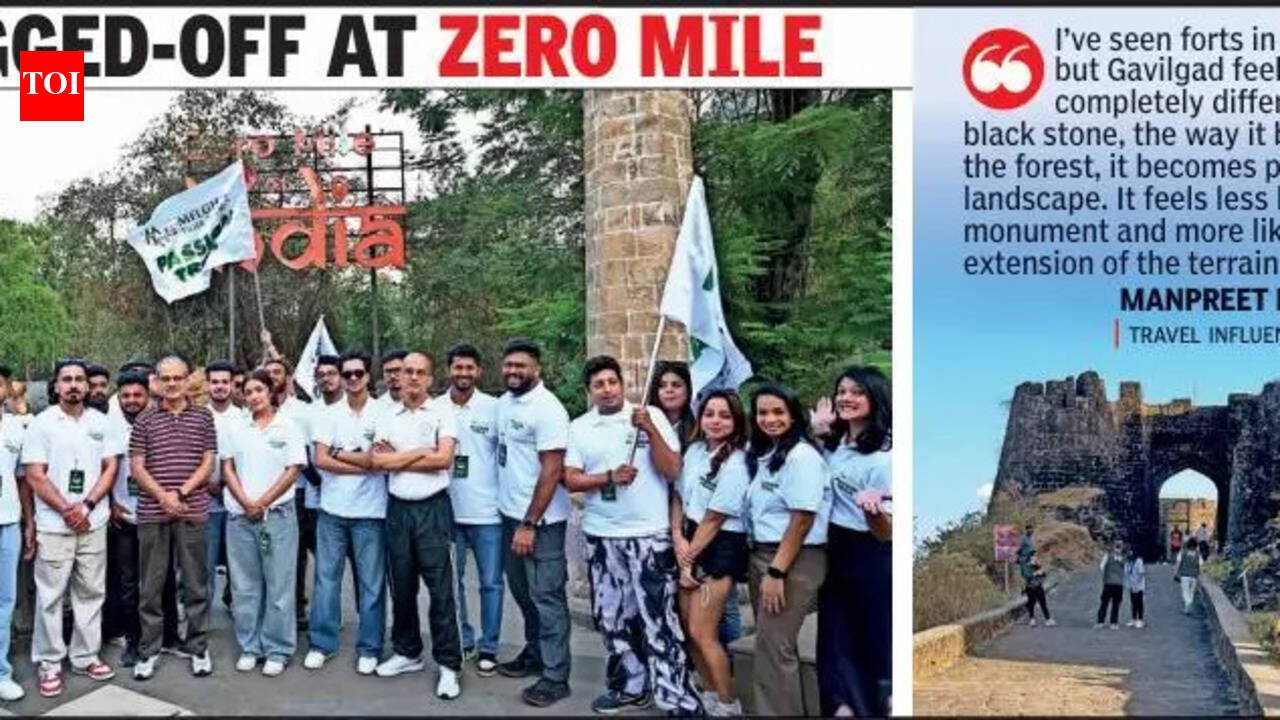
Nagpur: A group of 25 influencers on Sunday ventured deep into Melghat Tiger Reserve to experience wilderness along winding roads and verdant valleys on first day of the ‘Melghat Passion Trail’ from Chikhaldhara, known as the ‘Kashmir of Vidarbha’ in Amravati district.Flagged off from Zero Mile in Nagpur on Sunday morning, the four-day trail, organised in collaboration with The Times of India, seeks to take Melghat’s lesser-known story beyond its hills, through the lenses of influencers experiencing the reserve first-hand.At the forest rest house in Chilkhaldara, deputy conservator of forests Kirti Jamdade introduced participants to the ecological and social landscape of Melghat. Later, the group split into four teams — three of the teams headed towards safaris in Shahnoor, Seemadoh and Vasali, while the fourth team remained in Chikhaldara for a grounded engagement that unfolded along the historic trails of Gavilgad Fort.The jungle safari traversed narrow roads that disappeared into teak and dust. During the safari, sightings came in fragments: a set of pugmark softening at the edges, a distant call cutting through the stillness — a movement that never fully revealed itself.The Gavilgad Fort trek, part of the Vairat safari experience, moved through the fort whose origins trace back to the era of Chhatrapati Shivaji Maharaj. Later, Raghuji Bhonsale I is believed to have used it as a strategic stronghold during his Bengal campaigns. Walking through its black stone ramparts and forest-lined pathways, the team encountered a space where history and wilderness exist side by side.Delhi-based influencer Ayesha Malik said, “The first thing you notice here isn’t the landscape, it’s the chirping of birds and the soulfulness of air. There’s a stillness, a clarity you don’t realise you’re missing until you step into a place like this. The Vairat trail isn’t just a walk through a fort, it’s a reset in how you experience nature.”For influencer Manpreet Kaur, Gavilgad felt completely different from the forts she has seen in Rajasthan. “The black stone, the way it blends into the forest, the rugged setting, it becomes part of the landscape. It feels less like a monument and more like an extension of the terrain,” said Manpreet. As the group navigated uneven terrain and dense patches, they spotted birdlife and came across signs indicating presence of sloth bears, subtle reminders that wilderness continues to thrive. The experience offered an intimate perspective of Melghat, where every turn carried both ecological and historical significance.


