



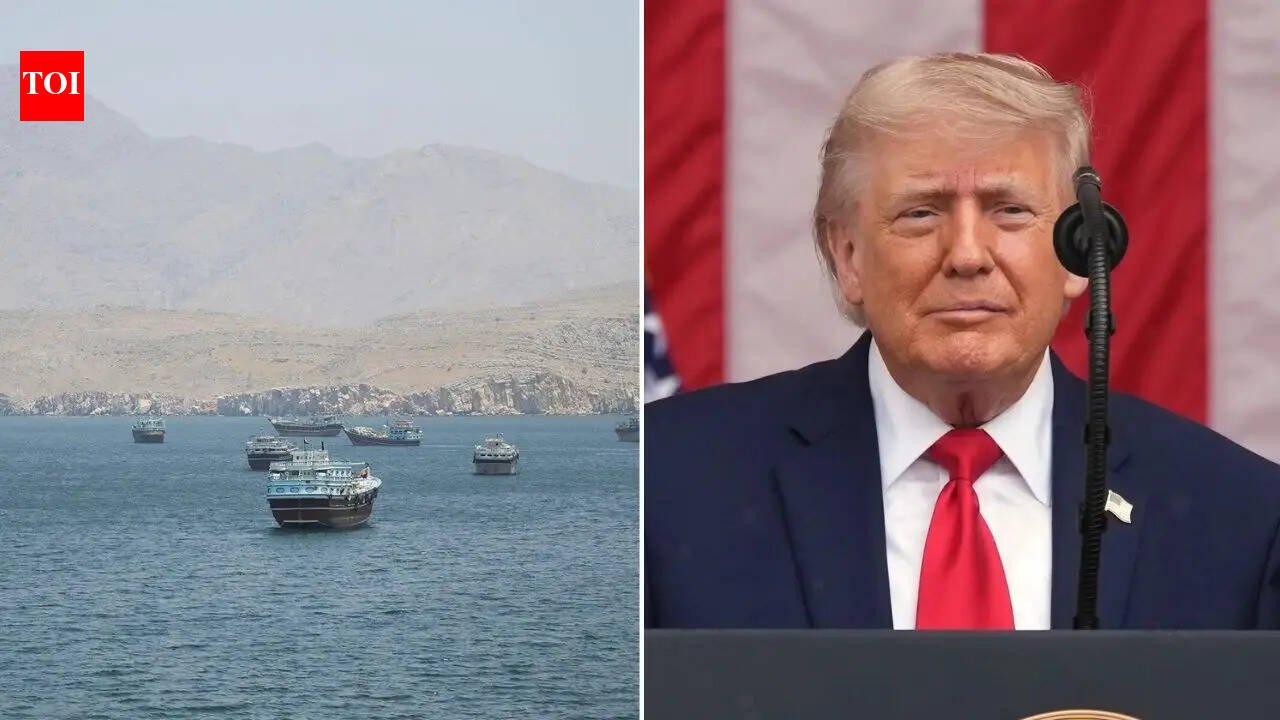
US President Donald Trump on Friday said a potential deal with Iran was now at the stage of a “final determination”, while laying out a detailed list of conditions for Tehran and signalling that restrictions in the Strait of Hormuz could soon be lifted.In a characteristically dramatic message on Truth Social, Trump claimed ships stranded due to the US naval blockade in the Strait of Hormuz could now begin “heading home”.Also read: What’s in the draft deal that can end US-Iran war“Ships caught in the Strait due to our amazing and unprecedented Naval Blockade, which will now be lifted, may start the process of ‘heading home!’ Say hello to your wives, husbands, parents, and families from me, your favorite president!” Trump wrote.The remarks come amid ongoing indirect talks between Washington and Tehran, with mediators attempting to secure a ceasefire framework and reopen the strategically critical Strait of Hormuz.
Trump lists conditions for Iran
Trump said any agreement would require Iran to permanently abandon its nuclear ambitions and ensure free commercial navigation through the Strait of Hormuz.“Iran must agree that they will never have a Nuclear Weapon or Bomb. The Hormuz Strait must be immediately open, no tolls, for unrestricted shipping traffic, in both directions,” he posted.He also claimed the US had already detonated several naval mines in the region.Also read: US and Iran said to be nearing deal even as missiles fly“All water mines (bombs), if any, will be terminated (we have removed, through detonation, numerous such mines with our great underwater mine sweepers. Iran will complete the immediate removal and/or detonation of any mines that are left, which will not be many!),” Trump said.The US president further claimed that enriched nuclear material buried underground after a B2 bomber strike nearly a year ago would be removed and destroyed under international supervision.“The enriched material, sometimes referred to as ‘Nuclear Dust,’ which is buried deep underground with virtually collapsed mountains, caused by our powerful B2 Bomber attack 11 months ago, sitting on top of it, will be unearthed by the United States… in close coordination and conjunction with the Islamic Republic of Iran, plus the International Atomic Energy Agency, and destroyed,” Trump wrote.“No money will be exchanged, until further notice. Other items, of far less importance, have been agreed to. I will be meeting now, in the Situation Room, to make a final determination,” he added.
JD Vance says US, Iran ‘very close’
Earlier, US Vice President JD Vance said Washington and Tehran were “very close” to reaching a memorandum of understanding that could extend the ceasefire by 60 days and restart broader nuclear negotiations.“We’re not there yet, but we’re very close, and we’re going to keep on working at it,” Vance told reporters on Thursday.He added that negotiators had “made a lot of progress”, though discussions were continuing over some language points and restrictions tied to Iran’s nuclear programme.“It’s hard to say exactly when, or if, the president’s going to sign the MOU,” Vance said.US officials quoted by Axios said negotiators had reached a tentative agreement, but it still awaited Trump’s final approval. Qatar has reportedly been acting as a key mediator between the two sides.
Iran sends mixed signals
Even as talks continued, Iranian officials issued fresh warnings against the United States. Iranian Parliament Speaker Mohammad Bagher Ghalibaf said Tehran secures concessions “with missiles” rather than negotiations.“We seize concessions not through dialogue, but with missiles; in negotiations, we merely make them understand,” Ghalibaf posted on X.“We have no trust in guarantees or words, only actions are the measure. No action will be taken before the other side acts. The winner of any agreement is the one who is better prepared for war from the day after,” he added.Iranian state media earlier reported that no final agreement had yet been confirmed, with Tasnim news agency saying the wording of the proposed memorandum had undergone “some changes in recent days”.
Strait of Hormuz remains tense
Despite signs of diplomatic progress, tensions in the Gulf remain high. Iran has accused the US of violating the ceasefire through strikes near Bandar Abbas, while Washington condemned Iranian missile and drone attacks targeting the region.Iranian state television said 24 ships had transited the Strait of Hormuz in the last 24 hours in coordination with the Revolutionary Guards and the foreign ministry, but warned that “ships from hostile countries face a severe response”.The Strait of Hormuz is one of the world’s most critical oil shipping routes, and fears of prolonged disruption have rattled global energy markets for weeks.


