



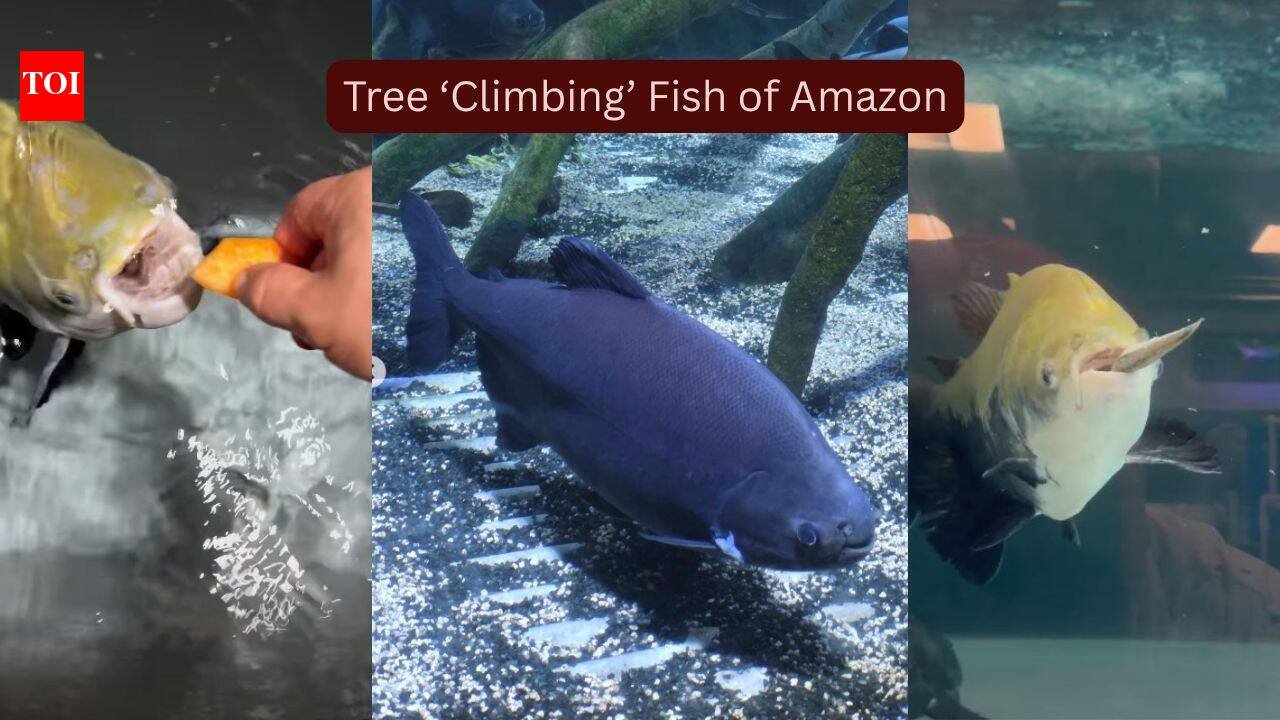
Imagine you are inside a flooded Amazon rainforest and the water has swallowed the forest floor. You are in a canoe, all you can see is the tops of giant trees and you are in search of stunning insects and wildlife. Suddenly, a loud splash echoes through the silence and under the branches, a massive fish leaps upward, snapping at ripe fruit hanging from a tree. And you are just so in awe of seeing a climbing/jumping fish that you completely forgot to capture the whole scene on your phone camera!‘Climbing’ fish of the Amazon This scene is as real as it sounds hypothetical. This remarkable spectacle takes place every year in the Amazon Basin during the annual flood season. Giant fruit-eating fish such as the tambaqui (Colossoma macropomum), also known as the giant pacu or black pacu, can go deep into flooded forests in search of fruits, seeds and nuts. These grow in the canopy. Rather than literally climbing tree trunks, they actually swim among submerged trees and jump high enough to pluck fruits directly from low-hanging branches. This whole scene looks like “tree-climbing fish.”For wildlife lovers, it is an unusual and rare lifetime experience. Some may also call it the most extraordinary natural phenomena on Earth. It is also one of the best reasons to visit the Amazon during its high-water season.When Amazon turns into an underwater forestDuring peak monsoons, the Amazon turns into an underwater forest. The place experiences one of the world’s most dramatic seasonal floods between December and May. The rivers rise by as much as 10 metres (33 feet) in several regions.Instead of remaining confined to rivers, fish suddenly gain access to a vast underwater forest. The flooded trees become a giant buffet filled with berries, figs, palm fruits, nuts and seeds.Tambaqui, a rare fish of the Amazon The tambaqui has evolved perfectly for this seasonal feast and is known for its powerful molar-like teeth. It can crush hard seeds and nuts that many other animals cannot eat. Not only this, the fish also helps grow the rainforest. Scientists say that these fish are some of the Amazon’s most important seed dispersers. After swallowing fruits, they transport intact seeds through the flooded forest before depositing them far from the parent tree. It helps regenerate forests.According to a recent study, there are over 40 species of Amazonian fish that consume fruits and seeds from nearly 190 tree species, highlighting how closely the health of the rainforest depends on these unusual underwater gardeners.A wildlife experience to remember
Amazon Canoe (Canva)
For travellers, witnessing this annual transformation is not a normal safari experience. Instead of searching for land animals, visitors explore an underwater forest. They can see monkeys swinging above the canopy while enormous fish feed beneath them.Where to spotTravellers can witness this unusual scene during guided canoe excursions through flooded forests in:The experienced local guides know exactly where fruiting trees attract schools of tambaqui and other such fish. Lucky visitors may see fish ‘climbing’ trees. The best places to experience flooded-forest wildlife include:
Amazon Canopy (Canva)
- Central Brazilian Amazon, particularly around Manaus
- Mamirauá Sustainable Development Reserve
- Jaú National Park
- Peruvian Amazon.
- Protected rainforest lodges in the Ecuadorian Amazon.
Best time to visit to witness the formulaThe high-water season generally runs from February to May.So for anyone wanting to witness the unforgettable wildlife moment, it is suggested to venture with only guided tours.


