






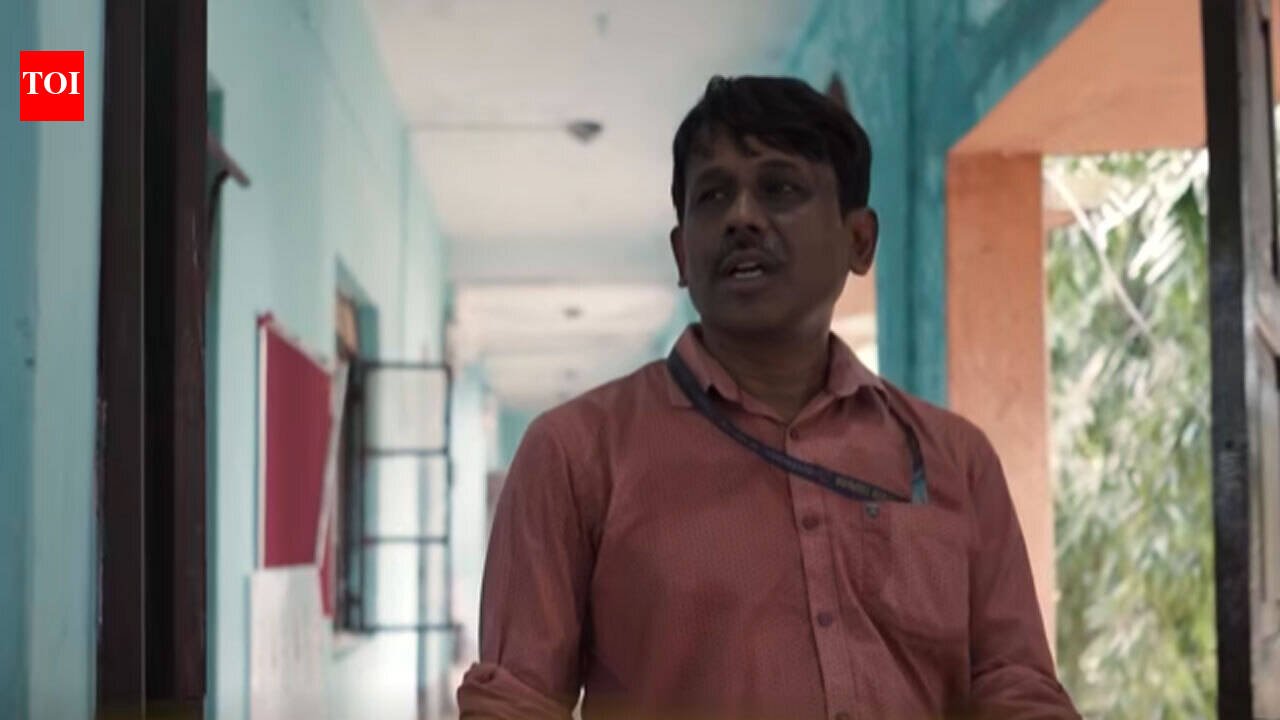
In a remote corner of southern Tripura, a government girls’ school is quietly changing what rural education can look like. Smart classrooms, science laboratories, robotics, an Atal Tinkering Lab and even virtual reality facilities are now part of everyday learning at PM SHRI Class XII Girls’ School in Sabroom.At the centre of this transformation is Ranjan Debnath, the school’s headmaster, who has been selected for the National Teachers’ Award 2026 for his contribution to education.President Droupadi Murmu presented the prestigious national honour to Debnath at a special ceremony in New Delhi on Teachers’ Day, September 5. His recognition has brought particular pride to Sabroom and the wider Tripura community.
From a remote school to a technology-enabled campus
Established in 1960, PM SHRI Class XII Girls’ School has expanded its focus beyond conventional classroom teaching under Debnath’s leadership.The school now offers students access to smart classrooms, science laboratories, an Atal Tinkering Lab, skill and robotics laboratories, a virtual reality lab, vocational education and self-defence training. A library, sports coaching and other co-curricular opportunities further broaden the learning experience.But for Debnath, technology is not meant to replace teachers. Instead, he sees digital tools as a way to encourage curiosity, interaction and practical learning.His approach centres on “learning by doing”, with students encouraged to participate in projects, experiments, educational activities and collaborative learning rather than relying only on rote memorisation.
A classroom without ‘frontbenchers’ and ‘backbenchers’
One of Debnath’s distinctive classroom initiatives is the use of U-shaped seating.The arrangement breaks away from the conventional division between frontbenchers and backbenchers and allows teachers to maintain greater interaction with students.The idea is particularly aimed at giving quieter students more opportunities to participate. For Debnath, classroom design is not merely about where students sit; it is about creating an environment where every learner feels seen and encouraged to contribute.
Building confidence beyond academics
Debnath’s vision of education extends well beyond examination results.Students are encouraged to participate in sports, yoga, cultural programmes, science activities, health-awareness initiatives and leadership programmes. The school has also strengthened Bal Sansad, giving students opportunities to take responsibility and develop confidence and leadership skills.Parent and community participation is another part of his approach. Meetings, awareness programmes and discussions help the school address challenges faced by students from economically disadvantaged and remote communities.
Nearly 700 girls, limited teaching resources
The transformation has taken place despite constraints. The school serves nearly 700 girls with a relatively small teaching workforce.Yet its academic performance has remained strong. The institution recorded a 100 per cent pass rate in both secondary and higher secondary examinations in 2022-23 and 2023-24. In 2024-25, it maintained a 100 per cent pass rate at the secondary level, while its higher secondary pass percentage stood at 92 per cent.The school has also expanded opportunities in sports, technology, vocational education and life skills, supported by infrastructure development under the PM SHRI programme.
A teacher whose influence goes beyond one campus
Debnath’s contribution to education predates his tenure at Sabroom. During his time at Henry Derozio School, his student-focused initiatives earned strong support from students and parents.He has also contributed to teacher training, mentored newly appointed headmasters and participated in SCERT initiatives. Through Vande Tripura, he has helped deliver educational content to students across the state.For Debnath, educational leadership is therefore not restricted to managing a school. It also means helping other teachers and institutions improve the way they reach students.
The award he sees as a collective achievement
Despite receiving one of the country’s highest recognitions for teachers, Debnath has described the honour as a collective achievement involving his students, colleagues, school community and the people of Tripura.His philosophy is simple: education should create responsible and compassionate human beings before it creates successful professionals.Now, his ambition is to develop PM SHRI Sabroom Girls’ Higher Secondary School into a nationally recognised model institution and expand educational opportunities for children in remote areas of Sabroom and Satchand.The story of Ranjan Debnath is ultimately a reminder that technology can modernise a classroom, but it takes a committed teacher to give that technology purpose. In Sabroom, that combination is helping turn a remote girls’ school into a campus where innovation, confidence and character are being taught alongside textbooks.


