



Tensions were running high at Meta Platforms.
For weeks, rumors circulated that the company was planning a large layoff as it poured tens of billions of dollars into artificial intelligence. Then employees were told their keystrokes and mouse clicks would be recorded to help train AI agents to use computers.
Some balked at the data collection; others started a petition demanding Meta drop it.
Technology chief Andrew “Boz” Bosworth stepped in, offering no apologies. To those who asked to opt out, he said no. To those who worried about privacy, he told them not to check personal email on company devices.
A top lieutenant of Chief Executive Mark Zuckerberg for more than 20 years, Bosworth’s outspokenness and hard-charging style have made him a magnet for controversy—and, at times, a useful heat shield for his billionaire boss.
When Zuckerberg became convinced that a virtual reality “metaverse” was Facebook’s future, it was Bosworth he put in charge of the initiative, which was widely seen as an expensive disaster. After Meta said it was developing battlefield technology for American soldiers, Bosworth joined the Army Reserve, a move he acknowledged riled some colleagues.
So when Zuckerberg wanted to transform Meta, with its global workforce of more than 70,000, into an AI-first company that could innovate as fast as nimble startups, he tapped Bosworth to lead the gargantuan effort in what might be his most provocative role yet.
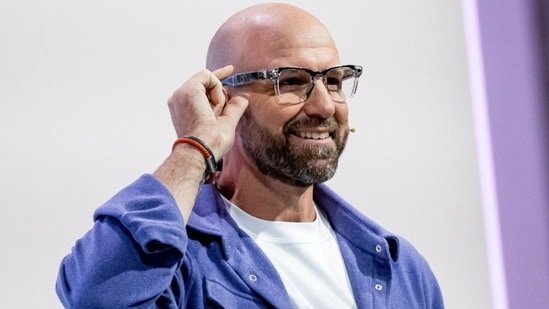
The bald, 6-foot-2 executive—who stands to make nearly $1 billion if he can help increase the company’s market capitalization by 500% in the next five years—has embraced it with zeal.
“He has a very ‘rip-the-Band-Aid-off’ style for making the changes,” said Mark Rabkin, a longtime Meta executive and former vice president of its virtual reality efforts.
In a companywide memo the day before the new tracking policy, Bosworth told employees that Meta is building toward a vision where agents primarily do the work. “Our role is to direct, review and help them improve,” he wrote.
Among the changes he has championed in his new role are large teams with virtually no managers and swapping out planning documents for working prototypes.
“We’re already seeing some tasks that used to take hours now take minutes and soon we won’t need to be in the loop on some tasks at all,” Bosworth wrote.
All the talk of eliminating humans from loops has many Meta employees wondering how many will be needed to run the company when the transformation is complete. On Wednesday, the company laid off 8,000 people and reassigned another 7,000 to new AI-related jobs.
Meta declined to make Bosworth available for an interview. (News Corp, owner of The Wall Street Journal, has a content-licensing partnership with Meta.)
Early Facebook days
Bosworth, 44, was raised on his family’s horse ranch in Saratoga, Calif., a wealthy enclave in Silicon Valley, and grew up heavily involved in agriculture and the state’s 4-H youth program.
He learned how to code when he was 10 years old, went to Harvard University and became a teaching assistant in a computer-science course. One of the students assigned to his section was a young Zuckerberg. The class: Intro to AI.
Facebook came out two weeks after the class’s finals. Noting the timing in an alumni profile on Harvard’s site a half dozen years ago, Bosworth joked that Zuckerberg clearly hadn’t been studying.
Unlike some of Facebook’s other early employees, Bosworth stayed and finished his degree at Harvard. He then worked briefly at Microsoft as a software design engineer before joining Facebook in 2006. At the time, the company had fewer than 100 employees.
Within months of his arrival, Bosworth played a central role in one of Facebook’s first controversies: He was a key engineer on the News Feed, the scroll of posts that would become the defining form of social-media sites. Its introduction provoked an outcry among users who felt their privacy had been violated but sent engagement soaring.
Several years later, as Zuckerberg sought to transition Facebook’s desktop users to a new mobile app, he put Bosworth in charge of figuring out how to do the same for its advertising.
Bosworth knew little about digital advertising at the time, recalled Alex Himel, one of Bosworth’s direct reports and now Meta’s vice president of wearables. “He did this big listening tour, and then he came back and said ‘All right, here’s the plan we’re going to do,’” Himel said.
Since then, Meta’s advertising business has grown into a $200 billion a year juggernaut that is expected to overtake Google this year as the world’s largest digital-ads seller.
Brash personality
Over the years, Bosworth has developed a reputation as a blunt, outspoken provocateur.
If Zuckerberg is famously controlled in his communications with both the public and his own staff, Bosworth is his foil. The latter is known for penning frequent internal corporate strategy memos, answering questions from Meta users in his weekly ask-me-anything sessions on Instagram and sharing even more of his thoughts on his podcast called “Boz to the Future.”
He’s a frequent poster on X, where he has sparred with Oculus founder and former Facebook executive Palmer Luckey over the details of Luckey’s 2017 firing and with Elon Musk over edit buttons on social media.
While employees who have reported to him say they appreciated always knowing where they stood with the boss, Bosworth’s tell-it-like-it-is personality has also gotten him into trouble.
In 2016, as the company was coming under increasing scrutiny for its growth-at-all-costs mindset, he posted an internal memo titled “The Ugly,” in which he defended its relentless pursuit, even if it made Facebook a more useful tool for cyberbullies or terrorists.
“The ugly truth,” Bosworth wrote, “is that we believe in connecting people so deeply that anything that allows us to connect more people more often is *de facto* good.”
The memo sparked intense backlash after it was resurfaced and leaked to the press nearly two years later. Bosworth issued a public statement on X, saying the post was intended to be provocative, that it was one of the most unpopular things he had ever written and that the ensuing debate helped shape the social network’s tools for the better.
Bosworth, a self-described liberal, wrote another controversial post—this time on his public Facebook page—shortly after Donald Trump was elected president in 2016, disparaging his political supporters. Bosworth deleted the post after being told that Trump voters within the company had said it made them feel unsafe, an episode he described in another internal post in 2020 that was reported on by the New York Times.
Later that year, in a blog post on his personal website, Bosworth recounted a talking-to he had once received from Sheryl Sandberg, the company’s then-head of operations, about his overbearing way of communicating. He attempted to argue the point, maintaining his assertiveness had made him successful.
“Boz, you have been effective in spite of your behavior,” he said Sandberg told him, “not because of it.”
Metaverse mishaps
In 2017, Bosworth left the ads division and became head of Facebook’s augmented-reality and virtual-reality efforts—a division that would take center stage when Facebook rebranded itself as Meta in 2021.
As part of the new brand strategy, Zuckerberg appointed Bosworth chief technology officer and announced plans to focus on building the so-called metaverse with him at the helm.
It was a huge promotion, even for such a tenured executive. But the strategic pivot didn’t go as planned. Nearly a year after the rebrand, internal documents showed that Meta’s flagship metaverse product, a virtual-reality app for consumers called Horizon Worlds, suffered from glitches and struggled to add and retain users.
Five years later, the metaverse still hasn’t taken off, and Meta has started to shift resources and focus away from it. The company announced layoffs in the division earlier this year and said it was moving some spending to other bets that are gaining more momentum, such as AI smartglasses.
In one of his Instagram ask-me-anything sessions in March, Bosworth defended the company’s metaverse ambitions, saying virtual reality wasn’t dead and that the company was continuing to invest in it.
But much of his focus now is on his new mandate from Zuckerberg to get the company’s workers to use AI in more of their work and, when possible, hand tasks over to it entirely.
Among his new duties is overseeing an entirely new “applied AI engineering” organization whose role is to supercharge the efforts of the researchers working to develop AI models that can compete with those from OpenAI and Anthropic.
True to form, Bosworth is still finding time to post about the AI transformation he is helping to engineer—and mix it up in the comments when he has a hot take.
Write to Meghan Bobrowsky at meghan.bobrowsky@wsj.com


