



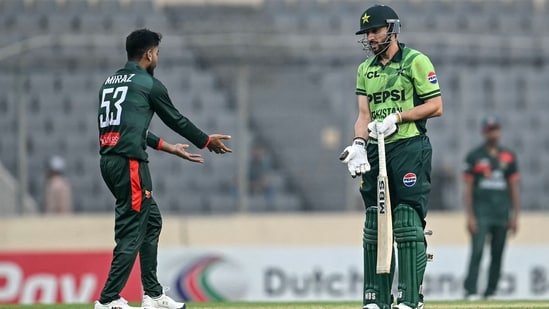
The Marylebone Cricket Club (MCC), custodians of the Laws of Cricket, has weighed in on the controversial run-out of Salman Ali Agha during Pakistan’s second ODI against Bangladesh, bringing clarity to an incident that sparked a widespread ‘spirit vs rules’ debate.
The moment unfolded in the 39th over of Pakistan’s innings in Dhaka. Off a delivery from Mehidy Hasan Miraz, Mohammad Rizwan played the ball back towards the bowler. At the non-striker’s end, Agha had stepped out of his crease, looking for a quick single. In the process, he collided with Miraz while attempting to regain his ground, before momentarily engaging with the ball outside the crease.
Sensing an opportunity, Miraz reacted swiftly, collected the ball and threw it onto the stumps, catching Agha short of his crease. The dismissal immediately triggered strong reactions, with the Pakistan camp questioning the spirit of the act, while Bangladesh stood firm on the legality of the decision.
Addressing the incident, MCC made it clear that the dismissal was fully within the Laws of the game.
“There is little that either umpire could have done differently. The non-striker was clearly out of his ground when the wicket was broken, and the ball was in play. That is out,” the statement read.
The club further explained that Agha’s actions may have worsened his position. It noted that the batter had left his ground while the ball remained live and was only beginning to recover when the collision occurred. MCC also pointed out that a batter attempting to pick up the ball without the fielding side’s consent risks a separate dismissal under Obstructing the field.
On the question of whether the ball should have been declared dead following the collision, MCC dismissed the notion. It clarified that collisions alone do not warrant a ‘dead ball’ call unless there is a serious injury or a clear cessation of play.
“If it did, that would incentivise players to seek out collisions when the situation was advantageous,” MCC stated, adding that Miraz’s actions clearly indicated that the ball was still considered in play.
However, MCC also acknowledged the grey area around sportsmanship. While upholding the legality of the dismissal, it noted that Miraz, as captain, had the option to withdraw the appeal if he felt it aligned better with the Spirit of Cricket.
“Agha clearly thought the ball was dead and was attempting to assist the fielding side after an unintentional collision,” the statement said, underlining that the Laws do permit such discretionary withdrawals.


