



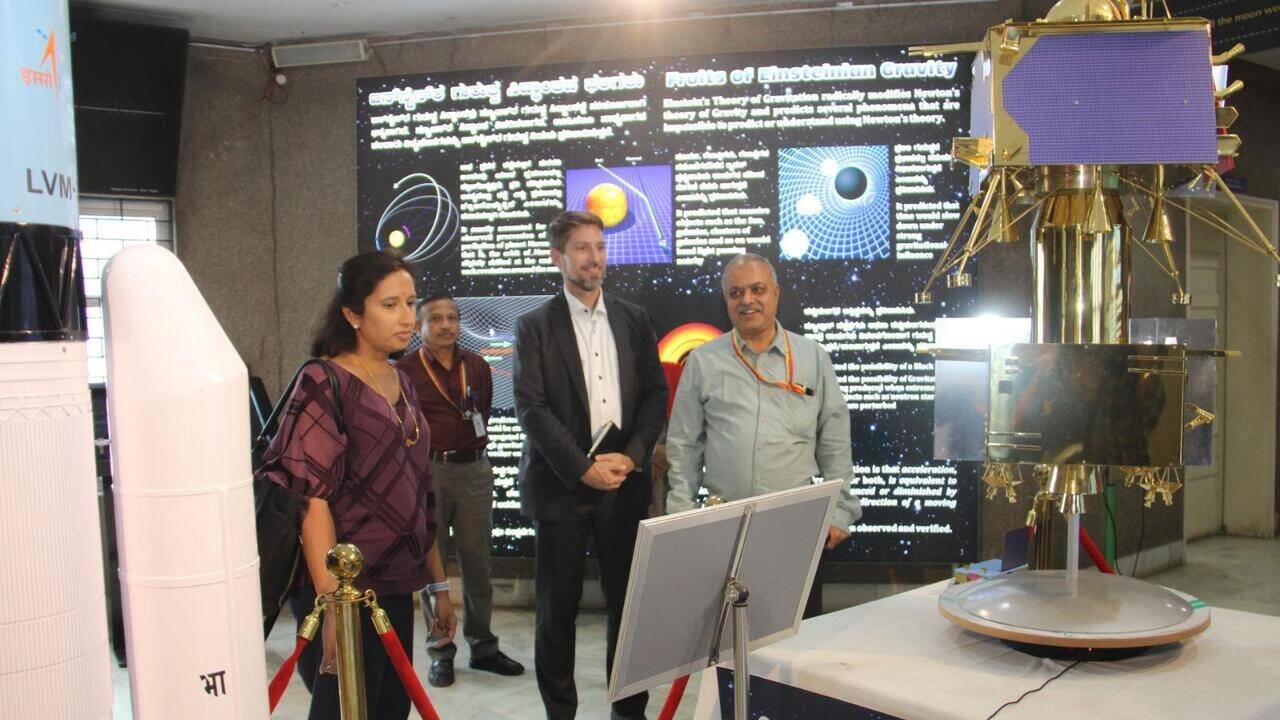
Bengaluru: The next India-US Civil Space Joint Working Group meeting will be held in Bengaluru in early Aug, officials said Monday even as Nasa scientist Swati Mohan highlighted the growing scope for collaboration between the two countries and shared insights into Mars exploration and future space technologies during an interaction in the city.“Mars is as similar to Earth as we can get in our own planetary system,” said Swati, aerospace engineer and project manager, AstroNav, NASA Jet Propulsion Laboratory (JPL). The Indiranagar resident said the Red planet remains humanity’s best bet for exploration beyond Earth because of how closely it mirrors our own planet — similar gravity, a thin but real atmosphere and familiar chemical building blocks like carbon dioxide and water.Swati, who was in India on a personal visit, was interacting with media during a conversation with Jawaharlal Nehru Planetarium director BR Guruprasad.Swati, who led the guidance, navigation and controls on NASA’s Perseverance mission to Mars, recalled that commanding its landing in Feb 2021 felt “dissociative” — years of rehearsal meant she was locked onto the next call, not the stakes. Relief and emotion arrived only after touchdown was confirmed and the first Martian image came through, proof that eight years of work had succeeded. She called parachute deployment, with no partial backup if it failed, her most anxious moment.Comparing Mars to hostile alternatives like Venus, Mohan said Nasa’s Moon-to-Mars strategy lets long-duration spaceflight technologies be tested closer to home first.Six years on, Perseverance remains “phenomenal,” Mohan said, “having cached samples at Three Forks, including one from Cheyava Falls seen as a strong biosignature candidate — though she deferred to geologists on interpretation”.She highlighted the Ingenuity helicopter and the oxygen-generating Moxie experiment, which hit over 99.9% purity, as key steps toward future human missions. She explained Mars Sample Return is necessary because Perseverance’s onboard instruments alone can’t conclusively answer whether life existed on Mars.On colonisation, she said humanity must first solve launching material off another planet’s surface. The toughest navigation challenge beyond Earth, she noted, is the total absence of GPS-like infrastructure.


