



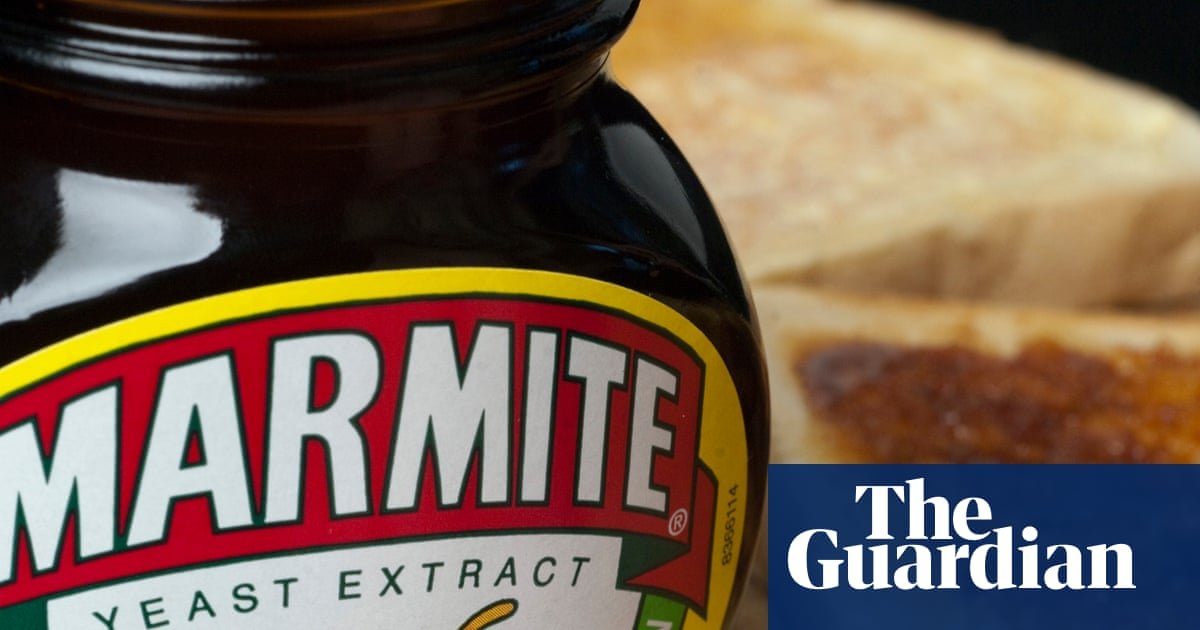
Unilever has agreed to combine its food business with US-based McCormick in a $44.8bn deal that will give the Marmite-to-Hellmann’s mayonnaise owner majority control of a food empire.
The Anglo-Dutch company will control 65% of the new spin-off, which will combine brands such as Knorr and Pot Noodle with McCormick’s condiments and spices including French’s mustard, Old Bay seasoning and Cholula hot sauce.
However, the combined company will be called McCormick and led by its executives, with senior management representation from the ranks of Unilever’s food business.
Under the agreement, McCormick will pay London-listed Unilever $15.7bn in cash and the equivalent of $29.1bn in shares for a stake in almost all of the Anglo-Dutch company’s food arm.
After the combination, which is forecast to result in $600m (£453m) of annual cost savings by the end of the third year, McCormick will retain its global headquarters in the US and New York stock exchange listing, with an international headquarters at the existing Unilever Foods base in the Netherlands.
Unilever’s food business employs research, development and marketing staff in the UK and has factories making Pot Noodle in Crumlin, Wales, and Hellman’s, Marmite and Colman’s mustard in Burton-on-Trent.
The companies said savings would come from changes in manufacturing, distribution and on procurement of supplies but said they were yet to confirm how many jobs might be affected and where. “It is about accelerating growth first,” said Fernando Fernández, Unilever’s chief executive.
Brendan Foley, the chief executive of McCormick, said the company had “a strong track record for retaining talent in transactions” and wanted the “talented Unilever team” to be part of running the business.
The remainder of Unilever – which last year hived off its ice-cream division, the home of Ben & Jerry’s, Magnum and Wall’s – will focus on beauty, personal care and home products.
“We are unlocking trapped value through a growth-led separation of foods, creating a scaled, global flavour powerhouse,” said Fernández. “Our retained ownership stake reflects our conviction in the strength of the combined company and its future prospects.”
Analysts at Jefferies said the deal risked reducing global economies of scale as Unilever has historically argued that the combination of food, health and beauty was “critical for … efficiency”. Jefferies said in a note that the deal could prompt the company to seek new acquisitions in health and beauty
The new company is planning a secondary stock listing in Europe to “reflect the global nature of Unilever’s current shareholder base”.
Unilever said that parts of its food business, including its operation in India and the Horlicks and Boost brands, would not be included in the new combined company, which has total annual revenues of about $20bn.
“Integrating two global organisations of this scale requires disciplined execution,” said Foley . “We are confident that our detailed integration roadmap, experienced teams from McCormick and Unilever, external advisers and our strong partnership will enable us to capture the full value of this opportunity”.
The cash-and-stock deal is being undertaken through a Reverse Morris Trust. This means it would be tax-free for US federal income tax for Unilever and its shareholders.
Shares in Unilever dived by almost 7% after the announcement of the deal, while McCormick fell by 5.6% in the US. Unilever, which is valued at about £100bn, has implemented a three-month global hiring freeze amid the impact of the widening conflict in the Middle East.
The deal marks the end of nearly a century of Unilever’s focus on selling food products, but means the maker of Dove soap and Tresemmé shampoo is now repositioned to compete directly with large household and personal care companies including L’Oréal, Beiersdorf and Estée Lauder.
“For Unilever, this transaction is another decisive step in sharpening our portfolio and accelerating our strategy towards high-growth categories,” said Fernández.
In 2017, the company sold off its spreads business, which included brands such as Flora and I Can’t Believe It’s Not Butter!. Most of its tea business, including Lipton, PG Tips and Tazo, was sold in 2022, before last year’s listing of the ice-cream business.
Unilever has also disposed of brands including The Vegetarian Butcher and the healthy snacking brand Graze.


