



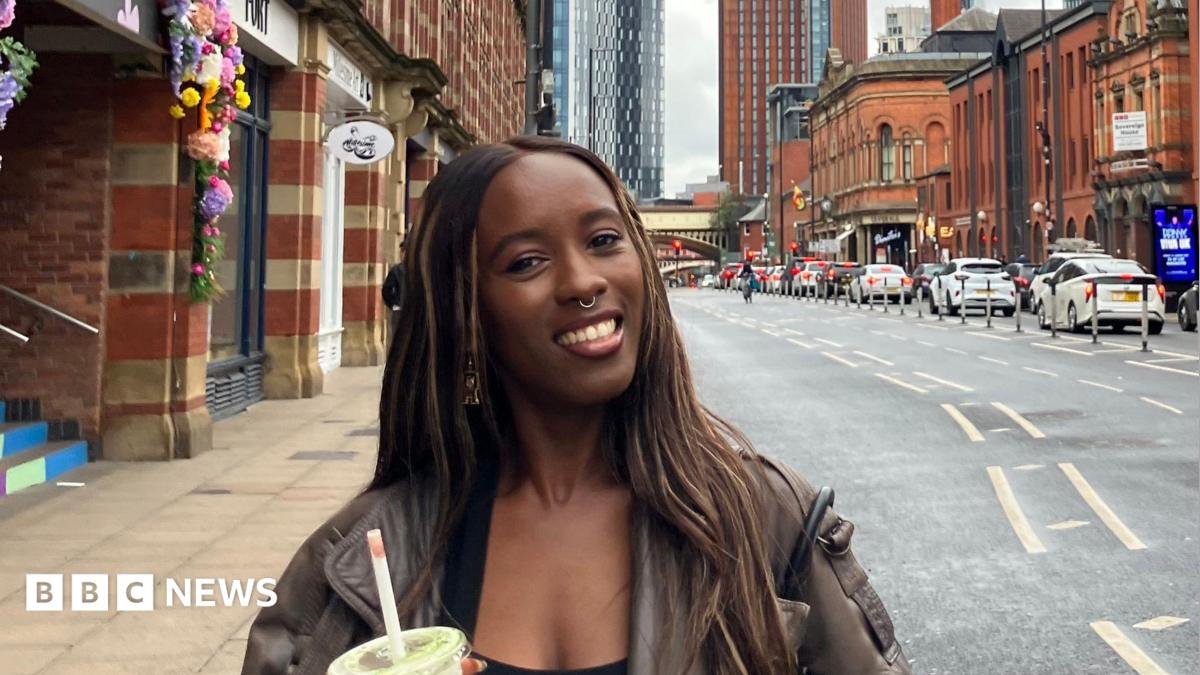
The 25-year-old knew no-one in Manchester beyond a few extended family members and initially planned to stay only temporarily, using it as a base to travel across Europe and explore other parts of the world.
But all that changed when videos she posted of her dance classes on TikTok took off. What started out as a hobby quickly turned into a business.
“We’ve been sold out for seven months,” she says. Her classes cater to different dancing abilities and she can have as many as 40 people in each one.
“Northerners are so friendly,” Sufia tells me over matcha in a cafe near her apartment in Ancoats. “I’ve felt so welcomed.”
She says things are going so well she left her full-time marketing job in February to concentrate exclusively on her dance business.
High-rise buildings like those in Ancoats, which suffered huge deprivation after the war, are clear evidence of Manchester’s redevelopment but Swinney says its economic “growth miracle” has been overestimated by official statistics.
“There hasn’t been this huge explosion of [economic] productivity,” he says.
He also points out that median average wages in Greater Manchester have not increased as much as you might think, just 1% since 2019, external when adjusted for inflation.
There are also concerns about the high-rise apartments that have been constructed with some requiring repairs for safety problems. One developer was taken to court by the government in April for using taxpayers’ money for such remedial works.
Away from the city centre high-rises, Swinney thinks the council has adopted policies that could encourage economic growth in the surrounding areas.
He says transport is a good example as Greater Manchester was the first area in England, outside of Greater London, to have local control of its bus network since deregulation in the 1980s.


