



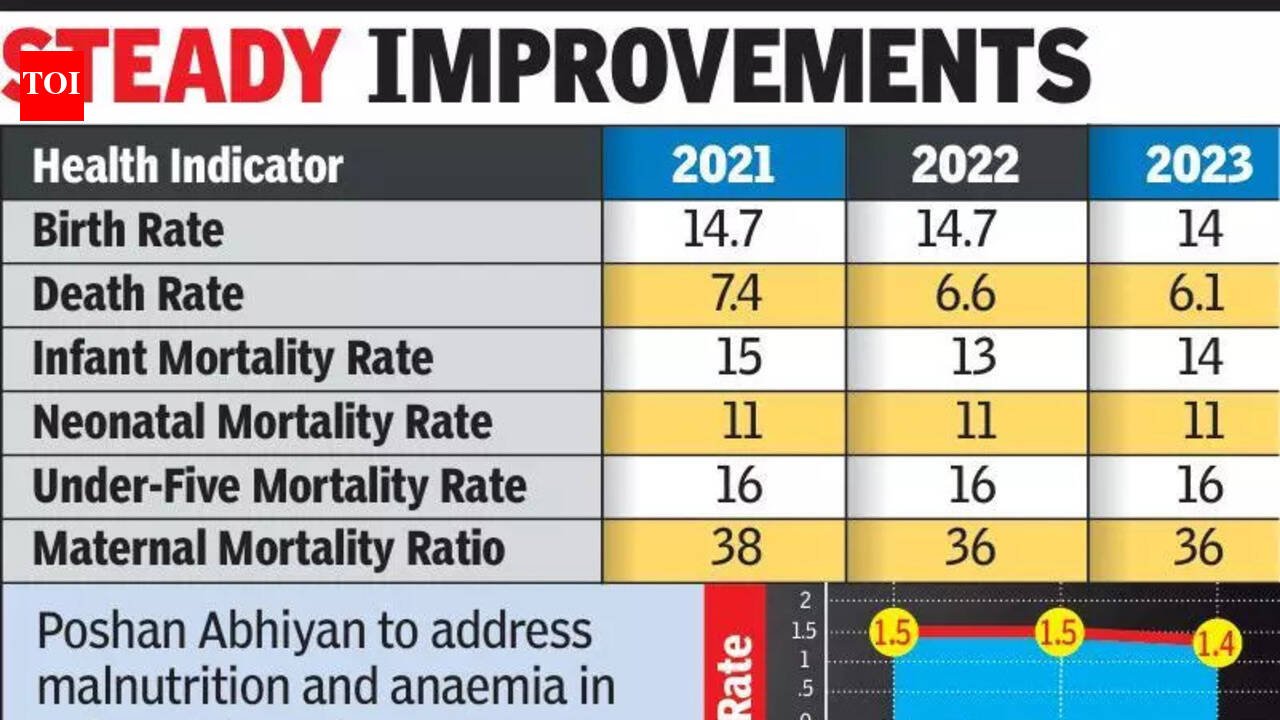
Nagpur: Maharashtra recorded a significant decline in infant mortality over the past five decades, with the Infant Mortality Rate (IMR) dropping to 14 deaths per 1,000 live births in 2023, according to the Economic Survey of Maharashtra 2025-26, released on Thursday. The All-India average is 25 for the same period. The latest figures, based on data from the Sample Registration System (SRS), highlight steady improvements in maternal and child healthcare across the state.The report defines IMR as the number of deaths of infants aged one year or younger per 1,000 live births in a given population and time period. The survey states that alongside the IMR, other key child health indicators also showed improvement. The neonatal mortality rate — deaths of infants within the first 28 days of life — stood at 11 per 1,000 live births, while the under-5 mortality rate was recorded at 16 deaths per 1,000 live births in 2023.However, disparities persist between rural and urban areas. The IMR in rural Maharashtra was 17, significantly higher than 10 in urban areas, indicating continued challenges in healthcare access and maternal services in remote regions.The survey also outlines future projections, suggesting that the IMR is expected to decline further during the 2026–2030 and 2031–2035 periods.Several govt initiatives contributed to this improvement. The Janani Suraksha Yojana promotes institutional deliveries among economically-weaker sections, including BPL, Scheduled Caste and Scheduled Tribe families, thereby helping reduce maternal and infant deaths.Similarly, the Navsanjivani Yojana focuses on improving healthcare services in tribal areas through preventive interventions aimed at reducing infant mortality.Under the Baby Care Kit initiative, mothers delivering in govt hospitals receive kits worth up to Rs2,000, aimed at ensuring proper newborn care.Malnutrition remains a key factor contributing to infant mortality, prompting the govt to implement nutrition-focused interventions such as the Poshan Abhiyan and other targeted nutrition programmes to address severe malnutrition and anaemia in vulnerable regions.Another major initiative, the Rashtriya Bal Swasthya Karyakram (RBSK), focuses on early detection and treatment of birth defects, diseases, deficiencies and developmental delays among children from birth to 18 years.Additionally, the Lek Ladki Yojana provides financial support aimed at improving the survival, health and well-being of girl children in the state.Dr Vasant Khalatkar, president, Indian Academy of Paediatrics, said, “Maharashtra made remarkable progress in reducing neonatal mortality from earlier 35. I congratulate the state govt, public health system and frontline healthcare workers for this achievement. The next goal should be to bring the rate to single digits by 2030, in line with the United Nations Sustainable Development Goals. Strengthening primary healthcare through systematic training of doctors, nurses, paramedical staff and Anganwadi workers, along with increased investment in child health infrastructure and services, will be crucial to sustain and accelerate Maharashtra’s progress.“


