





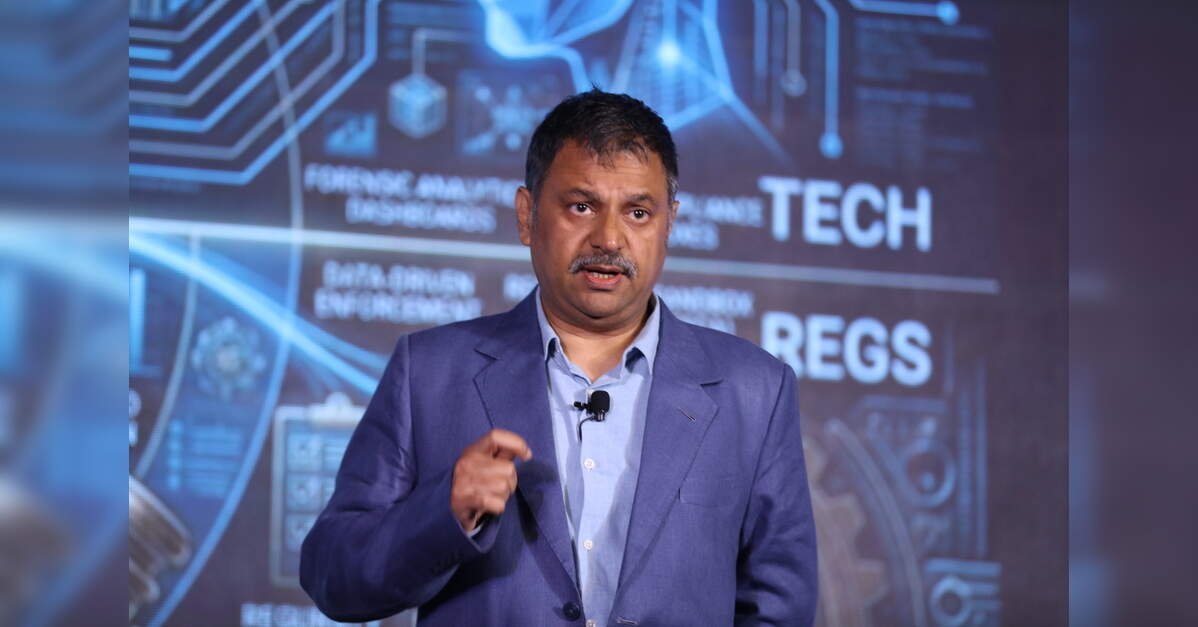
Technology has accelerated the speed, scale and complexity of white-collar crime, but it has also given investigators new tools to uncover misconduct through digital trails, metadata and data analytics, Brijesh Singh, Principal Secretary, Government of Maharashtra, said while delivering the keynote address at ETLegalWorld’s India White Collar Crime Forum 2026. Singh said Indian companies must recognise that weak compliance frameworks can expose them not only to domestic scrutiny but also to enforcement action from foreign jurisdictions.
Singh framed the evolution of modern financial investigations through the example of the Panama Papers, noting that the disclosures triggered a new form of collaborative, technology-led investigation. He said the International Consortium of Investigative Journalists used graph database tools to map relationships across entities and transactions, generating insights that earlier required investigators to manually examine large volumes of paper records.
“For the first time, a graph database was used for financial investigations,” Singh said, adding that such tools could reveal links that were difficult to detect through traditional methods. For enforcement agencies and corporate investigators, the implication is clear: complex financial misconduct is increasingly being identified through data relationships, not only through conventional document review.
Singh said the global response to offshore leaks and financial disclosures also showed a gap in outcomes. According to him, while significant tax and liability recoveries were made globally, prosecution success in India remained much lower than in several other jurisdictions. He connected this to a broader compliance challenge for Indian entities.
“Wherever there is a compliance gap, you are seeing jurisdictional overreach from the US, the UK or other countries,” he said. This, he noted, means Indian entities may find themselves exposed to foreign enforcement standards, including frameworks such as the US Foreign Corrupt Practices Act and UK corporate criminal liability regimes, especially when they deal with overseas customers, investors or counterparties.
The warning is significant for Indian corporates operating in global markets. As sanctions, anti-bribery laws, ESG expectations and supply-chain scrutiny become more interconnected, compliance is no longer limited to local statutory obligations. It increasingly determines market access, investor trust and exposure to cross-border enforcement.
Singh also highlighted cybercrime as one of the fastest-growing economic threats, arguing that despite governance systems and compliance structures, significant risk continues to “slip through the cracks.” He said companies with stronger governance practices tend to perform better over the long term, while ESG-related compliance, often viewed domestically as an additional burden, is becoming essential for access to markets such as the European Union.
On the investigation side, Singh said digital evidence has become deeply embedded in enforcement work. Devices, even when formatted multiple times, can yield recoverable data, while metadata can establish patterns of communication even where encrypted content is inaccessible.
“You may not get the content of the communication, but if you were sitting in the boardroom and repeatedly chatting with someone on WhatsApp at a critical juncture, that metadata will have to be answered,” he said. For companies, this reinforces the importance of defensible documentation, communication discipline and internal controls around sensitive decision-making.
Singh also pointed to cryptocurrency-linked money laundering, where techniques such as mixers, tumblers and chain hopping have made tracing funds more difficult. However, he said investigative technology is also improving, with analytics tools now capable of tracing flows across blockchain networks. This, he said, shows that while technology has enabled crime, it has also strengthened enforcement capability.
He called for greater innovation in governance, arguing that India has built large-scale digital public infrastructure but must now apply similar thinking to compliance and regulatory systems. Singh said regulators should examine frameworks such as regulatory sandboxes and voluntary disclosure mechanisms, noting that in some jurisdictions, voluntary disclosures have led to significantly lower penalties.
For mid-sized companies, Singh suggested that shared forensic tools and open-source compliance technologies could help build preventive capabilities that are otherwise available mainly to large corporations. He said real-time and preventive forensics can help organisations detect red flags early, reduce losses and build healthier work cultures.
“Reputational collapse velocity is at the speed of light,” Singh said, emphasising that companies must invest in governance, forensic readiness and compliance systems before a crisis emerges.
India Inc’s top legal, compliance, and risk leaders have gathered today for the 2nd Edition of India White-Collar Crime Forum in Mumbai, a full-day conference examining how companies can navigate rising enforcement scrutiny, technology-led fraud, and cross-border regulatory risks.


