



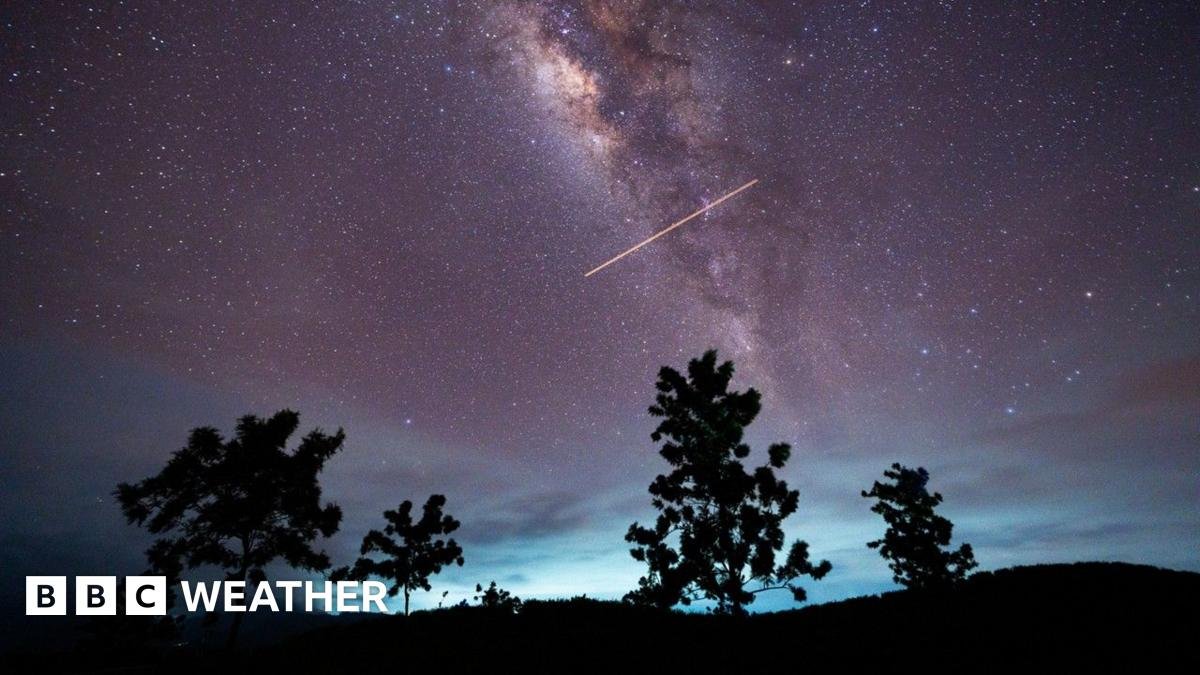
The Lyrids are not the only meteor shower to visit our skies in April.
The Eta Aquarids will also be active between 9 April to 28 May, with the peak in the early hours of 6 May 2026. The average rate is around 40 an hour.
They are named after a star called Eta Aquarii in the Aquarius constellation, which is the point from which it appears to originate and created from the trail of the Comet 1P/Halley. This takes considerably less time than Comet Thatcher to compete its solar orbit – between 75-76 years.
Halley is one of the most well known and best studied by scientists.
The comet will be back again in 2061 but in the meantime we can enjoy the bi-annual meteor showers as its dust particles create passing through the Earth’s atmosphere, not only giving us the Eta Aquarids in April but also the Orionids in October.


