


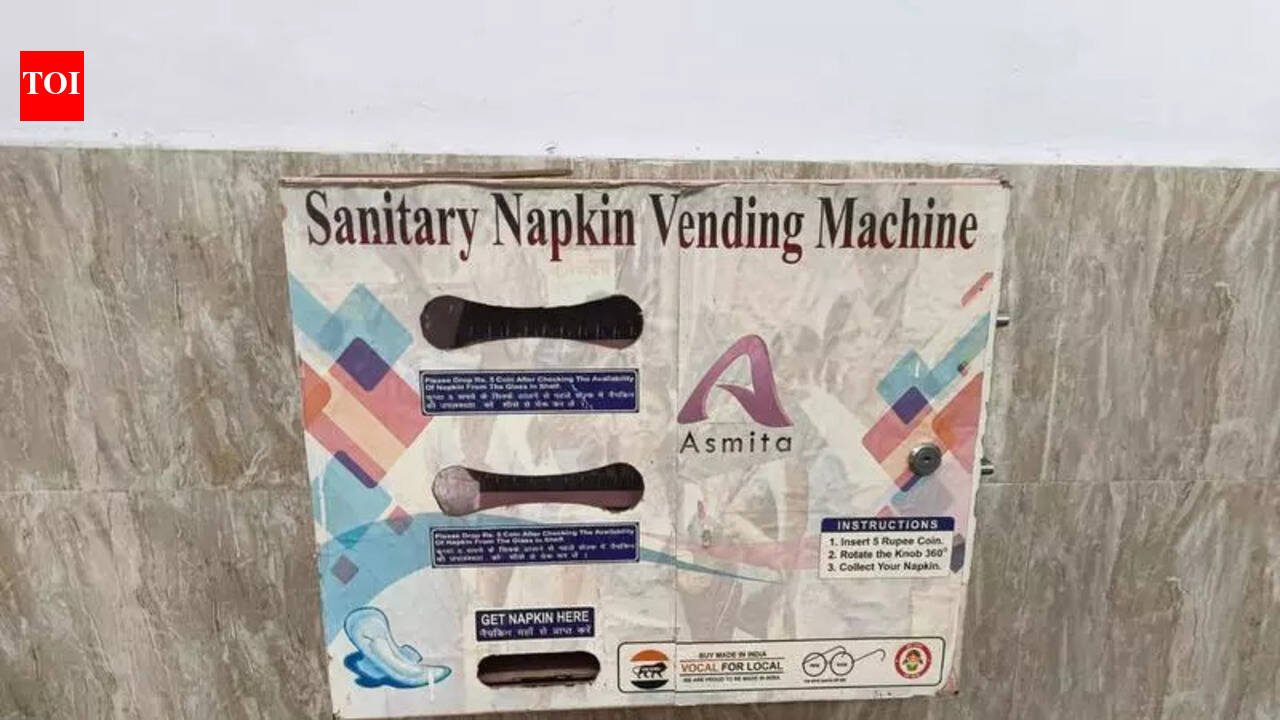
Students reported that although sanitary napkin vending machines have been installed in some buildings, several wash-rooms, including those near gate 4 parking, the department of commerce, the department of western history and the physics department, are either non-functional or remain empty for weeks. Wash-rooms frequently lack soap, regular cleaning, basic hygiene standards and proper disposal facilities.“The vending machines exist only on paper. Most of the time they are empty or not working, and there is no system to ensure regular refilling. In moments of urgency, students are left helpless. Wash-rooms often lack soap, proper disposal facilities and regular cleaning,” said Sakshi Misra, a postgraduate student from the arts faculty.Another student, Simran Arora said, “Many girls’ wash-rooms are either locked or in extremely poor condition. During emergencies, it becomes stressful and humiliating to search for a usable toilet. The lack of basic facilities affects both attendance and academic focus.”Aisha Singh, an undergraduate student, said, “The condition of wash-rooms is pathetic. We often look for cleaner wash-rooms outside the campus. Many times, there is no soap, vending machines are empty, hygiene is poor, and the foul smell is constant. I have rarely seen cleaners maintaining the wash-rooms.”Medical professionals stressed that menstrual hygiene is not merely an infrastructure issue but a public health concern.Veena Tiwari, a gynaecologist, said, “Poor menstrual hygiene can lead to infections and long-term health complications. Educational institutions must treat this as a health priority, not a welfare add on.”LU spokesperson Mukul Srivastava said, “In accordance with the Supreme Court guidelines, the university has installed sanitary vending machines and established hygiene facilities. At some locations, the availability of machines has been limited, which the administration is prioritising. Significant progress has been made in hygiene, and we remain committed to continuous improvement for the convenience of female students.“


