



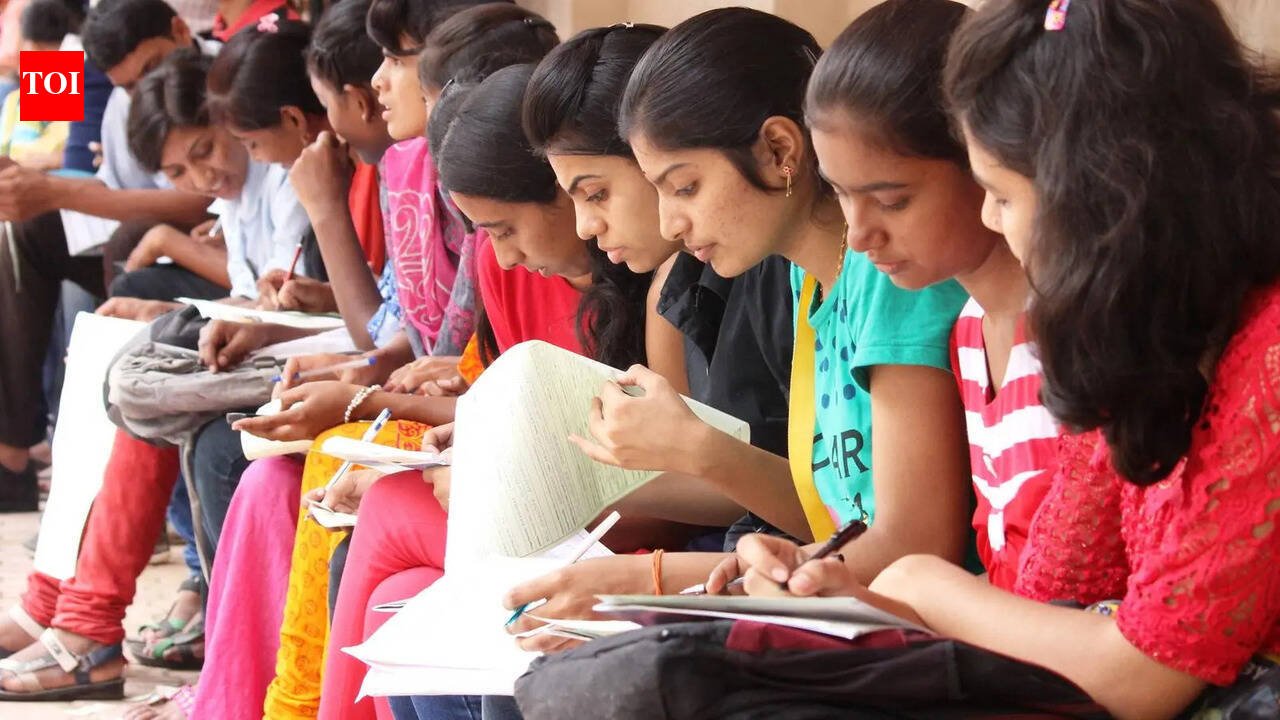
Pune: A majority of students are reluctant to enrol in four-year degree courses the state implemented under the National Education Policy (NEP) in 2023-24, indicate internal surveys of some autonomous colleges.Principals of autonomous colleges, where the four-year degree was introduced, said only 30% or fewer students showed interest in pursuing the fourth-year honours programme.According to students, those who want to appear for competitive exams will opt out after 3 years, while others who want to take up research or go abroad will go for a four-year honours degree course.Maharashtra implemented the NEP, 2020, from the 2023-24 academic year. The batch from 2023 is going to conclude as the final semester examination for a three-year degree is over in state colleges. The students are awaiting their results, after which they need to decide on their future course. The exact number of students – about how many are going to enrol in the fourth year will be clearer by June-end.A BSc biology student from Fergusson College said during the survey he opted for honours with a research degree, but he was not sure.“The rule stated that if I get 75% and above in my honours with a research degree, I can skip the master’s degree and apply for UGC NET or other exams or get admission to a PhD course. Even if I don’t get 75% marks, I can pursue one year of a master’s degree and then apply for a PhD. But I wonder how good this four-year course will be, as there has not been any information regarding its syllabus and admission. Will it be better to do it in a university, or should I take the traditional route of a two-year master’s in a reputed institute?” he said.Ganesh Mali, a political science student from Modern College, said he would like to opt for the four-year course only if ‘public policy’ is offered. “We still don’t know what options will be available. If the options are not the ones that I want, I will opt out and join the 2-year master’s programme, which has much more diverse and in-depth options,” said Mali.There are 74 autonomous colleges affiliated to SPPU, which has jurisdiction over Pune, Nashik and Ahilyanagar districts, as per the latest data on the department of Higher Education website for the year 2025. Interestingly, despite the colleges being autonomous, they are awaiting clarification from Savitribai Phule Pune University to start the admission process for the fourth year.The administrators of some autonomous colleges said they were still awaiting the university to give them clear guidelines on several issues, including how to go about the admission process. What will the lateral entry scheme be for students from other colleges? What will be the subjects offered? And what will be the formula for the equivalence of different subjects, among others?According to an internal survey at Modern College, only 1 out of 100 students has shown interest in a four-year programme.“There has not been any clarity from the govt or the university on anything related to the admissions and operation of the fourth year. We had written to them asking for clear guidelines after which there was a meeting with the higher education minister Chandrakant Patil last month, yet there has been no clarity,” said Nivedita Ekbote, principal of Modern College of Arts, Science and Commerce.Denying these allegations, Parag Kalkar, SPPU pro vice-chancellor, told TOI, “We have had meetings and even a workshop explaining everything to autonomous colleges. The govt. resolution was self-explanatory. When we asked the colleges to send us queries if they had any doubts or needed clarification on any point, only 6 colleges wrote to us. We have solved their problems.”Kalkar further said that autonomous colleges do not need to take permission from the university for each and everything, as it defeats the purpose of autonomy.The four-year honours courses, said the college administrators, will have limited options and seats and will be open for all students, irrespective of the college where they completed their third year, as long as they have the requisite credits.Deepak U Powdel, principal of BMCC, told TOI that there was a lack of directions from the university and the govt regarding the implementation of the four-year programme. “We had taken an internal survey. Out of 600 students we have, about 80 students said they would choose to apply for the four-year programme. It is a low number. When we begin the fourth year, we will be able to give limited options because students are few. Whether we start honours with an internship or honours with a research programme in three subjects, we would need at least 60 students so that we can have a batch of 20 each,” said Powdel.Calling 2026-27 the experimentation year, Kalkar said that the colleges need to see it as a chance to do something extra. “The idea was to produce a completely employable student after four years instead of 3+2 years. The colleges themselves were not clear about subject options in the fourth year. We even suggested that instead of every college giving the same options, decide among yourselves and give exclusive subjects so that there would be enough students to enrol in each college,” Kalkar told TOI.Ekbote further said teachers who received payment from the government have said that they were overworked and could not take on additional loads. “It meant that the college needed to appoint teachers. It would mean a different fee structure for the fourth year, but was that allowed? Also, if only 2-3 students were choosing a subject, it was not economically viable for colleges to move an entire system for them. The bottom line has been there was no clarity,” Ekbote said.Countering the argument, Kalkar said, “If the colleges do not have teachers, they can apply to the govt to provide them with teachers on a clock-hour basis. If they want to increase the fees, they can go to the fee regulation committee and get it sanctioned. If they decide they would rather not run the fourth year, they can do so. There has been complete flexibility,” said Kalkar.He further said a draft with details on the implementation was ready and would be shared with all colleges on Monday. “We will have an online meeting with the autonomous institutes on Monday afternoon. We would take suggestions and objections from the colleges on the draft, and then present the final version to the academic council on May 30. This version would also be uploaded on the website,” added Kalkar.


