






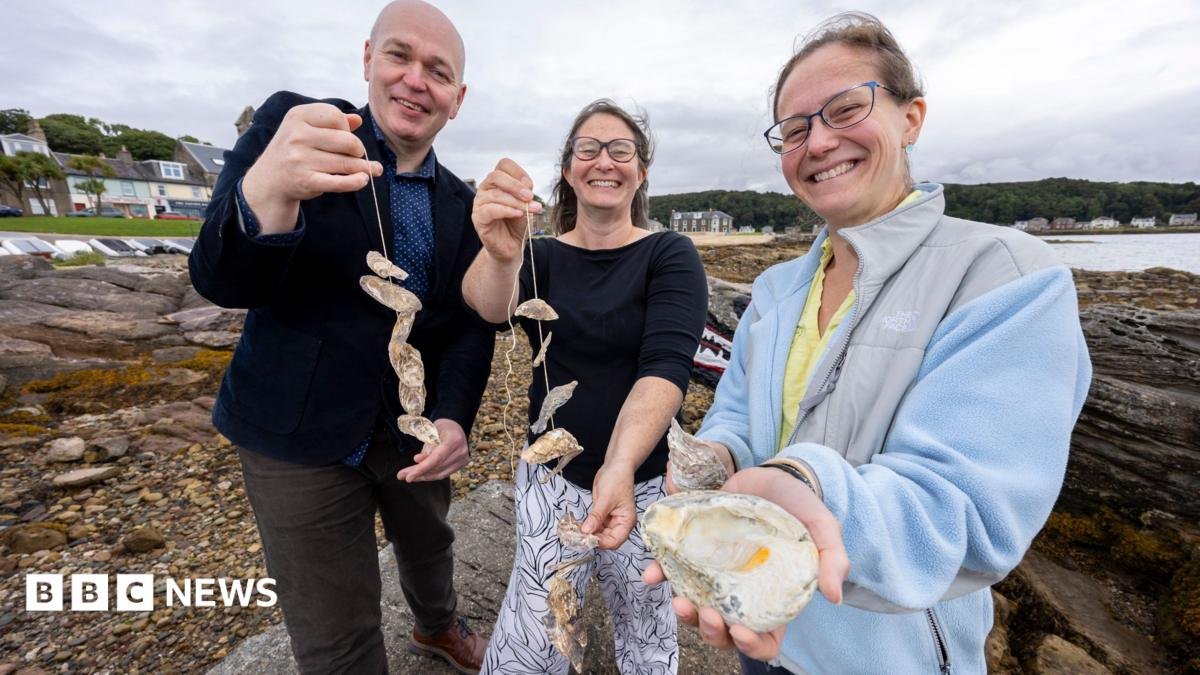
Dr McGregor hopes the team can build on their findings through continued work with local communities in Islay and Mull, alongside oyster bed restoration and protection work in key areas.
The research team will now trial the feasibility of a mobile oyster hatchery, in the hope it could both supply oyster larvae to coastal communities and help rebuild oyster beds in various areas.
The first mobile hatchery is being trialled in Millport, with plans to trial more in the future.
Dr McGregor said: “What we are hopping is to connect knowledge of the past, where shellfish was an important part of people’s diets, to future improvement.
“We want to look where shellfish used to be, where communities had a connection with them, and develop that again.
“A small scale hatchery like this [on Millport] can be sustainable on an island, and really help people to connect with them.
“Seeing oysters life cycle can help people understand why it’s important to keep them in the wild, and then get the numbers back up to levels where we can harvest them for lots of purposes.”
The Native Oyster Restoration Alliance – NORA – coordinates projects across Europe to enhance the restoration of flat oyster reefs.
Hein Sas, the secretary of NORA, said: “The Eisirean project can serve as an example for other projects on how cultural heritage can help to identify suitable restoration sites.”


