



Ghaziabad: A study commissioned by Ghaziabad Municipal Corporation has found that Loni recorded significantly higher pollution levels than areas monitored by the civic body through 2025-26, with officials saying the township is driving up the city’s overall air quality readings.The report analysed PM2.5 and PM10 concentrations — inhalable particles such as vehicle exhaust, smoke, dust, mould and industrial emissions that can penetrate deep into the lungs and enter the bloodstream — recorded across four Continuous Ambient Air Quality Monitoring Stations (CAQMS) in Ghaziabad during the year and compared air quality within GMC areas against Loni Nagar Palika.Loni recorded PM2.5 concentrations 33% higher than the average of GMC monitoring stations through 2025-26, while PM10 levels were 18% higher, the study showed. Loni’s average PM10 concentration in 2025 stood at 213.63 micrograms per cubic metre (µg/m³), against an average of 181.21 across the city’s three other monitoring stations at Vasundhara, Indirapuram and Sanjay Nagar. On PM2.5, Loni recorded an annual average of 114.25 compared with 85.80 for the rest of the city.Under India’s National Ambient Air Quality Standards (NAAQS), the annual permissible limits are 40 µg/m³ for PM2.5 and 60 µg/m³ for PM10.The study recommended that GMC and Loni Nagar Palika be evaluated separately, with targeted interventions for a more accurate assessment of air quality performance.According to Swiss company IQAir’s April 2026 report, Loni had ranked as the most polluted city in the world with an average PM2.5 concentration of 112.5 last year — 22 times World Health Organization’s safe limit.Environmentalist Sushil Raghav said meteorological factors alone did not explain Loni’s pollution levels, pointing to illegal units across the township engaged in retrieving e-waste and metals. “It is not that it happens only during winter. It happens all year, but it was only that the problem of pollution aggravates during winter,” Raghav said.
Several illegal metal extraction units were sealed in Loni in March
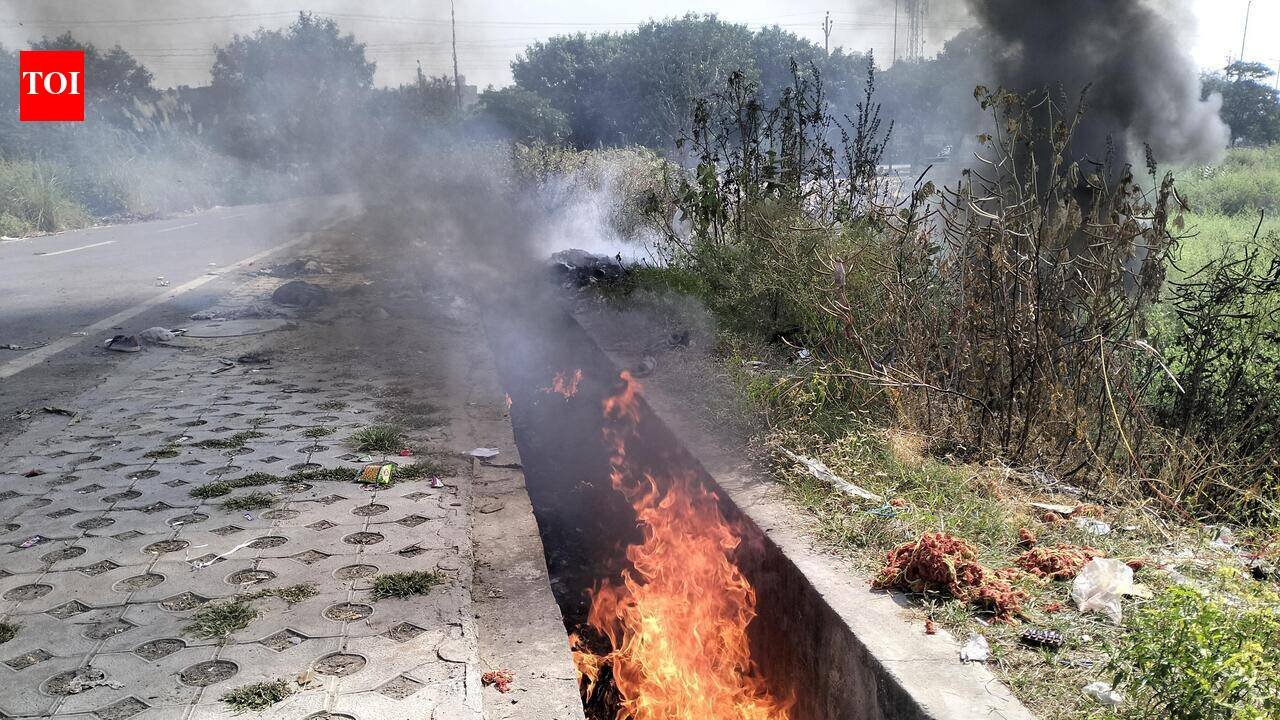
Raghav alleged that tonnes of e-waste were transported from across Delhi to Loni given its proximity, with metals extracted at night by heating chemical-filled drums in pit furnaces. “The toxic fumes generated in the process get mixed with air, resulting in a sudden spike in PM10 and PM2.5 pollutants in the vicinity and it all happens in connivance with the officials,” he said.An estimated 1,000-plus illegal units are believed to be operating in Loni, in areas including Amit Vihar, Krishna Vihar, Ankit Vihar and Sewa Dham.Open garbage burning, rampant across Loni, also pushes particulate matter levels up by releasing dense smoke, toxic soot and hazardous chemicals directly into the air, say experts.


