



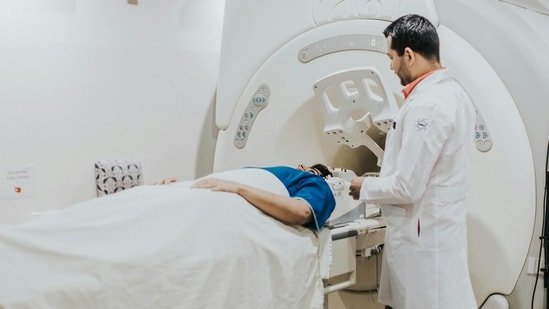
MRI, short for magnetic resonance imaging, is a non-invasive imaging technique that has become a popular diagnostic tool. However, according to Dr Vassily Eliopoulos, a longevity expert trained at Cornell University and co-founder and chief medical officer of Longevity Health, a full-body MRI should also be a part of the regular medical check-up, especially for individuals at an advanced age.


Also Read | Wellness coach shares 7-day summer diet plan to lose weight: From Monday to Sunday, here’s what to eat
Taking to Instagram on March 31, Dr Vass argued that most people discover something is wrong with their health after they feel it. By that time, the disease could have been growing for years. A full-body MRI can help detect even before symptoms appear, and thus allow for treatment to be started early.
What is a full-body MRI?
“A full-body MRI is a head-to-toe scan that creates detailed images of your organs, tissues, vasculature, and structures, without radiation,” shared Dr Vass. “It takes 60 to 90 minutes. It requires no surgery, no contrast dye in most cases, no recovery time.”
The importance of a full-body MRI is that it can detect conditions that can remain completely hidden in a regular physical examination. Some of these conditions are highly treatable when diagnosed in early stages, and can be extremely dangerous if caught late.
A single full-body MRI scan can help detect the following conditions:
- Early-stage cancers, lung, kidney, liver, prostate
- Cardiovascular abnormalities: arterial plaque, aneurysms, structural heart issues
- Brain changes: white matter lesions, early neurodegeneration markers, silent strokes
- Organ health: liver fibrosis, adrenal abnormalities, early kidney disease
- Spinal and structural issues that explain chronic pain or performance decline
“These aren’t rare findings. In high-performing men over 40, incidental findings are more common than most people expect,” noted the physician.
Why should one not wait for symptoms to get full-body MRI?
“The most treatable version of almost any disease is the one you find before it has symptoms,” highlighted Dr Vass. For instance, when kidney cancer is diagnosed at Stage 1, the five-year survival rate of the patient is over 90 percent. However, when diagnosed at Stage 4, the survival rate drops to below 15 percent.
Dr Vass explained that getting a full-body MRI is not about being anxious; it is simply gathering data. It allows healthcare providers to get a complete picture of one’s health rather than some snapshots. It is important for those above the age of 40 to get the imaging done before the window closes on early intervention.
“The scan is only as valuable as what you do with it. A finding without a clinical context is just anxiety,” cautioned Dr Vass. “What matters is having a physician who can interpret results in the context of your full biomarker picture, your inflammatory load, metabolic health, hormones, and genetic risk and build a protocol around what they see. That’s the difference between a scan and a strategy.”
Note to readers: This article is for informational purposes only and not a substitute for professional medical advice. Always seek the advice of your doctor with any questions about a medical condition.
This report is based on user-generated content from social media. HT.com has not independently verified the claims and does not endorse them.


