



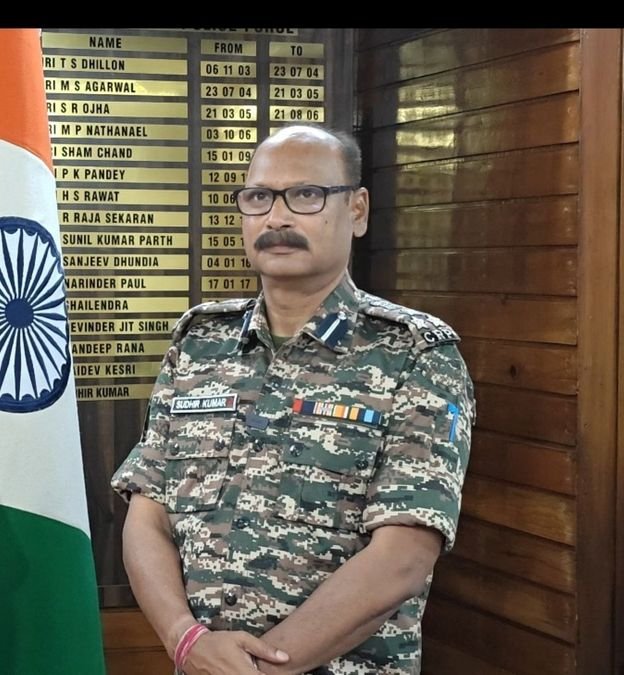
Technology, trained MRTs, strategic deployment form tight security grid at Baltal: DIG Sudhir Kumar
Says Security, natural & logistical challenges being tackled professionally
Srinagar, June 29: As the annual Shri Amarnath Ji Yatra inches closer, Deputy Inspector General (DIG) CRPF Sudhir Kumar, who is also the nodal officer for Baltal base camp, Monday said that local support was the backbone for the successful pilgrimage.
In an exclusive interview with Rising Kashmir, Kumar, who is handling the responsibility for the third consecutive year, said that all arrangements have been made while keeping every possible challenge in view. The annual pilgrimage is all set to take off on July 3.
Kumar, who is the DIG CRPF (north Srinagar) said the Yatra mainly faces three key challenges — security challenges, natural challenges and logistical challenges — but added that all stakeholders are working in close coordination to deal with them professionally.
“All stakeholders have ensured that all these challenges are met professionally, keeping all angles in view. This time, we are relying more on technology and latest gadgets so that yatris come and go peacefully,” he said.
Asked about his role as nodal officer for the third straight year at Baltal base camp, DIG Kumar said vigilance and preparedness remain the top priority.
“Vigil is being given top priority and I would not like to go into details this time,” he said, while indicating that multi-layer security arrangements are firmly in place.
To tackle emergencies caused by difficult terrain and unpredictable weather conditions, Mountain Rescue Teams (MRTs) have been deployed at base camps and other strategic locations along the route.
DIG Sudhir Kumar said that this year the MRTs have been equipped with the latest gadgets and modern rescue equipment to ensure timely response during emergencies arising out of natural and geographical challenges.
“This time CRPF teams in MRTs are more trained compared to previous years,” he said.
He further stated that each MRT includes at least one experienced team leader with expertise in capacity building and rescue operations to strengthen emergency response during the pilgrimage.
“At least one team leader with vast experience in capacity building and rescue is part of the MRTs,” he said.
The DIG said contingency plans have also been put in place to handle emergencies effectively, with ambulances, oxygen support systems and first aid medicines kept readily available for pilgrims.
“About natural calamities, MRTs are meant to deal with such situations and this time they have been deployed at strategic locations to meet the possible challenges,” he added.
When asked whether there were any inputs regarding possible security threats, the DIG said threats are always present during high-profile events, but security forces are fully prepared to counter them.
“Threats are always there during high-profile events and CRPF along with J&K Police and other security agencies are always ready to deal with such threats,” he said.
Highlighting the role of people in making the Yatra successful, the CRPF officer said local cooperation remains one of the most important pillars of the annual pilgrimage.
“Without local support, Yatra is not possible. Local support is of highest importance for successful pilgrimage,” he said. The officer expressed confidence that with coordinated efforts, advanced technology, trained rescue teams and strong local support, this year’s Amarnath Yatra through the Baltal route will be conducted peacefully and smoothly.


