



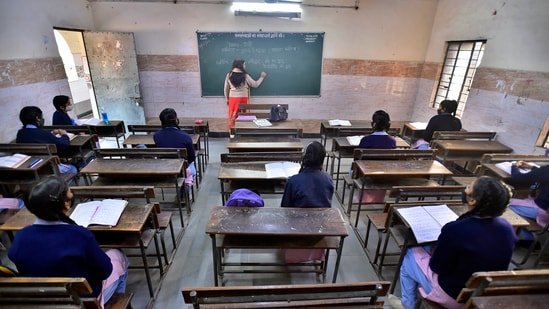
Teacher preparedness is increasingly recognised as the most influential in-school determinant of learning outcomes. In India’s large and diverse education system, sustained improvements in quality and equity require institutionalised mechanisms that strengthen teacher capacity, align leadership structures, and embed responsible data use.


India’s school education system serves over 250 million students across diverse geographic, socio-economic, and linguistic contexts, as reported by UDISE+ 2022–23. While access has expanded substantially over the past decades, quality and equity gaps remain persistent.
National learning assessments and independent surveys continue to report foundational literacy and numeracy gaps in early grades. These outcomes reflect not only curriculum and assessment challenges, but also structural issues related to instructional quality and teacher preparedness.
Significant variation in infrastructure, teacher availability, and professional development persists across states and districts. Multi-grade classrooms and single-teacher schools continue to operate in certain regions, creating uneven instructional conditions. In such a system, reform efforts must move beyond infrastructure expansion toward strengthening the professional ecosystem that supports teachers.
Education policy analyses across multiple systems demonstrate that improvements in instructional quality yield stronger learning gains than isolated investments in infrastructure or administrative reform.
India’s National Education Policy 2020 recognises this reality by prioritising continuous professional development, competency-based curricula, digital integration, and inclusive pedagogical practices. However, translating these priorities into operational frameworks requires institutional coherence.
Teacher preparedness should, therefore, be conceptualised as a system-level reform priority rather than an individual capability issue. It must integrate professional learning, leadership alignment, and data systems within a coherent framework.
Professional development in many systems has historically relied on workshop-based delivery with limited follow-up. Evidence from large-scale international teaching and learning surveys suggests that stand-alone training events produce limited sustained impact unless embedded within ongoing professional learning structures.
A reform-oriented model of teacher preparedness must incorporate:
- Curriculum-aligned micro-learning modules
- Structured peer learning communities
- Instructional coaching mechanisms
- Technology-assisted instructional support
Education technology studies indicate that platforms designed to enhance instructional practice are more effective when they reinforce teacher agency and classroom application rather than focus primarily on compliance or monitoring.
For large systems such as India’s, digital enablement offers scalability. However, equitable design remains essential. Offline access, vernacular content, and low-bandwidth functionality are critical to ensure inclusion in resource-constrained settings.
Continuous professional development must become institutionalised rather than episodic.
In-service reform cannot compensate indefinitely for weaknesses in pre-service preparation. Reviews of teacher education institutions indicate variability in programme quality, particularly in integrating theory with clinical practice.
International evidence demonstrates that teacher preparation programmes incorporating extended internships, structured mentorship, and supervised teaching practice significantly improve early-career effectiveness and retention. These concepts are part of our policy but need to be implemented uniformly across all teacher education institutes in the country.
The four-year integrated teacher education programme (ITEP) introduced under NEP 2020 reflects a structural response to these challenges. However, policy success will depend on:
- Institutional capacity-building
- Faculty development
- Standardised practicum frameworks
- Strong school–institution partnerships
Strengthening the pre-service pipeline reduces the long-term burden on in-service corrective training and enhances system stability. However, to make the ITEP effective, we need to reflect on several questions like, how will ITEP manage its operationalisation while ensuring the quality of the program for all the students opting for foundational classes to secondary classes? Should we look at the continuation of D.El.Ed, which is implemented by the DIETs to train pre-service teachers up to preparatory classes?
Large education systems require robust data to inform policy design and implementation. National and state-level assessments provide insights into learning progression and subject proficiency trends. When interpreted constructively, such data can guide targeted teacher support initiatives.
For instance, district-level identification of recurring literacy or numeracy gaps can inform focused instructional coaching or curriculum reinforcement strategies. International policy analyses consistently indicate that accountability frameworks are most effective when integrated with structured professional development rather than punitive oversight mechanisms.
To serve reform objectives, data systems must:
- Function as diagnostic tools
- Inform professional development design
- Support leadership decision-making
- Build trust through transparency and responsible use
Data use should strengthen professional practice, not undermine teacher confidence.
Research across education systems identifies leadership quality as one of the strongest school-level influences on student outcomes after classroom instruction. School heads and district administrators play a pivotal role in translating policy directives into classroom realities.
A multi-level reform agenda must include structured leadership development focused on:
- Instructional leadership
- Evidence-based decision-making
- Collaborative professional cultures
- Resource alignment
The policy-to-practice gap often reflects operational and managerial constraints rather than conceptual disagreements. Strengthening leadership capacity enhances coherence and continuity in reform implementation.
The focus on strengthening SCERT is a welcome step. However, the success of this initiative depends on establishing a cadre for SCERT and DIET faculty to ensure institutional stability and academic support for teachers in the public education system.
Given the scale and diversity of India’s education ecosystem, multi-stakeholder collaboration is essential. Strategic corporate social responsibility initiatives can support reform by piloting scalable models, strengthening institutional capacity, and aligning with national priorities.
Evidence from public-private partnership models suggests that sustainability improves when initiatives integrate within existing governance structures rather than operate independently. Effective partnerships combine digital infrastructure, professional development, monitoring systems, and policy alignment.
The objective should be institutionalisation and replicability rather than isolated demonstration projects.
Teacher preparedness must be understood as a multi-level, multi-dimensional reform agenda encompassing:
- Continuous in-service professional development
- Strengthened pre-service preparation
- Leadership capacity-building
- SCERT and DIET cadre support system development
- Responsible and diagnostic data systems
- Protection of instructional time through reduced non-teaching assignments
These components are interdependent. When aligned, they create reinforcing conditions for system-wide improvement.
Encouragingly, several states have begun to recognise that protecting instructional time is foundational to improving learning outcomes. Governments in states such as Haryana, Andhra Pradesh, Punjab, Bihar and Gujarat have issued directives to reduce or regulate non-academic duties assigned to teachers. These measures reaffirm the spirit of Section 27 of the Right of Children to Free and Compulsory Education Act, which limits deployment of teachers for non-educational purposes.
Such decisions represent an important structural shift. By relieving teachers from routine clerical and administrative assignments, states are enabling them to focus on lesson planning, assessment, student engagement and professional growth. This alignment strengthens the returns on investments already being made in curriculum reform, digital platforms and teacher training.
Infrastructure expansion and curriculum reform will continue to evolve. However, durable improvements in learning outcomes depend on institutional arrangements that allow teachers to operate effectively within diverse classroom contexts. When instructional time is protected and supported by strong academic leadership and data-informed planning, classroom practice becomes more consistent and purposeful.
India’s education system has achieved significant expansion in access. The emerging reform focus on quality and equity is now being matched by policies that strengthen the professional environment in which teachers work. Teacher preparedness, supported by institutional clarity and reduced administrative diversion, represents a reliable and scalable pathway toward improved outcomes.
A coherent reform agenda that integrates leadership development, continuous professional learning, data-driven systems, strengthened pre-service education, and protected classroom time can bridge the gap between policy intent and classroom practice.
In systems of this scale, coordinated and sustained measures are essential. Institutionalised, multi-level support for teachers is steadily becoming central to education reform strategy.
Through such integrated and solution-oriented approaches, policy commitments can translate into measurable and sustained improvements in learning outcomes.
This article is authored by Antony Nellissery, head, Sterlite EdIndia Foundation.


