






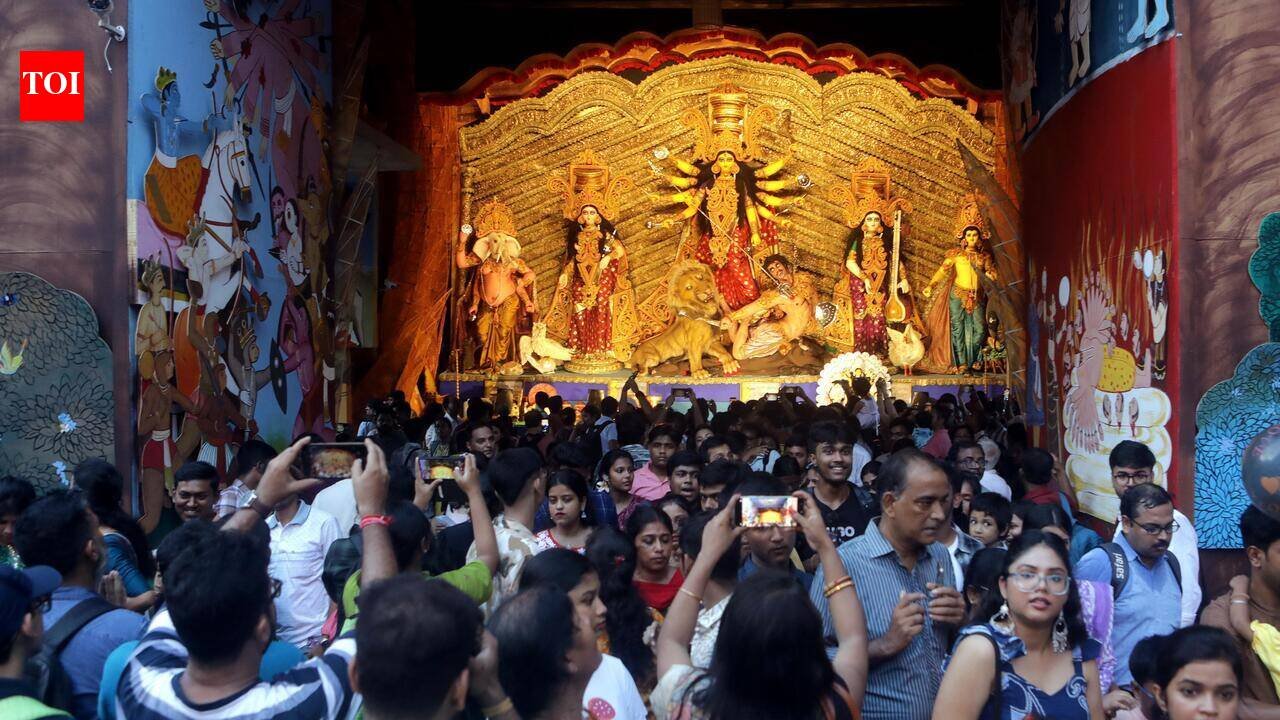
Kolkata: Common people, including members of prominent Kolkata families and Durga Puja organisers, are often more interested than priests in understanding the intricacies of Durga Puja and the significance of its rituals and ‘mantras’, said Jayanta Kushary, principal of the Sarva Bharatiya Prachya Vidya Academy, which conducts an annual ritual training workshop ahead of the festival.The 40th edition of the workshop, in which training is imparted on puja procedures, ‘shlokas’ and festival customs, will be held at Sovabazar Rajbari from Sept 7 to 14.“Emphasis will be laid on the ideal code of conduct during the puja for both priests and devotees. Next, we will discuss the meaning of the puja. It is not about throwing flowers at the Goddess and making the place of worship dirty. Then comes the conduct of the puja: the rituals of ‘Mahasnan’, ‘Mahapuja’, ‘Balidaan’ and ‘Hom’,” Kushary said. The correct utterance of ‘shlokas’ and ‘mantras’ is emphasised upon, he added.“Durga Puja is pouranik, or based on mythology. Brihannandikeswar Puran and Debi Puran are used for the worship of goddess Durga. Kalka Puran is used for worshipping goddess Chamunda during Sandhi Puja. Chandipath is based on Markandeya Puran,” he said.Kushary said Durga Puja had been governed by three separate ritual traditions followed in different regions. In West Bengal and Bangladesh, the puja follows Durgotsav Tatwa.In Mithila, covering parts of Bihar and Jharkhand, it follows Durgabhakti Tarangini, while the rest of India follows Durgotsav Bibek.“There are subtle differences in the practices. Dakshinanta, or payment of remuneration, is made after Nabami puja in Bengal. In other two traditions, it is performed on Dashami,” Kushary said.


