



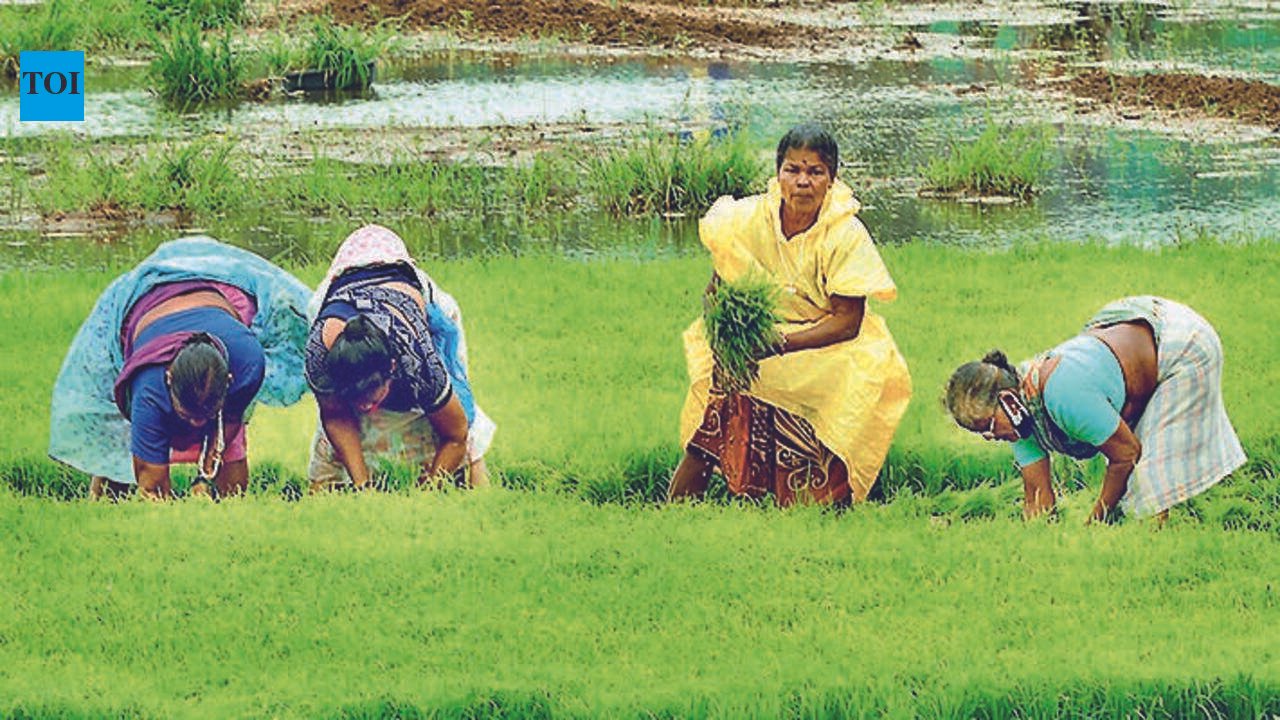
Pune: The southwest monsoon’s delayed arrival has significantly slowed paddy transplantation across Pune district this kharif season, with barely 7,000 hectares of the district’s average paddy area of around 61,000 hectares brought under cultivation, so far.Over 40,000 hectares had already been transplanted during the corresponding period last year, showing the impact of a weak start to the monsoon, this year.However, district agriculture officials remained optimistic that the gap would narrow in the coming weeks with rainfall picking up in major paddy-growing regions. They expected transplantation to gather momentum through Aug and reach the district’s normal acreage, eventually.Paddy is cultivated extensively in the tehsils of Bhor, Velhe, Mulshi, Maval, Khed, Ambegaon and Junnar — where thousands of farming families depend on the crop as their primary source of livelihood in the district’s hilly and tribal regions. Limited irrigation facilities make rice the only viable crop in the area during the monsoon.District agriculture officer Sanjay Kachole said the recent rainfall had changed the situation. “The rainfall received during the first week of July and again over the last few days has been conducive for transplantation. The activity is in full swing now. Though the corresponding figure is much lower than last year, it is not a cause for concern. We are confident of achieving the district’s average paddy area by the end of Aug,” Kachole told TOI.Improved weather has encouraged farmers to begin the activity in earnest. They said timely rainfall over the next few weeks would determine productivity and grain quality. “We had prepared the nursery on time, but the rains did not arrive. The seedlings were ready, but we had to wait for enough water in the fields before transplanting. We have resumed work now that the rains are steady. If the monsoon remains active through Aug, we can still expect a good harvest,” said Satish Zambre, a farmer of Mulshi.Another grower from Bhor said rain delay had increased labour costs and extended the farming calendar.“Every week of delay raises uncertainty. Labour becomes more expensive and the entire crop schedule gets pushed back. We are still hopeful because the recent rainfall has created the right conditions for transplantation,” said farmer Sandeep Jadhav.Strong rice ecosystemAgriculture experts and officials said Pune’s rice economy had undergone a significant transformation over the last decade, driven by the growing popularity of premium local varieties like Indrayani. The aromatic rice has built a strong consumer base in Maharashtra and neighbouring states, encouraging farmers to continue cultivating paddy despite erratic weather.“Certain local varieties, especially Indrayani, have established a strong market. Farmers receive better returns now than they did a few years ago. Therefore, this season is economically important for growers. Many farmers are also adopting improved cultivation practices to enhance productivity. A strong local ecosystem involving growers, traders and consumers has developed around paddy cultivation in the district,” said district agriculture officer Sanjay Kachole.Typically, farmers cultivating Indrayani earn between Rs30,000 and Rs50,000 per acre, depending on yield and grain quality — making the crop one of the most remunerative options in the rain-fed hilly belt.Tribal activist Budhajj Damse of Ambegaon said the crop remained indispensable to tribal communities. “Rice is mainly cultivated in the hilly areas of Pune district, where a majority of farmers belong to tribal communities. Therefore, for many families, paddy is the only crop they grow throughout the year because they do not have irrigation facilities to cultivate any other crop. A good monsoon directly determines their annual income and food security,” Damse said.With the monsoon finally gaining strength, farmers and officials are hoping that the delayed start wold not translate into lower production, allowing Pune’s paddy belt to recover before the transplantation window closes in Aug-end.


