



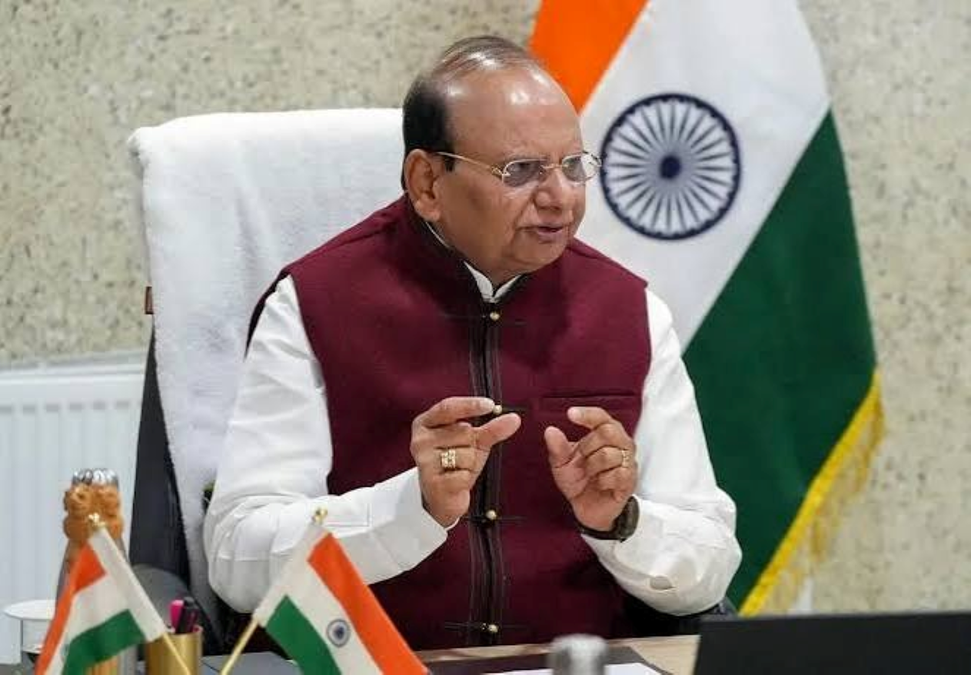
Leh, August 28: Lieutenant Governor of Ladakh Vinai Kumar Saxena, has directed the administration to adopt a “zero tolerance” approach towards food safety violations across the Union Territory, warning food business operators that any compromise with hygiene, quality and statutory food safety standards will invite stringent action under law.
The directive, aimed at safeguarding public health and ensuring that food available to consumers in Ladakh is safe and wholesome, comes with a stern warning to nearly 8,800 Food Business Operators (FBOs) registered in the UT. Violations can attract penalties ranging from ₹1 lakh to ₹10 lakh, while serious offences involving unsafe or adulterated food may also lead to imprisonment.
The UT Administration has issued a detailed circular on the directions of the Lieutenant Governor, making strict compliance with the Food Safety and Standards Act, 2006 mandatory for all FBOs operating in Ladakh.
The administration has made it clear that food manufactured, processed, stored, transported, distributed or sold in Ladakh must be safe, wholesome and compliant with prescribed food safety standards.
At present, Ladakh has 428 FSSAI licence holders and 8,355 FSSAI registration holders, taking the total number of registered food business operators to 8,783.
The Food Safety Department has been directed to ensure continuous compliance by FBOs with statutory food safety, hygiene, sanitation and FSSAI licensing requirements. The department has also been asked to initiate stringent legal action wherever violations are detected.
“All food business operators, including restaurants, hotels and eateries, shall ensure that food offered to consumers is safe and conforms to the prescribed standards,” the administration has directed.
Food operators have been specifically prohibited from manufacturing, storing or selling food that is unsafe, sub-standard, misbranded, adulterated, contaminated or beyond its shelf life/expiry date.
Emphasising the importance of food safety, Lieutenant Governor Vinai Kumar Saxena said the issue goes beyond regulatory compliance and is directly linked to the health and well-being of citizens.
Selling food that is not of the nature, substance or quality demanded can attract a penalty of up to ₹5 lakh, while sub-standard food can invite a penalty of up to ₹5 lakh. Misbranded food may attract a penalty of up to ₹3 lakh, along with corrective measures or directions for destruction wherever applicable.
Misleading advertisements can attract a penalty of up to ₹10 lakh, while food containing extraneous matter can invite a penalty of up to ₹1 lakh.
Failure to comply with directions issued by a Food Safety Officer may attract a penalty of up to ₹2 lakh, while unhygienic or unsanitary processing or manufacturing can result in a penalty of up to ₹1 lakh.
Possession of adulterants can attract a penalty of up to ₹2 lakh where the adulterant is not injurious to health and up to ₹10 lakh where it is injurious to health.
Contraventions for which no specific penalty is prescribed can attract a penalty of up to ₹2 lakh.
The administration has issued a particularly strong warning against the manufacture, storage, sale or distribution of unsafe food. Such violations can result in imprisonment and fines, depending on whether the offence causes injury, grievous injury or death.
Interfering with seized food or other seized items can attract imprisonment of up to six months and a fine of up to ₹2 lakh.
Furnishing false information can invite a penalty of up to ₹10 lakh, while obstructing, impersonating, threatening or assaulting a Food Safety Officer can result in imprisonment of up to three months and a fine of up to ₹1 lakh.
Carrying out a food business without the required licence can attract a penalty of up to ₹10 lakh.


