


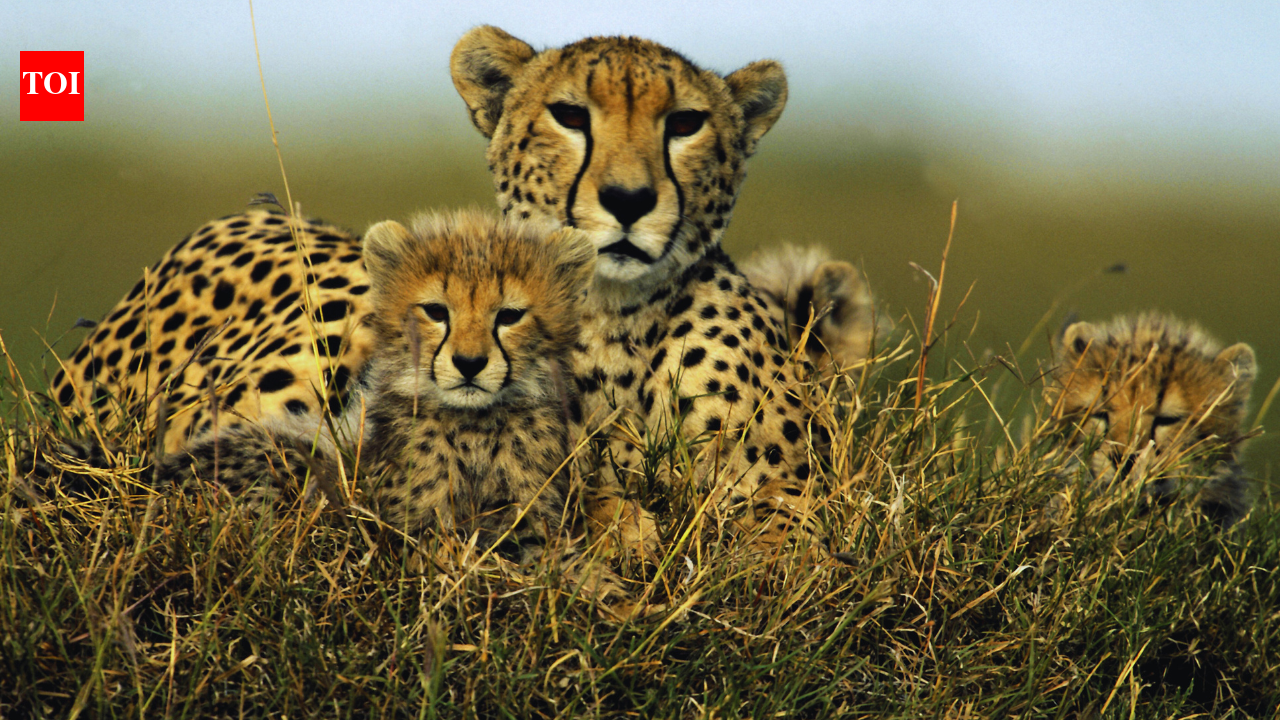
Kuno National Park, formerly known as Kuno Palpur Wildlife Sanctuary, is spread across the Sheopur and Shivpuri districts of Madhya Pradesh, covering nearly 74,200 hectares of varied terrain. The park takes its name from the winding Kuno River that flows through the landscape, sustaining its forests and grasslands. It’s now one of those places in the country where the history is being rewritten, and where cheetahs are thriving once again. If you’re planning a trip here in 2026, you aren’t just booking a safari, you will be stepping into one of the most ambitious conservation experiments in modern India.
A park where history is being rewritten
Kuno lies in the Sheopur district of Madhya Pradesh, a mosaic of dry deciduous forests, open grasslands and riverine stretches shaped by the Kuno River. Unlike India’s dense tiger reserves, Kuno feels open and airy, a landscape built for speed. India lost its last wild cheetahs in 1952. For decades, the species existed only in history books. That changed when cheetahs were translocated from Namibia and South Africa under a conservation programme nurtured under the leadership of Prime Minister Narendra Modi. The goal: reintroduce the species to suitable Indian grasslands and restore a missing ecological link. The early years saw challenges, health setbacks, adaptation struggles, and intense monitoring. But in 2026, Kuno is witnessing something far more encouraging, stable breeding.
The big news: Successful litters
On February 18, 2026, Madhya Pradesh Chief Minister Mohan Yadav announced that a South African cheetah named Gamini had given birth to three cubs inside Kuno. With this, India’s total cheetah population has reached 38. Just days earlier, on February 7, 2026, Aasha, a Namibian cheetah and now a proud second-time mother, delivered five cubs. These births have pushed the number of Indian-born surviving cubs to 24. For conservationists, this isn’t just good news, it’s proof that the animals are adapting, breeding, and surviving in Indian conditions. For travellers, it means the park you visit today feels very different from the one that reopened with uncertainty just a few years ago. There is a sense of quiet optimism in the air.Read more: France announces visa-free transit and aims to welcome 30,000 Indian students by 2030
What a safari at Kuno feels like
A safari here is more about scanning the horizon. Cheetahs are known to move quickly, and this is often accompanied by their silhouette against the open landscape. Other animals you might come across include chital, nilgai, wild boar, langurs, and leopards, which are all a part of the environment that supports the reintroduced big cats.
When to visit
- Best time to visit: October to March
- Do not visit during: Peak summer months of April to June when the climate is hot
- Safari times: Early morning safaris are ideal for observing wildlife movement
- Access: Road travel from Gwalior or Shivpuri
- Stay options: Modest lodges and eco-resorts around Sheopur; infrastructure is growing but still limited
- Permits: Advance safari booking recommended
Because this is a sensitive conservation zone, regulations are strict. Off-route driving, loud disturbances, and crowding are not tolerated. The cheetah project is still fragile, and responsible tourism plays a critical role in its success.Read more: What’s it like to visit Jhalana Leopard Safari Park in Rajasthan?
Why Kuno matters now more than ever
The number 38 may not sound large in global wildlife terms. But when you remember that India had zero wild cheetahs for over seventy years, it becomes powerful. Twenty-four Indian-born surviving cubs. Two recent births in February 2026 alone — five from Aasha and three from Gamini. They are milestones in a comeback story that travellers can witness firsthand.


