


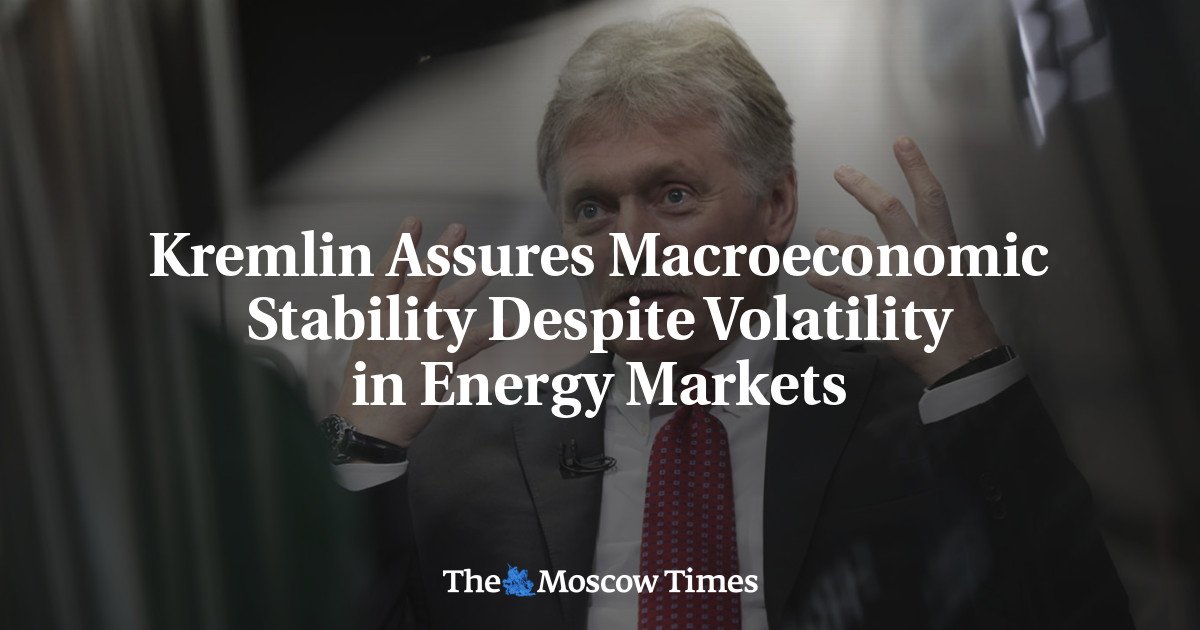
Kremlin spokesman Dmitry Peskov said Tuesday that Russia’s macroeconomic stability remains “absolutely secured,” even as volatility shakes global energy markets and the ongoing war against Ukraine strains the domestic economy.
“The stability of the Russian economy is secured, macroeconomic stability is absolutely secured, and this is not a matter of doubt for anyone,” Peskov told reporters during a daily press briefing.
“Yes, the situation in the global energy market is extremely volatile and impacts all countries, but at the same time, there is currently no reason to doubt our country’s macroeconomic stability,” he added.
Russia’s federal budget faces a revenue shortfall of 2.1 trillion rubles ($28 billion), driven by weaker corporate profits, falling crude prices and a stronger ruble.
While Moscow initially reaped windfalls from a surge in oil prices triggered by the war in Iran — when Russia’s benchmark Urals crude peaked at around $120 per barrel — the price has since tumbled to around $65 per barrel.
At the same time, surging state expenditures linked to the wartime economy have pushed the budget deficit past 6 trillion rubles ($80 billion) over the first five months of the year.
While acknowledging that shifting global energy prices directly pressure the Russian economy, Peskov claimed the country has undergone a structural shift away from absolute resource dependence.
“As for the strong volatility on oil markets, yes, it exists, and one way or another, it affects the entire world economy. It affects our economy too,” Peskov said. “However, while oil revenues certainly continue to make a significant contribution to our country’s budget, the share of non-oil and gas revenues is nevertheless growing.”
His comments come after Russia’s benchmark MOEX index fell more than 4% on Monday to hit its lowest level in more than three years, extending a 15-week decline.
The latest drop followed a modest Central Bank interest rate cut last week, which signaled that high borrowing costs will likely persist longer than investors had expected.
Inflation remains a concern for policymakers as Ukrainian drone attacks target Russian oil refineries and fuel supply networks, which has led to the introduction of fuel rationing measures across the country over the past month.
