






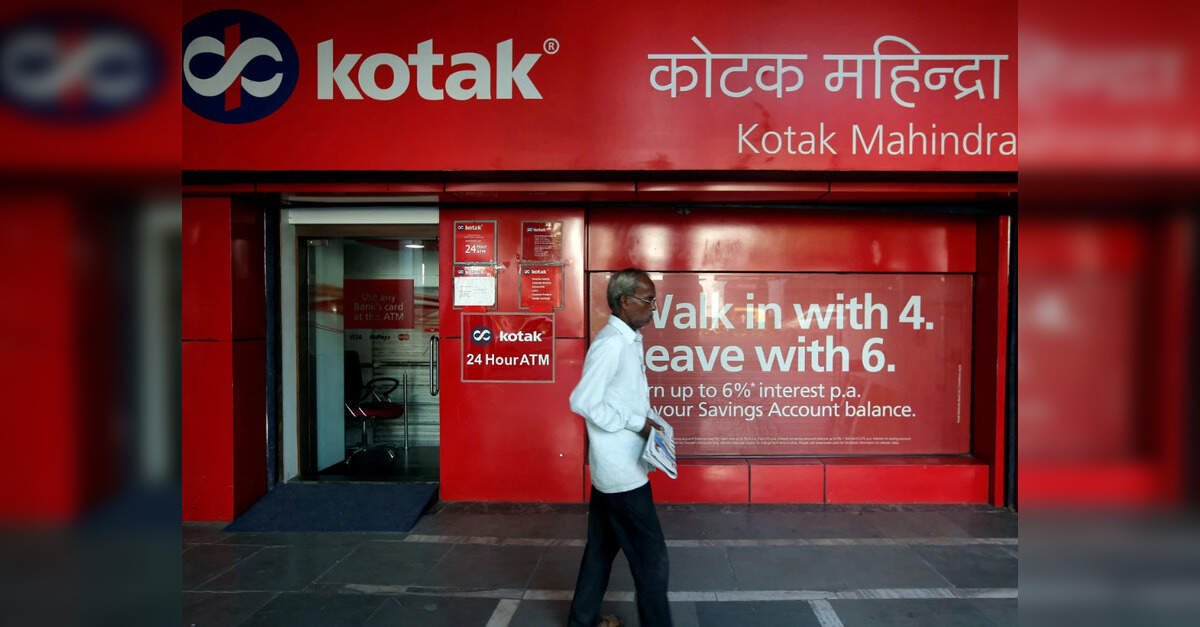
Mumbai: The National Company Law Tribunal (NCLT) has admitted Kotak Mahindra Bank‘s insolvency petition against Unity Realty and Developers over a claimed default of ₹68.49 crore, paving the way for initiation of the corporate insolvency resolution process (CIRP) against the Mumbai-based real estate company.
The Mumbai bench of the tribunal, in an order pronounced on September 22, admitted the petition filed under Section 7 of the Insolvency and Bankruptcy Code (IBC) on February 25.
Also Read: Corporate stress remains benign despite IBC delays and deep haircuts: Kotak
The financial creditor had claimed the amount in default as of August 31, 2025, with September 23, 2023, stated as the date of default. Unity Realty and Developers is a corporate guarantor for financial facilities availed by Unity Infraprojects, whose account had been classified as a non-performing asset on June 30, 2015.
The dispute relates to financial facilities originally sanctioned by ING Vysya Bank in 2008. Following financial difficulties faced by the principal borrower, a corporate debt restructuring package was approved in 2014 and restructured facilities aggregating to ₹31.78 crore were sanctioned in February 2015. Unity Realty and Developers had executed a corporate guarantee in relation to these facilities.
The guarantee was invoked by the bank in October 2019. The Debt Recovery Tribunal (DRT), Delhi, subsequently directed the defendants, including Unity Realty and Developers, to jointly and severally pay ₹39.45 crore, along with interest at 11% per annum. A recovery certificate issued in August 2023 quantified the liability at ₹55.94 crore, besides further interest and costs.
Unity Realty and Developers had opposed the insolvency petition, arguing, among other things, that the petition was barred by limitation since the guarantee had been invoked in 2019. It also questioned Kotak Mahindra Bank‘s right to initiate proceedings independently of the security trustee and raised objections concerning the restructuring documents and release of facilities.
The tribunal rejected these objections, noting that the DRT’s judgment and recovery certificate had not been challenged, stayed, modified or set aside. It held that the DRT judgment and recovery certificate provided a fresh cause of action and that the insolvency application filed in February this year was within the limitation period.
The NCLT also held that Unity Realty and Developers’ liability as a corporate guarantor could be proceeded against under Section 7 of the IBC. It said the financial creditor had established the existence of financial debt and default and that the petition satisfied the requirements of the IBC.


