



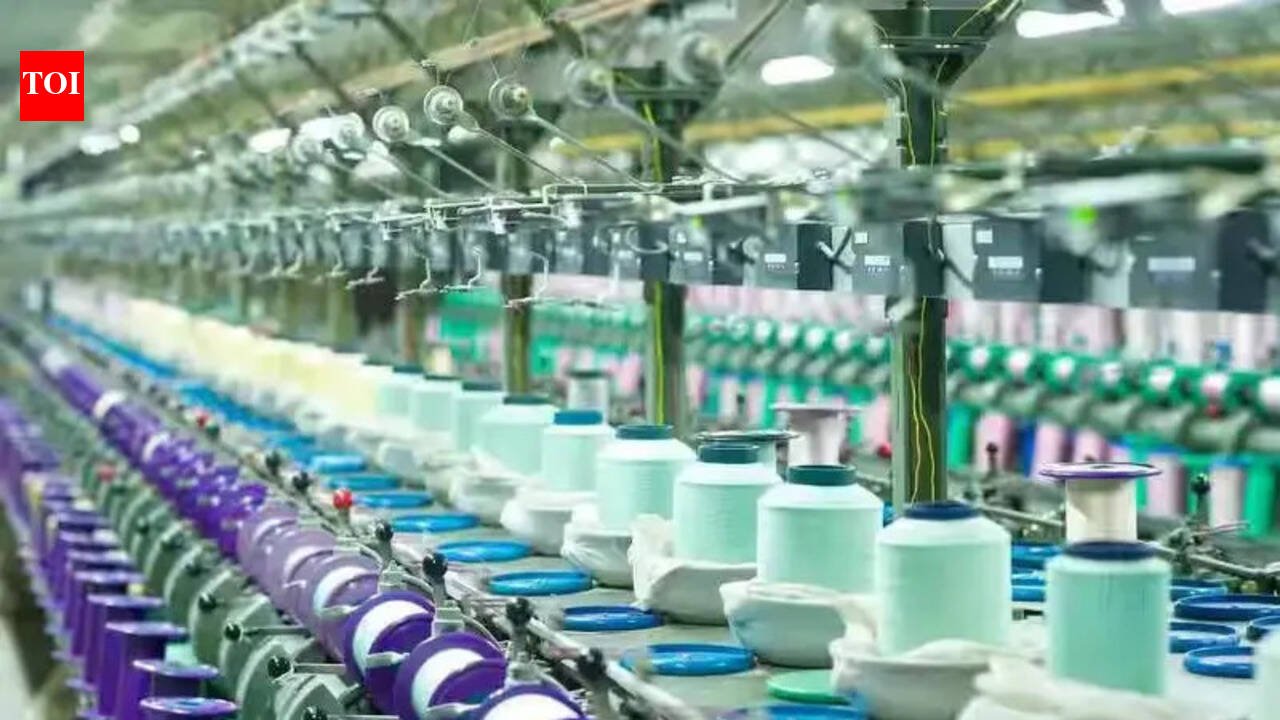
Ludhiana: Even as the ongoing LPG shortage has disrupted industries including the textile sector across several parts of the country, Ludhiana’s textile and hosiery sector has largely escaped a direct blow. This is owing to its limited dependence on LPG as a primary fuel. In key textile hubs such as Surat in Gujarat, where many units shifted to LPG, the shortage has forced production cuts and temporary shutdowns. In contrast, Ludhiana’s industry continues to operate with relative stability. Unlike other regions, most units in Ludhiana use rice husk, wheat husk, and pet coke in boilers for fabric treatment and dyeing processes. This diversified fuel mix has helped the industry avoid a direct crisis.The city’s textile, hosiery, and dyeing sector, comprising an estimated 1,500 units and employing approximately 4 to 5 lakh workers, has been buffered by its traditional reliance on alternative fuels for heating. Sudarshan Jain, president of the Knitwear and Apparel Manufacturers Association of Ludhiana, noted that the industry was saved from a head-on impact because units traditionally rely on agri-waste and other fuels for heating. Namit Aggarwal, a textile unit owner, added that while Gujarat units hit hard after shifting to LPG as a cleaner fuel, Ludhiana still depends on coal and agri-waste. Mridula Jain, president of the Shawl Club, stated that the industry remained cushioned by using wheat husk primarily.Bobby Jindal, a dyeing industry representative, highlighted that easy access to paddy husk and stubble in Punjab has protected operations, though one of his LPG-based units remained shut for a month and is now shifting to agri-waste. Despite avoiding a direct hit, leaders say multiple other challenges are weighing heavily. The West Asia conflict has caused indirect strain through cost pressures and global factors. With input costs rising, exports slowing, and labour becoming uncertain, the industry faces a challenging economic environment. Tarun Jain Bawa, President of Bahadur Ke Road Textile & Knitters Association, mentioned that the industry is under pressure due to the rising costs of fibers and yarns like polyester, acrylic, and cotton.Amit Jain, chairman of CII Punjab, highlighted that current stress is driven by expensive logistics, labour issues, and weak global demand rather than LPG. JP Singh, CMD of a manufacturing firm, noted that labour availability has emerged as a concern, with workers leaving due to the high price of cylinders. He instructed management to bear additional LPG costs to retain the workforce. A limited section of the sector using LPG for singeing—a process to prevent pilling—has faced disruption. While singeing is increasingly in demand, its overall use is comparatively low and remains almost entirely absent in most Ludhiana hosiery and dyeing units, allowing the broader sector to maintain operations amidst the national crisis.


