



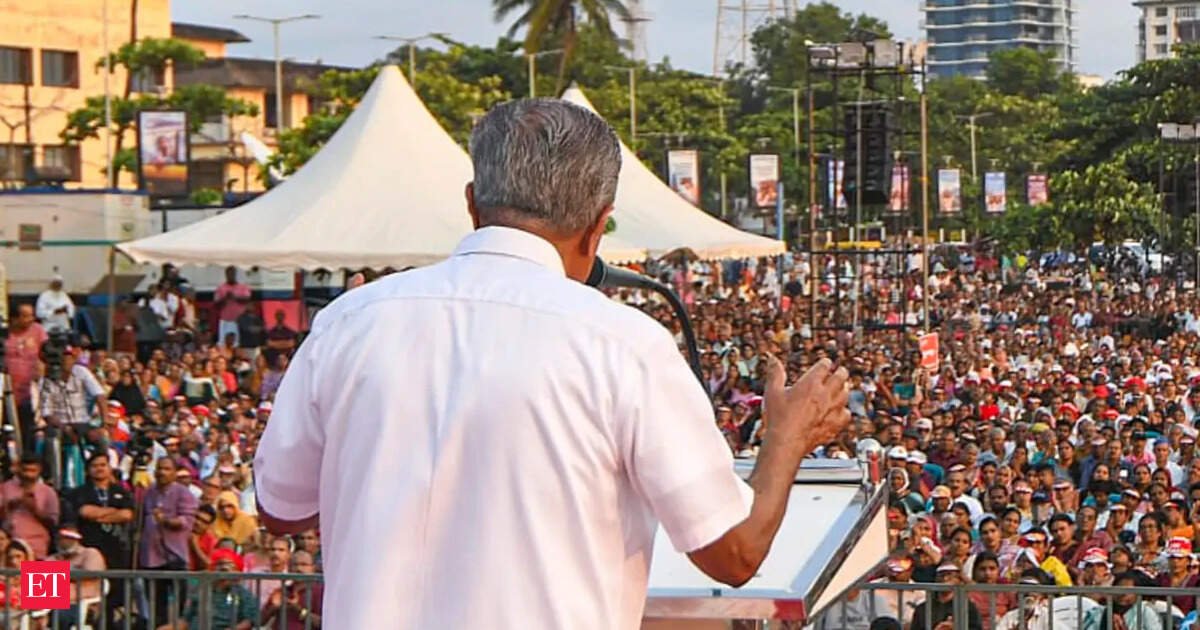
For decades, Kerala’s electoral rhythm has swung predictably between the LDF and the United Democratic Front (UDF). The LDF’s return to power in 2021 disrupted that pattern, raising expectations while placing Vijayan’s leadership under sharper scrutiny. As 2026 approaches, the central question is whether that break was a one-off shaped by extraordinary circumstances, or the beginning of a durable shift.
Anti-incumbency: Undercurrent turning visible?
Anti-incumbency in Kerala has always been difficult to measure—subtle, often invisible, yet decisive. Political commentator Roy Mathew describes it as an “undercurrent”, which may not always be visible but manifests itself decisively during polls.
This time, however, that undercurrent appears to be surfacing. The LDF’s setbacks in the 2024 Lok Sabha elections and the 2025 local body polls have been read as early warning signs. While not definitive predictors, they point to a growing unease among voters—less ideological and more rooted in governance concerns such as economic stress, delays in welfare delivery, and signs of administrative fatigue.
Leadership vs government: A personalised challenge
What distinguishes the current political moment is a perceptible shift from general anti-incumbency against the government to a more personalised critique of Vijayan’s leadership.
Signs of dissent within the Communist Party of India (Marxist) (CPM)—including rebel candidates and internal discontent—suggest friction within party ranks. Critics argue that perceptions of centralised decision-making, an assertive leadership style, and allegations of political arrogance have contributed to this sentiment.
The key question, then, is whether anti-incumbency in 2026 is directed primarily at Vijayan the leader, or at the broader performance of his government.
Economic strain and welfare pressures
Kerala’s fiscal stress is emerging as a central factor shaping voter sentiment. Welfare delivery has long been the cornerstone of the LDF’s political legitimacy, and any disruption—particularly delays in pension disbursal—directly impacts its core support base.
At the same time, agrarian distress and unemployment have beagun to chip away at the perception of administrative efficiency.
Political analyst and psephologist J Prabhash notes that the LDF now carries the weight of a decade in office. The relatively muted anti-incumbency in 2021, he suggests, was largely due to the extraordinary context of the pandemic. The current climate, in contrast, reflects broader and more tangible dissatisfaction cutting across social groups.
Perception gaps and cumulative fatigue
Recurring allegations of corruption and governance-related controversies have added to a narrative of disconnect between the ruling establishment and public sentiment. While no single issue may prove decisive, their cumulative impact has reinforced perceptions of fatigue within the system, Prabhash says.
The counter-narrative: The ‘Pinarayi model’
Despite these challenges, Vijayan continues to project confidence, seeking to frame the election around governance and development outcomes.Supporters argue that the “Pinarayi brand” remains intact. Political commentator Jacob George points to infrastructure and development milestones—such as the completion of the GAIL pipeline and progress on the Vizhinjam port—as evidence of strong, results-driven leadership.
Kerala 2026: Can Pinarayi Vijayan defy anti-incumbency and make the ‘Pinarayi model’ stick?
This narrative seeks to consolidate voter trust by emphasising continuity, administrative capability and long-term development gains.
A high-stakes political test
The 2026 election is unlikely to hinge on anti-incumbency alone. Instead, it is shaping into a layered contest where leadership perception, governance performance, internal party cohesion and opposition mobilisation will all play critical roles.
For the LDF and Vijayan, the challenge is to sustain credibility amid economic pressures and internal dissent. For the opposition, the task lies in converting emerging discontent into a cohesive and credible alternative.
Ultimately, the verdict will determine whether Kerala is witnessing the consolidation of a new political model centred on strong leadership—or a return to its long-standing cycle of alternation. (With inputs from Times of India)


