



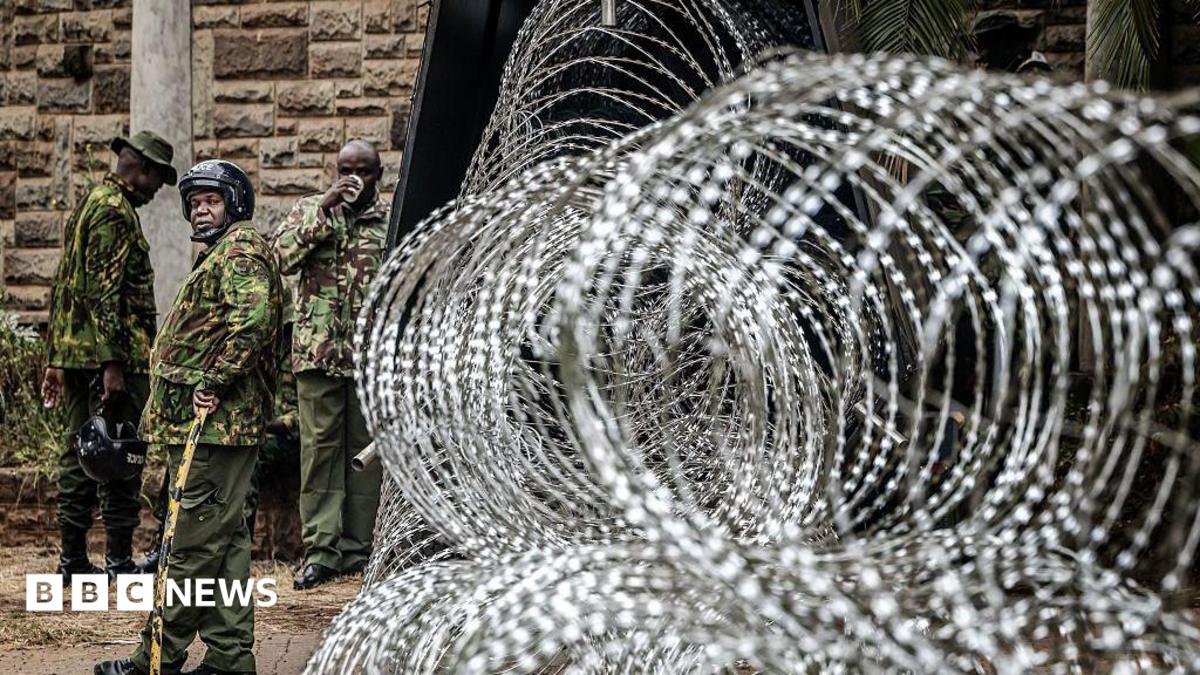
President William Ruto on Friday said people had a right to protest but warned that anyone “mobilised to destroy property or cause chaos” would not be tolerated.
Several political leaders, civil society groups, and human rights organisations have expressed support for peaceful demonstrations, describing them as part of the right to democratic expression protected under the country’s constitution.
Ruto’s former deputy Rigathi Gachagua, now a bitter rival, has urged Gen Z activists to stay away from the streets, citing concerns that the protests could turn violent. Instead, he has called on Kenyans to remain at home in a symbolic show of dissent.
Last week, President Ruto announced a fund of nearly $15m (£11m) to compensate nearly 2,000 victims of protest-related human rights abuses between 2017 and 2025 identified by rights groups.
Ruto said the compensation was not a “price for life, pain or loss” and should not be seen as rewarding violence or criminality.
However, human rights organisations have rejected the compensation plan, citing the exclusion of some victims, inadequate pay-outs and a lack of transparency.
President Ruto is facing growing public discontent ahead of the 2027 elections, with critics accusing his government of failing to deliver on key campaign promises.
He rejects those claims, insisting his administration has fulfilled most of its pledges and saying he is ready to defend its record as he seeks re-election.
In June 2024, thousands of Kenyans protested against proposed tax hikes, culminating in the storming of parliament and the eventual withdrawal of the controversial finance bill.
But the security forces were accused of using excessive force, with a BBC investigation finding that police had deliberately tried to kill protesters.
In the days that followed, dozens of people were reportedly abducted, allegedly by members of the security forces. Some were later found badly beaten, while others were found dead, fuelling concerns over enforced disappearances and extrajudicial killings.


