


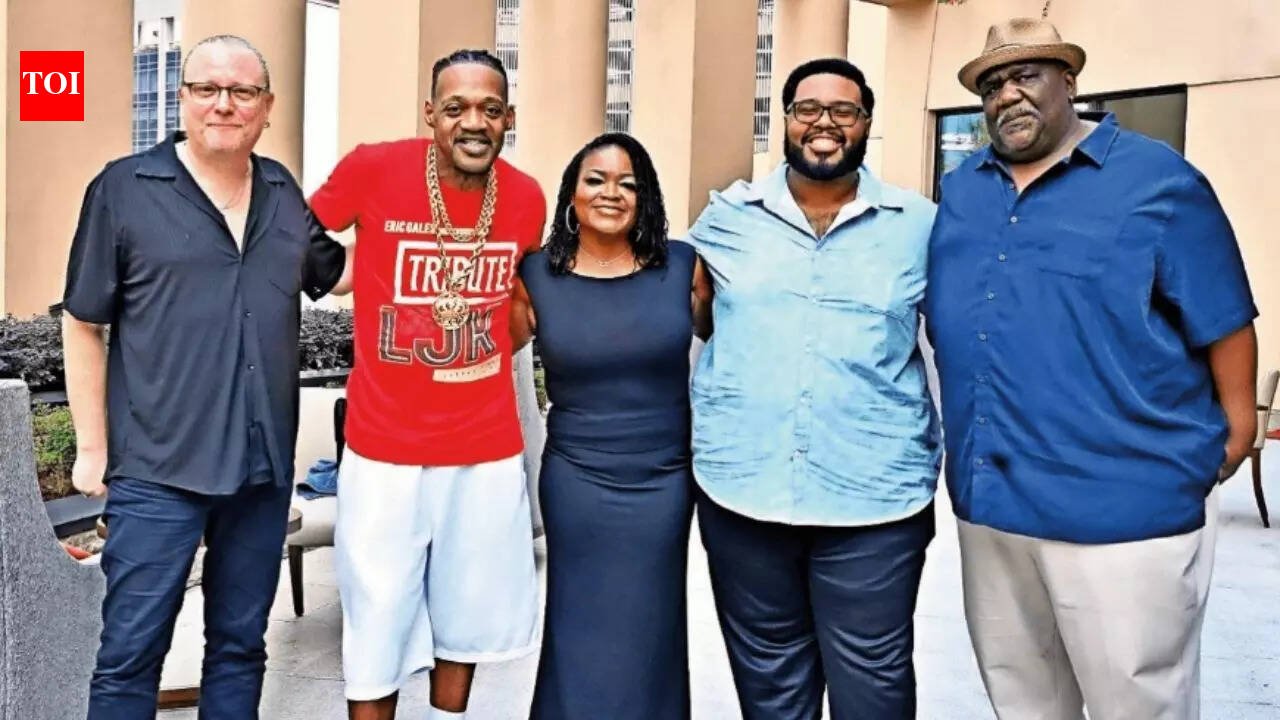
From seasoned players to young revivalists, artists at this year’s blues fest explain why the genre remains restless, relevant and rooted in lived experience‘Blues crossing into the cinematic world, is a whole other level’: Eric GalesEric Gales landed in Mumbai with a Grammy glow and a stiff neck. Just hours before boarding his flight from North Carolina, the blues guitarist slipped on ice outside his home. “I landed on my neck and back,” he says matter-of-factly. A hospital visit later, he shrugs it off. “I’m very sore, but I’ll be okay.”That grit feels fitting. Gales’ career has never been about smooth edges. An energy that also explains his nickname Raw Dawg, which he says is about being “plain, unfiltered… my guitar style, my personality are raw.” The name stuck through blues stages and even his rapping detour with hip-hop group Three 6 Mafia.This year, though, that rawness has travelled somewhere new. Into cinema. His guitar work on Sinners soundtrack ‘Elijah’, composed by Ludwig Goransson, has just earned him two Grammy Awards and an Oscar nomination, a moment he’s still absorbing. “When it crosses into the cinematic world and has the kind of success this film is having, it’s a whole other level.” After years of work, the recognition he says, feels earned. “I’m not completely surprised… but full of joy and gratitude.”Goransson, already a fan of Gales’, initially wanted him to appear in the film, but a tour with Joe Bonamassa made that impossible. Instead, he was brought in to play for the score. “He asked me to play what I felt, just be myself in each scene,” Gales recalls. The scale of it only hit him at the New York premiere. “Within the first five minutes I heard my guitar… About 97% of what I played made it into the film. It was a beautiful thing.”That ease comes from a lifetime of trusting instinct, including his famously upside-down guitar technique. “I just picked it up from my brother and that’s how I play,” says Gales. He didn’t even realise it wasn’t standard untilyears later. “And I didn’t want to change it.”The Mahindra Blues Fest (MBF), where Gales is performing for the third time on Sunday, has stayed with him. The energy always does. So does something harder. “It hurts to see the poverty,” he admits. There are lighter memories too. Arriving once with his wife and ZZ Top without luggage, dressed instead in traditional white outfits. “Like kings and queens,” he laughs. “But the way people treat you here, the traditions… it’s special.”‘Young people still rush to the stage’: DK HarrellDK Harrell laughs when the conversation turns to his name — Irish, as it turns out — and unexpectedly loaded. “D’Kieran Rion Harrell,” he says, explaining its meaning: “little dark prince”. In Hebrew, the name translates to “on top of the mountain of God”. He suspects his mother sensed something. “That her son was going to do something unique.” His own reading is less mystical. “The worst storms start at the top of a mountain. So I have the best seat in the house when things go wrong!” At 27, the blues singer and guitarist, carries a layered lineage that traces back to French settlers in Louisiana and enslaved ancestors. “I’m Black, I’m Creole, I’m a little everything,” he says. That complicated history, he believes, even shows up physically. He links his vitiligo to the genetic consequences of incest within his family tree, a reality many Creole families were forced into. “I used to be scared of it,” he admits. “Now I like it because being different is beautiful.”The blues, for Harrell, arrived before the alphabet. “I was two when my mother played B B King’s Deuces Wild in the car,” he says. “She heard a little voice singing The Thrill Is Gone. That’s actually how I started talking.”One of the most formidable young stars of the current blues resurgence, Harrell is aware of the contradiction of being a young man playing avintage genre. “We actually have more young people in Europe show up than in the US,” he says. Sometimes the divide collapses. At a Florida festival, he recalls launching into Etta James staple I Just Want to Make Love to You when “a big group of young ladies in their twenties just rushed the stage”, startling an audience otherwise filled with people in their sixties.His solution is straightforward. “I make the music sound old school… but my lyrics are contemporary,” he says. So instead of Cadillacs and automobiles, his blues talks about FaceTime or loving more than one person “because that’s the way young people are”.To keep the genre alive, he argues, the blues simply needs to be put back in the room. “With collaborations. HaveBeyonce do a song with Shemekia Copeland and Eric Gales with Drake. If it wasn’t for the blues, they wouldn’t have this music.” And Harrell, standing at the edge of the mountain, sounds ready to keep calling out the forecast.‘All of a sudden, at 64, my passport is full’: Jeff TaylorIt’s hard to picture Jeff Taylor as a former high school principal, and yet, for years, the frontman of the Altered Five Blues Band walked the tightrope between school and stage before he finally gave himself over, six years ago, body and soul to the blues. “I told the band right in the beginning, ‘school has to come first. I can’t miss the prom; I can’t miss the school dances.’ So, I would go to the school dance and then drive downtown and play music.”The city will sample it today as the Altered Five Blues Band—the quintet from Milwaukee—debuts at the blues festival with a lineup of the old, the new, and the spanking new. “We’ll be playing a couple of songs from our latest album Hammer & Chisel. With the last few albums, we’d try to play songs live for at least six months to get an audience reaction before we recorded them. With this one, we didn’t.”The band’s guitarist Jeff Schroedl is their principal songwriter, but everybody pitches in with stories. One of them was about the time Taylor almost drowned. “I was around 11 when my brother and I were playing on the frozen river in Wisconsin, and I fell through the ice. But I wasn’t thinking about dying. I was thinking about how madmy mother was gonna be,” he laughs, “I’m still afraid of water. That’s what our new song ‘I Can’t Shake it’ is about.”The band has bagged several awards including three Blues Music Award nominations; scaled the Billboards and topped iTunes and Amazon Blues Charts.“I was in the school cafeteria when the sixth graders came in for lunch and got a call: ‘Can you come to the phone? It’s Jeff.’” He was calling to say their album Charmed & Dangerous had hit number 13 on iTunes. Another call as the seventh graders arrived, it was up to number eight. By the time the eighth graders settled in, the song had climbed to number three. “The students were screaming and calling their parents to say, ‘Mr Taylor is on iTunes’... I had never reallybeen anywhere until I was 50, and now, all of a sudden, at 64, my passport is full.”‘As a white English guy, I followed the blues back to where it came from’: Matt SchofieldFrom a young age, Matt Schofield was taught to follow the thread to the heart of the music. “My father would say, ‘If you like Stevie Ray, you gotta listen to Albert King. Because that was his influence’. It seemed important for me to follow the tradition of electric blues guitar all the way back to the beginning,” says the three-time British Blues Guitarist of the Year. “Going back gives you a pretty good depth of understanding that you can apply to your own music.”Growing up in Cotswold, Schoefield cut his teeth on cassettes taped off his dad’s vinyl. “There was no one to teach me, so I learned from listening to records. I just had three songs of B B King that I’d listen to over and over.”His father moved to the US when he was a boy. Decades later, Schofield followed for the music. “I moved to be able to work there more easily, but also, to be around where the music came from. . . In fact, my next move is to New Orleans to really get to the heart of it. I guess it’s my own search for authenticity, as a white English guy. I want to be as deeply in it as I can be,” he grins.Incidentally, it was the Mahindra Blues Fest — and not New Orleans — that gave him this opportunity. “I got to play with Buddy Guy for the first time,” he says, of the inaugural edition of the festival, in 2011. “It was one of the highlights of my life. I grew up with his music, and to finally get to jam with him—in India, of all places! I thought it would be in a club in Chicago.”While Schofield has been tracing his way back to the roots of the blues, he credits its branches—British blues, in particular—with spreading the word. “It’s actually a very important part of the blues history,” he says, “because British blues artists in the 60s and the early rock androll bands — The Rolling Stones, John Mayall & the Bluesbreakers with Eric Clapton — introduced white America to the blues. Until then, it was segregated, race music.”‘If the world ended, my record would tell you what was happening’: Shemekia CopelandShemekia Copeland reads her audience before she sings. “I feel them out. I never make a set list and even if I do, I don’t follow it, because I like to go with the feel of the audience.” Having performed here twice before, she already knows the city’s pulse. “When I first got here, I was shocked to see so many Indians interested in blues.”She was eight when she first performed with her father Johnny Copeland at New York’s Cotton Club, and 18 when she cut her debut CD Turn The Heat Up. She has been called “the greatest female blues vocalist working today” by Chicago Tribune, has eight Grammy nominations, and won multiple Blues Music and Living Blues Awards, and she brings the sum of that legacy to the stage today.“I always say, I’m making little time pieces of art. So, if the world ended and someone found my record, they would know what was happening at that time,” says the singer, whose songs are both memorials and manifestos. She has sung about women’s reproductive rights, racial history, civil rights and domestic violence.Her 2024 album Blame It on Eve, which earned three Grammy nominations, was written at a time when women’s rights, particularly reproductive autonomy, were under scrutiny in the US. As political upheaval intensifies back home, and human rights face new challenges globally, Copeland sees the blues as a natural language for the moment. “I’m not a preachy person; I like to just talk about what’s happening.”Copeland made a critically acclaimed album in 2018 called America’s Child. “It had a song called Ain’t Got Time for Hate. That’s how I’m feeling again now. We’ve stopped loving each other, and instead of seeing how we’re all the same, everybody is focused on what’s different. In America, we’re divided by race and in India, you’re divided by religion. We shouldn’t let these divide us. We should embrace each other for who we are. That’ll be the focus of my next record.”


