



Officials said the certificates would provide citizens with an additional government document to establish their residential status and help ensure that eligible voters are not excluded from the electoral rolls.
The government has authorised deputy tahsildars, tahsildars and other officers notified by the government or district deputy commissioners to issue the certificates. Assistant commissioners have been designated as appellate authorities, while deputy commissioners will act as revisional authorities.
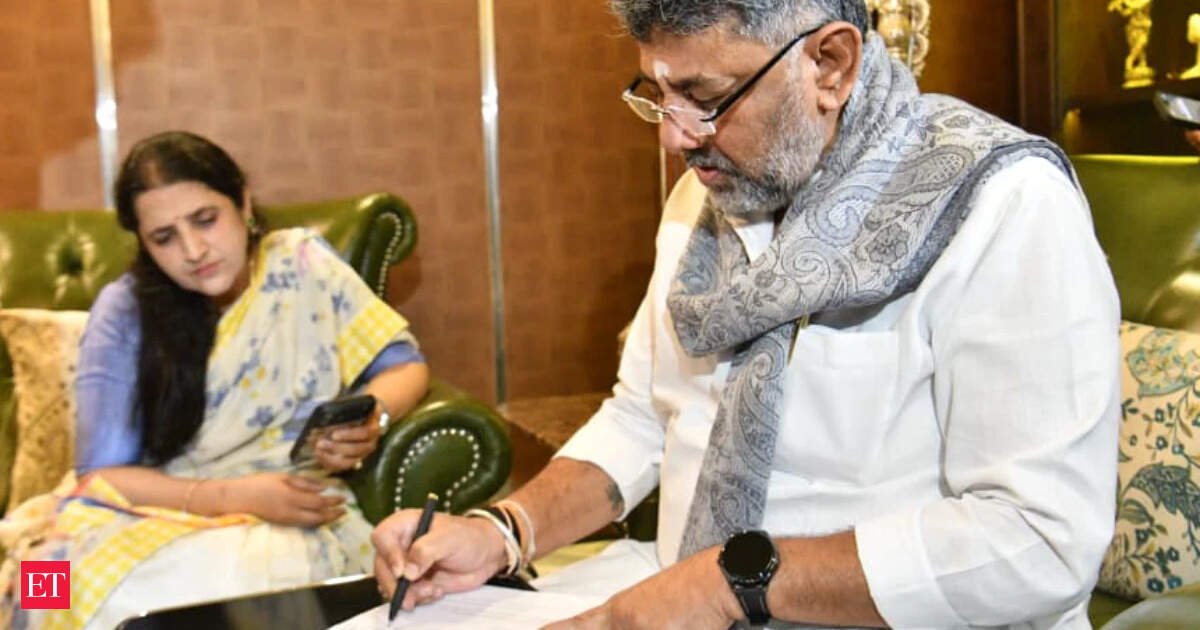
Chief Minister D K Shivakumar launched the enumeration exercise by submitting his enumeration form at his Sadashivanagar residence in Bengaluru.
According to the ECI, booth-level officers will conduct house-to-house verification until July 29. Draft electoral rolls will be published on August 5, while claims and objections can be filed until September 4. The final electoral rolls will be notified on October 7 after objections are disposed of.
The state cabinet said it supported a transparent and evidence-based revision of electoral rolls but expressed concerns over what it described as opacity, arbitrariness and the possibility of voter disenfranchisement under the current SIR framework.
ECI should address concerns: Kharge
Home Minister Priyank Kharge said Karnataka supported the revision of electoral rolls but opposed any process that could result in the disenfranchisement of eligible voters. He said the ECI was yet to respond to concerns raised by the Congress.Kharge urged the poll panel to undertake an independent review of the SIR exercise, including its legal basis, deletion criteria, supervisory mechanism, software systems and safeguards. He also sought an extension of the deadline for submitting enumeration forms to at least three months to reduce pressure on booth-level officers and the administration.
He called on the ECI to publish detailed standard operating procedures explaining the discrepancy criteria, software logic, responsible officials and the documents required for verification. Minor spelling, clerical or transliteration errors should not become grounds for objections, he said.
Kharge said no voter should be deleted from the rolls without prior notice, field verification by booth-level officers, an opportunity to be heard, and a reasoned order. He also asked the ECI to clarify the list of admissible documents, reconsider the exclusion of voter identity cards and Aadhaar, and recognise Karnataka’s Kutumba ID wherever applicable.
The minister further sought the public disclosure of daily data on additions, deletions, notices and orders in a machine-readable format, along with greater transparency in the software used for data entry, digitisation and verification. He also called for safeguards for vulnerable groups, including women, migrant workers, slum residents, nomadic and denotified tribes, widows, persons with disabilities, orphans, and transgender persons.


