






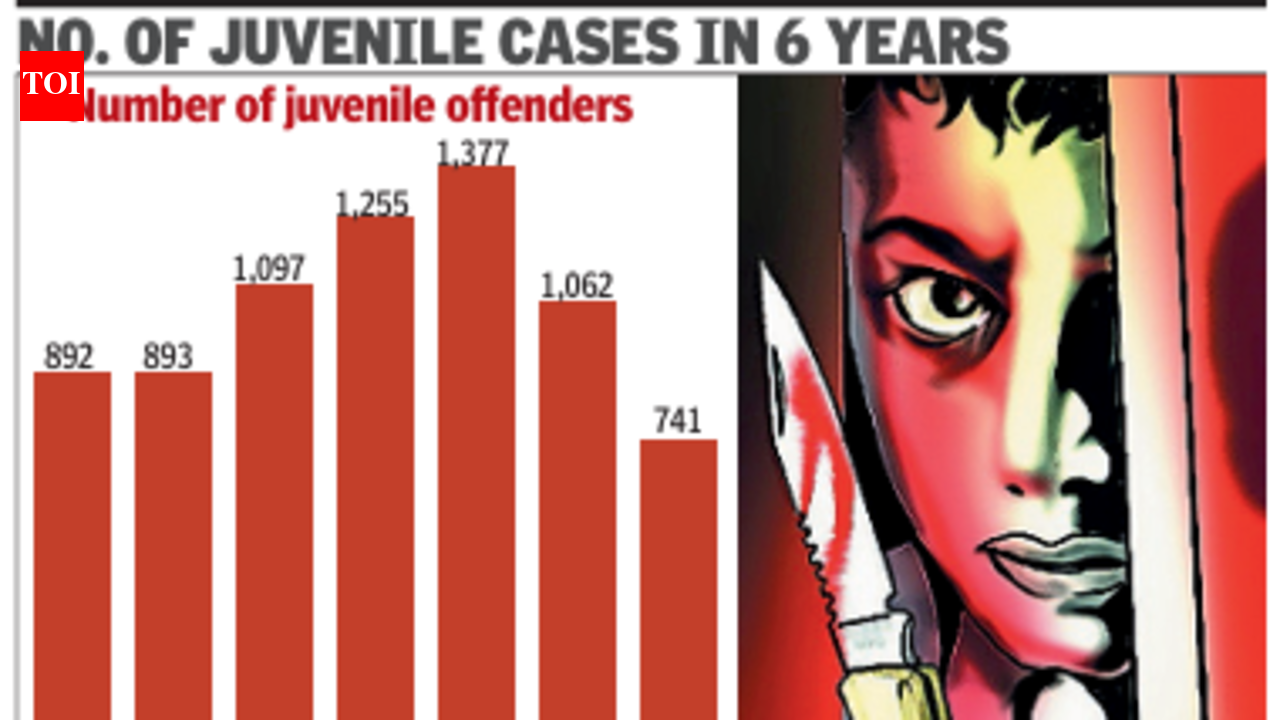
Mysuru: Between 2020 and Aug-end 2026, a total of 7,317 minors were involved in crimes across Karnataka, including murder, robbery, offences under the Protection of Children from Sexual Offences (Pocso) Act, drug-related crimes and prostitution-related cases, according to RTI data shared by Odanadi Seva Samsthe (OSS), an NGO working for the welfare of women and children.In 2025 alone, 1,062 minors were booked in various cases, while 741 minors had already been involved in offences by the end of Aug this year. The recent detention of a minor during a prostitution raid in Mysuru has once again highlighted how children are not only committing crimes but are also being drawn into exploitative criminal networks.According to child welfare workers, a minor allegedly killed his grandmother in a fit of rage over money. In another case, three teenagers allegedly raped a minor girl under the pretext of a romantic relationship. Elsewhere, a boy was reportedly used by brothel operators to bring customers. In a separate incident, a group of boys allegedly killed their friend after he threatened to expose them for stealing chickens from a neighbour’s house. In yet another case, a son allegedly killed his father with a blunt object during a dispute linked to the harassment of his mother.These incidents mirror broader trends reflected in official data. Social workers attribute the rise in juvenile crime to multiple factors, including drug addiction, exposure to violent content on mobile phones, and the influence of gangster-style online games and social media. Easy access to smartphones and unmonitored internet use can normalise aggression, reduce empathy, and connect children to risky peer groups and illegal activities. At the same time, family stress, domestic violence, poor parental supervision, poverty and school dropouts can create conditions in which impulsive behaviour and anger escalate into violence.Juvenile Justice Board member R Geetha observed that many juvenile offenders are uneducated, orphaned or come from economically disadvantaged backgrounds. A significant number of cases are related to Pocso provisions, often arising from relationships pursued “in the name of love”, where consent is legally invalid because of age. Of the 136 cases examined, nearly 30% involved heinous offences, indicating a worrying increase in the severity of crimes committed by minors.OSS directors L Parashuram and KV Stanly, who obtained the data from the State Crime Records Bureau through an RTI application, told TOI that juvenile crime can be curbed through value-based education, timely counselling and closer monitoring by parents and teachers. They stressed that stronger child protection mechanisms, policy reforms in education, effective implementation of child rights laws, and community-level support for vulnerable families are essential to prevent children from being drawn into violence and exploitation.Saraswathi, director of RLHP, an NGO that runs child care institutions, said engaging children in activities such as yoga, meditation, drawing, painting and karate plays a vital role in instilling discipline and preventing them from being drawn into unlawful activities. She added that goal-setting, life-skills training and counselling help children remain focused, build confidence and avoid negative thinking, ultimately encouraging healthier choices and better behaviour.


