



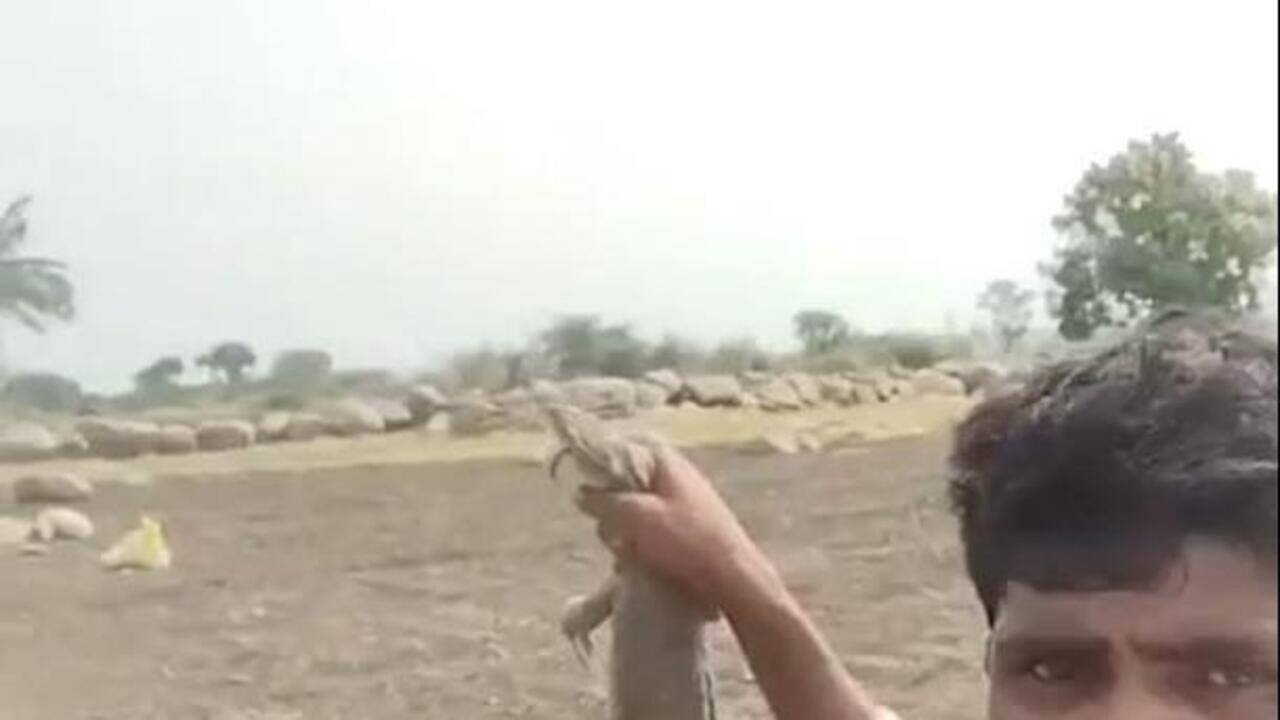
Bengaluru: Social media platforms have emerged as an unlikely hunting ground for Karnataka’s forest department. As poachers, particularly those from Kalyana Karnataka and central Karnataka districts, flaunt their hunting exploits and pose with wildlife carcasses online, forest officials are increasingly combing through such posts, tracing digital footprints and turning social media boasts into evidence of wildlife crimes.Acting on appeals from wildlife conservationists, the department has now decided to institutionalise digital surveillance across Kalyana Karnataka and North Karnataka by designating dedicated officers to hunt down poachers online. The crackdown has already resulted in nearly 25 wildlife offence cases being booked against offenders.Alarmed by recurring incidents of wildlife being hunted with packs of dogs and offenders brazenly celebrating their kills on social media, particularly Instagram, the department has directed forest divisions to designate tech-savvy officers to monitor online platforms, identify hunting videos and photographs, trace suspects and initiate criminal proceedings.The move follows a petition submitted to the Principal Chief Conservator of Forests (Wildlife) and Chief Wildlife Warden by Belagavi-based wildlife conservationist Giridhar Kulkarni. Subsequently, the forest department convened a high-level meeting of circle heads and chalked out a comprehensive strategy to tackle the menace.Flagging several such poaching incidents, Kulkarni argued that the recurring cases could not be viewed merely as a law enforcement problem but required a broader strategy addressing complex social issues, including traditional practices, economic conditions, unemployment, recreational hunting habits and poor awareness of wildlife protection laws.“Many of these regions of Karnataka are economically and educationally backward, where awareness about wildlife conservation and the legal consequences of hunting remains limited. With only small pockets of notified forests in these districts, wildlife is not confined to forests alone. As a result, wildlife conservation in these regions requires a much broader landscape-level approach rather than a forest-centric approach,” Kulkarni stated in his petition, which was accompanied by evidence of alleged hunting incidents.Acting on the petition, Karnataka Chief Wildlife Warden Kumar Pushkar and Additional PCCF (Wildlife) Bishwajit Mishra held meetings with circle heads and reviewed incidents involving the hunting of Indian hares, Indian porcupines, monitor lizards, small Indian civets, Bengal foxes, wild pigs and other wildlife species. Officials were subsequently directed to trace the offenders and initiate legal action.“After successfully tracing several offenders through social media evidence, the department has now directed every division to designate an officer of the rank of Range Forest Officer (RFO) or Deputy Range Forest Officer (DRFO) with expertise in information and communication technology to keep tabs on wildlife crimes online,” said an official, who attended the meeting.The designated officers will identify videos and photographs depicting wildlife hunting, trace the accused with police assistance wherever necessary and register Wildlife Offence Reports (WLORs). They have also been instructed to conduct proper investigations and file charge sheets before competent courts.Besides strengthening digital surveillance, the department has decided to build the capacity of its field personnel and intensify awareness campaigns in villages and hamlets identified as hunting hotspots. Residents, particularly children and rural youth, will be educated about wildlife conservation and the legal consequences of poaching.Periodic legal workshops will also be organised for field personnel to strengthen the investigation and prosecution of wildlife offences. Cases detected through social media that have already reached courts will be studied as case studies to help officials build stronger cases in future.


