






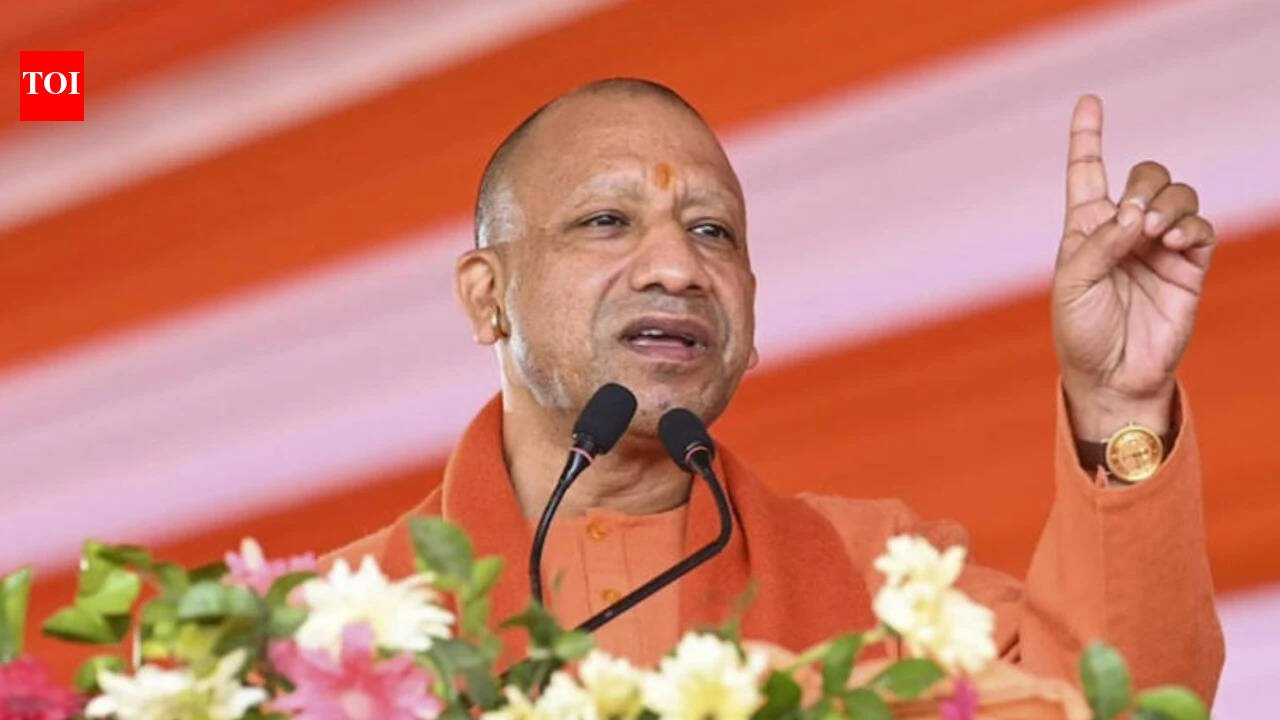
“Aligarh has emerged as a hub for small arms, defence equipment and military supplies, while Kanpur — traditionally known as the Manchester of the East — is becoming a centre for ammunition, missiles, defence textiles and protective gear.” UP Chief Minister Yogi Adityanath said.Announced in 2018, Yogi government not only developed six nodes of Defence Corridor in the state but transformed Kanpur into a new arsenal of defence weapons. Over the past nine years, Uttar Pradesh has steadily transformed its industrial landscape through the Uttar Pradesh Defence Industrial Corridor (UPDIC). As part of India’s broader push for self-reliance in defence manufacturing under the Atmanirbhar Bharat initiative, the corridor has grown from a policy announcement into a functioning ecosystem of production facilities, private investment, and skilled employment.Developed by the Uttar Pradesh Expressways Industrial Development Authority (UPEIDA), UPDIC now spans six nodes—Kanpur, Jhansi, Lucknow, Aligarh, Agra, and Chitrakoot—strategically located along major expressways and highways. Among these, Kanpur has emerged as the clear leader in investment commitments and operational scale, positioning itself as Uttar Pradesh’s primary defence manufacturing hub.When the corridor was first conceived, the ambition was clear: reduce India’s heavy dependence on imported ammunition, weapons systems, and related equipment while creating high-value industrial capacity in the state. Land acquisition began in earnest, and by 2026 the project had secured roughly 2,095 hectares across the six nodes. Of this, more than 1,140 hectares have already been allotted to industry. Sixty-five companies have received land, and projects worth nearly Rs 13,500 crore have moved from paper to the ground, with the potential to generate around 15,300 direct jobs. Total investment proposals have climbed to approximately Rs 39,500–40,000 crore. Kanpur accounts for the largest share—around Rs 12,900–13,000 crore—followed closely by Jhansi, with Lucknow, Aligarh, Chitrakoot, and Agra contributing the rest.Kanpur’s rise within the corridor reflects both historical industrial strengths and deliberate policy focus. The city already hosted ordnance factories and engineering units; the defence corridor channelled private capital and modern manufacturing practices into that base. The most visible flagship project is the Adani Defence & Aerospace ammunition manufacturing facility. The company has invested nearly Rs 4,000 crore in Kanpur so far and has outlined plans for further expansion. A new facility is proposed across approximately 250 acres in the Hathipur area, involving an additional investment of around Rs 2,000 crore in the immediate phase, with total further commitments of another Rs 4,000 crore over the coming years.At present the Kanpur plant produces roughly 15 crore rounds of ammunition of various calibres each year. Capacity is being scaled to about 30 crore rounds by the end of 2026. Production covers small-calibre rounds used in rifles and other small arms, large-calibre ammunition for tanks and artillery, and preparations are under way to begin medium-calibre ammunition for autocannons and similar systems by 2027. Grenade production is also expanding: the company aims for an annual capacity of 40 lakh units by 2027, with another 40 lakh units of additional capacity planned by 2029. These volumes are designed to meet domestic requirements and reduce reliance on imports.The facility currently employs around 2,000 skilled and unskilled workers. The planned expansion is expected to create further direct and indirect employment, including in logistics and supporting services in surrounding areas. Quality control incorporates artificial intelligence-based case-line inspection technology that checks ammunition cases against prescribed standards, improving consistency and accuracy. Officials state that the ammunition and artillery systems are manufactured to NATO standards, supporting interoperability and performance reliability. Demand for these products is also growing from friendly countries.Beyond ammunition, Kanpur has become a centre for indigenous small arms. The Abhay Rifle, capable of firing both 5.56 mm and 9 mm ammunition, has been highlighted as a distinctive dual-calibre weapon. The Prahar Light Machine Gun has received strong appreciation from the Indian Army, which has placed its largest order for the system. Pistols, advanced rifles, and other machine guns are also part of the production and demonstration range. These developments illustrate a shift from pure assembly or component supply toward more complete indigenous weapon systems.The broader corridor context reinforces Kanpur’s role. Nine manufacturing units are already operational across the six nodes—three each in Kanpur, Lucknow, and Aligarh—marking the transition from planning to production. In Lucknow, BrahMos Aerospace has operationalised a facility for next-generation missile systems. Other units produce electronic warfare systems, precision components, ballistic materials, defence textiles, and safety equipment. The corridor’s connectivity via expressways and the availability of plug-and-play infrastructure, single-window clearances, and policy support have helped accelerate project grounding since the first land allotments in 2021.Recent geopolitical experience has sharpened the emphasis on domestic capacity. References to “Operation Sindoor” underscore the risks of depending on external supply chains during periods of heightened tension, when even friendly nations may face competing demands. Expanding domestic ammunition and weapons production is therefore framed not only as an industrial opportunity but as a strategic necessity. Kanpur’s growing output of NATO-standard ammunition and indigenous small arms directly serves this objective.Looking ahead, the state aims to attract an additional Rs 25,000 crore in investment over the next five years, with the potential to create 20,000–22,000 more direct jobs. Further land acquisition is under way in Kanpur and Jhansi to accommodate new projects. Testing facilities for unmanned aerial systems, communications, and materials are also being developed. These steps are intended to deepen the ecosystem beyond final assembly into design, testing, and higher-value manufacturing.Nine years after its launch, the Uttar Pradesh Defence Industrial Corridor has moved from concept to concrete industrial activity. Kanpur stands at the centre of this progress. With large-scale ammunition production, expanding small-arms manufacturing, substantial private investment led by Adani Defence & Aerospace, and a growing skilled workforce, the city is strengthening both Uttar Pradesh’s industrial base and India’s self-reliance goals. The combination of policy continuity, infrastructure support, and private-sector execution has turned the corridor into a tangible contributor to national defence capacity and regional economic growth. As production volumes rise and new facilities come online, Kanpur’s identity as a major defence manufacturing hub is likely to consolidate further in the years ahead.


