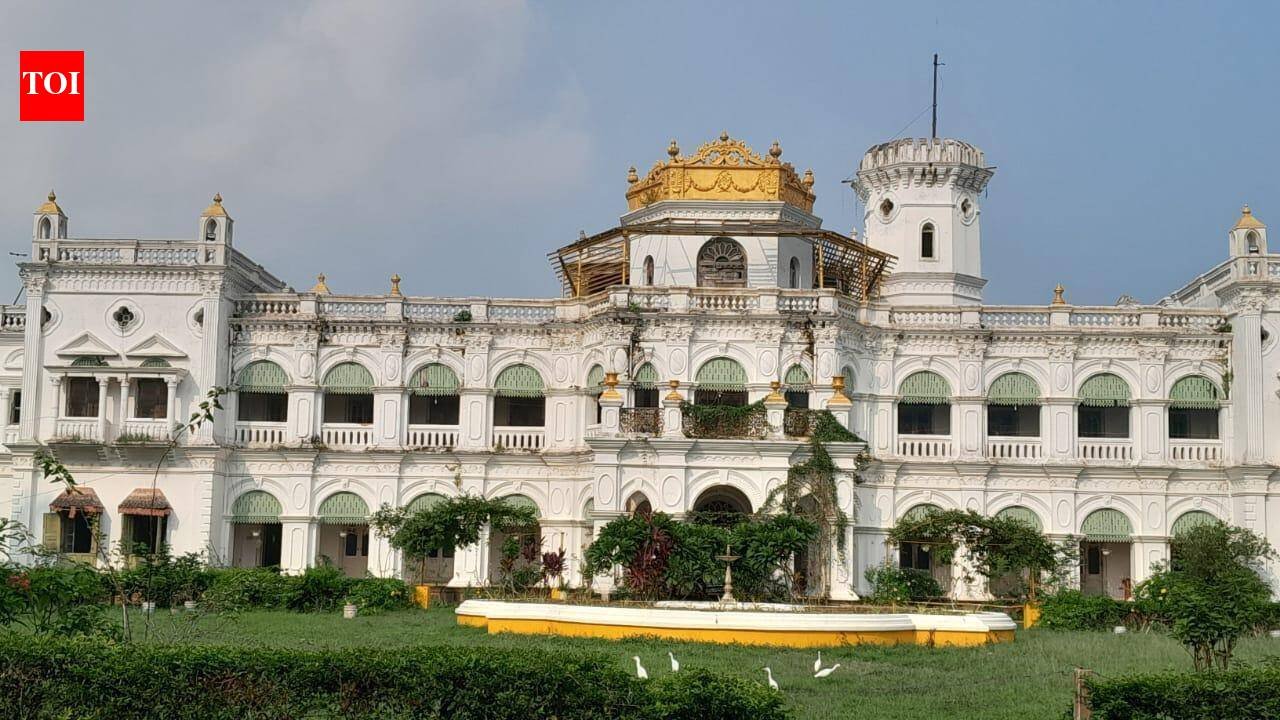
The century-old Kanika Palace in Rajkanika town of the coastal district of Kendrapada, around 125 km from Bhubaneswar, is a symbol of royal legacy, cultural heritage and history of
Odisha. It played a decisive role in the formation of the state of Orissa (now Odisha) in 1936 as the first linguistic state of British India.
The palace was built in 1909, by Raja Rajendra Narayan Bhanjadeo of the Kanika royal family. It reminds people about the legacy of Kanika rulers. “Sprawling across 64 rooms, the majestic three-storey palace is a symbol of the glorious past of Kendrapada district,” said Tapan Pati, a historian and former history professor of Kendrapada College.
The kings of Kanika, Rajendra Narayan Bhanjadeo and Utkal Gourav Madhusudan Das, were pioneers of the Odia movement in the early 20th century. Together, they co-founded Utkal Sammilani in 1903 to advocate for a unified, separate Odia-speaking state. Madhusudan Das was the main organiser of the conference, while Rajendra Narayan Bhanjadeo was instrumental in funding it. “Many meetings of Utkal Sammilani were held in the palace. Rajendra Narayan Bhanjadeo was also a disciple and close friend of Madhusudan Das,” shared Dr Basudev Das, a noted researcher of Kendrapada.
The royal palace has 64 rooms, all built in 1909 on 400 acres of sprawling land by Raja Rajendra Narayan Bhanja Deo. According to official estimates, nearly Rs 20 lakh was spent to construct the palace. The palace grounds have dwindled to 54 acres over the years. It displays a fascinating calm in its bucolic ambience. The royal presence is all-pervading in all its rooms and corridors. One may feel echoes of dancing feet and tinkling of ghungroo still reverberating in the Durbar Hall.
The very glimpse of this palace oozes luxury and affluence. The aura and grandeur of the palace speaks of the old royalty of yesteryears. It showcases the grandeur of the rajas and the elegant style of the British Raj. The tranquility on the grounds within the palace is soothing, and outside, there are huge canopies of trees.
“A portion of the palace was converted into a museum around five decades back, where many valuables preserved by the royal family members are showcased for the world to see. I am now the custodian of the palace-cum-museum,” said Shivendu Narayan Bhanja Deo, the present scion of the royal family.
The museum displays hundreds of antiquities, wildlife trophies, mirrors, paintings, rare photographs, arms and other antique objet d’art. Art works in the museum’s collection include paintings, pottery, bronze wares, inscribed wares, toys, clocks and court documents. The 99-cm-long skull of a salt-water crocodile displayed in the museum is the world’s largest one of its kind. The reptile was shot dead in 1926 by Rajendra Narayan Bhanjadeo in Dhamra river.
The skeleton of a crocodile at the palace
An elephant’s skull and foot also enhaces the beauty of the museum. A stuffed tiger also catches the attention of visitors. Articles of use displayed from the king’s court include jewels, accessories, clocks, medicines, furniture and furnishings. Vying for attention are a variety of exhibits such as portraits of kings, real palanquins, dresses, weapons, royal umbrellas, canopy, dolis, swords, prized cups and a century-old billiard table. Life-size portraits of kings adorn the walls of the long, rectangular Durbar Hall, which originally served as a coronation hall.The current scion of the royal family, Shivendra Narayan Bhanjadeo, hasn’t merely been content with restoring the palace to its former glory. Many projects are underway to develop the palace and its famous museum.