



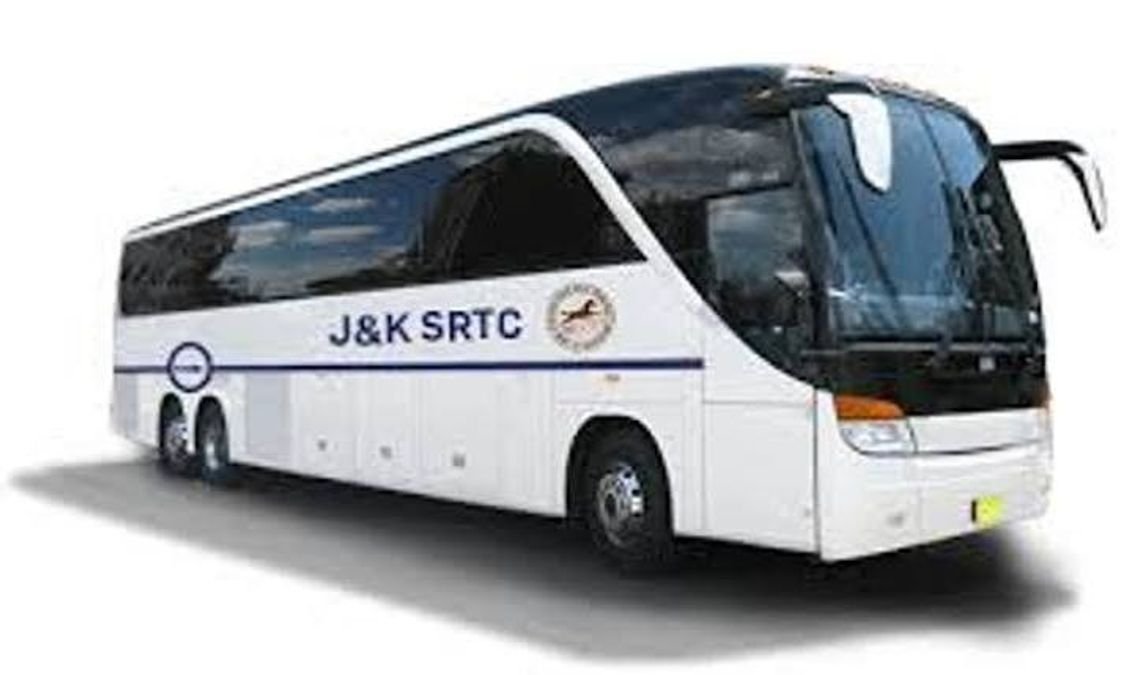
Srinagar, Oct 16: Commuters across Jammu and Kashmir are bearing the brunt of frequent breakdowns of buses operated by the Jammu and Kashmir Road Transport Corporation (JKRTC), alleging that several vehicles spend more time in workshops than on roads, leaving passengers stranded and disrupting their daily routines.
The complaints come amid the government’s acknowledgement that an ageing fleet has been requiring frequent repairs, highlighting the operational challenges facing the corporation even as plans are underway to augment its fleet.
In February this year, the government informed the Assembly that JKRTC had auctioned 237 vehicles during 2024–25, while another 236 vehicles had been identified for auction in 2026–27. Fleet augmentation was also underway to restore routes and improve revenue generation.
Passengers, however, said recurring mechanical failures continued to affect services, with buses often plying for a day before breaking down the next, turning an already unreliable service into a routine ordeal for daily commuters.
“Buses are seen on the roads one day and in workshops the next. It has become a routine now, and passengers are the ones who suffer,” said Irshad Ahmad, a commuter from Baramulla town.
He said frequent disruptions had made it difficult for people to plan their journeys, particularly employees, students and others who depend on public transport to reach their destinations on time.
The unavailability of buses often forces passengers to wait for extended periods or seek alternative transport at additional cost, commuters said, adding that the problem was particularly burdensome for those who rely on affordable government-run services.
In north Kashmir’s Kupwara district, commuters also raised concerns over the condition of buses and the maintenance system.
“Buses on our route also break down. In fact, the department is also not serious about maintaining them,” said Tahir Ahmad, a local resident of Kupwara.
Meanwhile, the government has proposed procuring 200 additional electric buses under the PM e-Drive scheme, with the transport minister telling the Assembly that their induction would help assess the feasibility of extending services to more areas. The government has also said that an Intelligent Transport Management System is being implemented to enable real-time tracking, improve fleet utilisation and strengthen passenger safety.
Commuters said the priority should be to ensure that buses already available with the corporation remain roadworthy and operate according to schedule, rather than leaving passengers uncertain about their availability.
They urged the authorities to identify buses repeatedly developing mechanical faults, ensure timely repairs and monitor whether vehicles released from workshops remain operational.
The complaints have also raised questions over the adequacy of maintenance arrangements and the availability of spare parts, particularly when repeated breakdowns disrupt services on routes used by people who have limited transport alternatives.
Passengers called for a time-bound plan to improve fleet reliability and restore regular services, saying public transport should ease people’s daily travel difficulties rather than add to them.
However, the Managing Director and General Manager (Operations) of JKRTC did not respond to calls from Rising Kashmir seeking their comments.
