


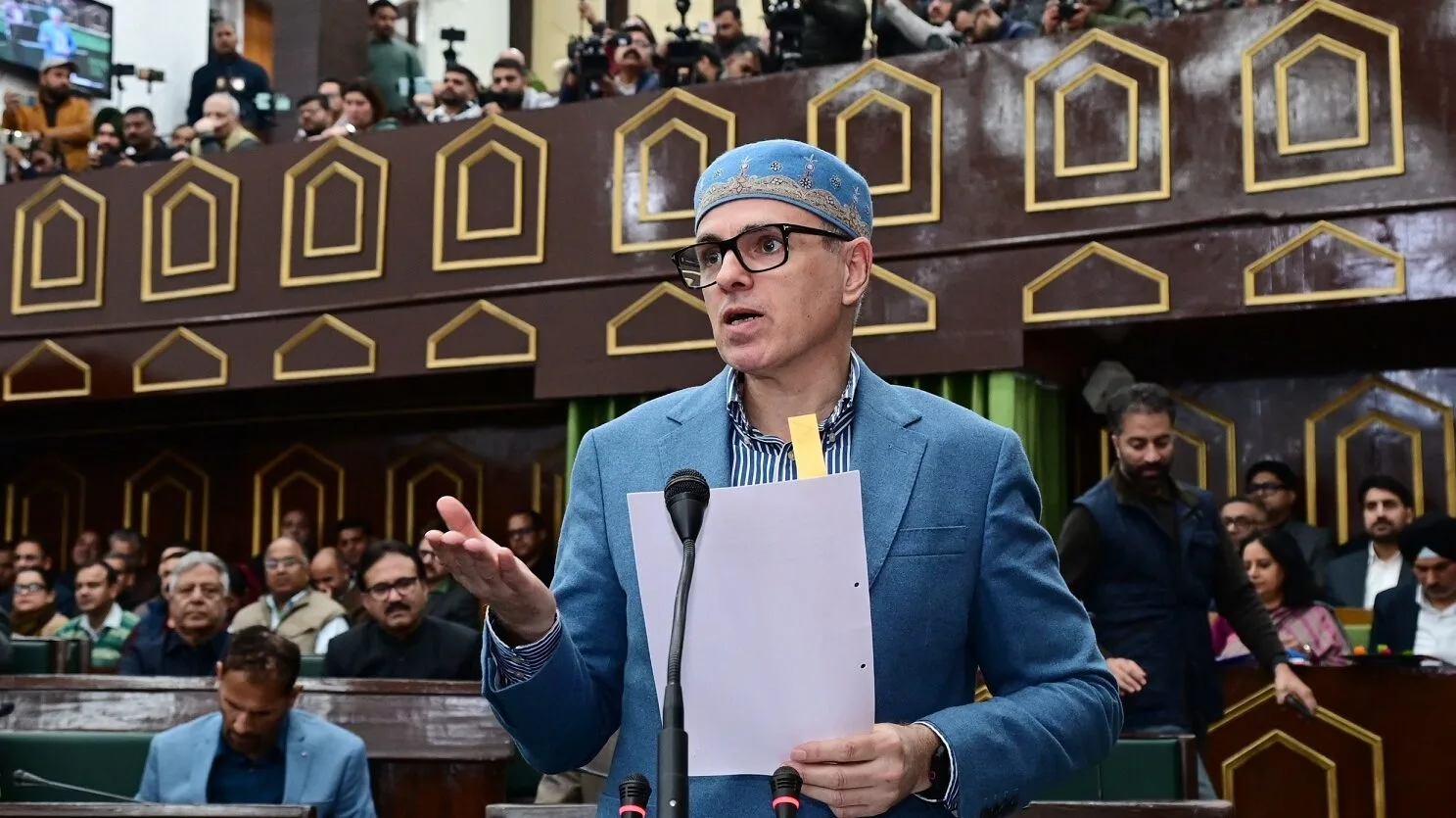
Jammu, Feb 6: Chief Minister Omar Abdullah on Friday said that while it is in the interest of Jammu & Kashmir to become self-sufficient, achieving that goal will not be easy and will require difficult decisions.
Addressing a post-budget news conference, the CM said he envisions a Jammu & Kashmir that does not have to rely on the Government of India.
“I don’t have a categorical answer in terms of years—one year, two years, or five years. The problem is endemic; it is not new, and certain events have only worsened it,” he said when asked about when the Union Territory might fix its financial position.
Fixing J&K’s fiscal health, he emphasized, “will not be easy. To reach that point will require difficult decisions. It may not be painless, but it is in the interest of J&K, and in the interest of its self-respect, to be in a position where we are not dependent.”
Commenting on the limited increase in the 2026–27 budget, the CM said 2025 was particularly challenging due to the Pahalgam attack and floods.
“This year was difficult. We were hoping for a 5–10% budget increase, but massive losses from the Pahalgam attack and floods affected every sector—hospitality, industry, services. We are hopeful of bringing growth back on track this year,” he said.
Omar Abdullah described the Baisaran Pahalgam terror attack and the September–October floods as the two biggest challenges faced by his government in 2025.
“The Baisaran attack claimed precious lives and created a war-like situation between the two countries. No sector of our economy escaped unscathed,” he said.
“The floods, especially in Jammu, were another extremely difficult phase. The Centre has sanctioned Rs 1,430 crore as a relief package for permanent restoration of damaged infrastructure. We will use these funds judiciously for reconstruction.”
On the Indus Water Treaty, the CM said J&K has not yet benefited from its abeyance. “Power projects such as Ratle, Kiru, Kwar, and Pakal Dul are ongoing, with no change in their scope, design, or water-holding capacity. Their generation capacity remains unchanged. However, future projects could benefit if there are no restrictions under the treaty,” he added.


