


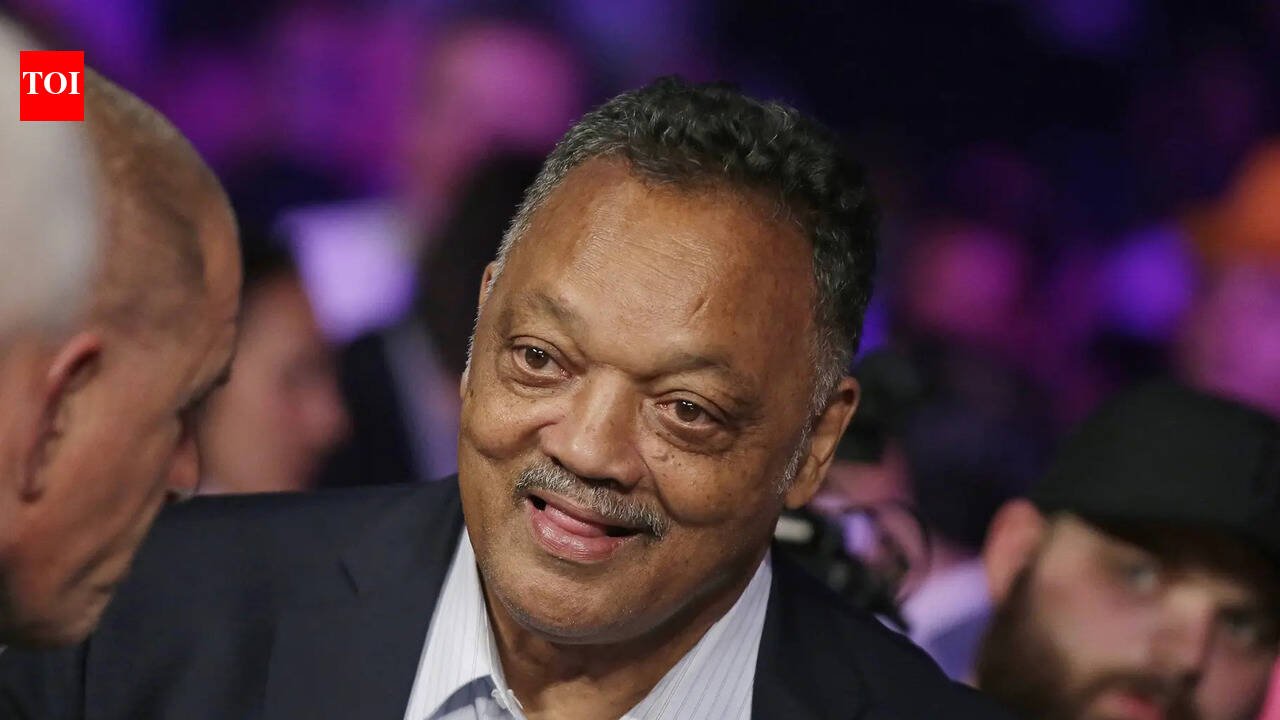
The Rev. Jesse Jackson, one of the most recognisable figures of the American civil rights movement and a former presidential candidate, has died aged 84. His family confirmed he passed away peacefully surrounded by loved ones, without specifying a cause. In a statement they wrote: “Our father was a servant leader – not only to our family, but to the oppressed, the voicelessa, and the overlooked around the world. We shared him with the world, and in return, the world became part of our extended family. His unwavering belief in justice, equality, and love uplifted millions, and we ask you to honour his memory by continuing the fight for the values he lived by.” For more than half a century Jackson occupied a singular space in American life: preacher, organiser, negotiator, campaigner and political candidate. Admirers saw moral authority and endurance. Critics often saw ambition and controversy. Both were part of a public career that stretched from the segregation era to the modern Democratic Party.
From segregated South to national politics
Born Jesse Louis Burns in Greenville, South Carolina in 1941, Jackson grew up during the Jim Crow era, the son of a cotton grader and a hairdresser. His mother later married Charles Henry Jackson, who formally adopted him in 1957. His activism began early. In 1960 he joined seven others in entering a whites-only public library in Greenville County, an act that led to arrest and jail. By 1966 he had been chosen by Martin Luther King Jr. to lead the Chicago branch of Operation Breadbasket, an economic justice initiative within the Southern Christian Leadership Conference. After King’s assassination in 1968, Jackson emerged as one of the most prominent successors to that movement’s public voice. He founded Operation PUSH in 1971 and later the National Rainbow Coalition, organisations that eventually merged into the Rainbow-PUSH Coalition. The coalition brought together Black, White, Latino, Asian American, Native American and LGBTQ supporters and helped reshape the Democratic Party’s coalition politics.
FILE – Civil rights leader Dr. Martin Luther King, Jr., right, and his aide Rev. Jesse Jackson are seen in Chicago, Aug. 19, 1966. (AP Photo/Larry Stoddard, File)
Jackson ran for the Democratic presidential nomination in 1984 and again in 1988, campaigns that broadened minority participation in national politics even though they did not secure the nomination. In 2000 he received the Presidential Medal of Freedom from President Bill Clinton and also served as a diplomatic envoy, negotiating releases of Americans held abroad in Syria, Cuba, Iraq and Serbia. For several years he also hosted CNN’s programme Both Sides with Jesse Jackson.
Family life, children and public controversy
Jackson married Jacqueline Lavinia Brown in December 1962. Together they had five children: Santita, Jesse Jr., Jonathan, Yusef and Jacqueline. Two sons later entered politics themselves, with Jesse Jackson Jr. serving as a U.S. congressman for Illinois and Jonathan Jackson elected to Congress in 2022.
Jackson poses with his family during his 1984 presidential campaign. He and his wife, Jacqueline, had five children together: Jonathan, Santita, Yusef, Jacqueline and Jesse Jr./ Image: David Hume Kennerly/Getty Images
In 2001 Jackson publicly acknowledged fathering a daughter, Ashley, with staff member Karin Stanford. The child had been born in May 1999. Jackson accepted responsibility, provided financial support and maintained a relationship with her. The revelation briefly overshadowed his career and prompted questions about credibility, though he later returned to public advocacy and speaking engagements.
Finances, earnings and later health
Jackson’s net worth has been estimated at about $4 million. Earlier reporting by the Ch icago Tribune in 1987 valued family assets between $400,000 and $600,000 at the time, roughly $1.2–$1.7 million today, with many holdings placed in his wife’s name. Financial disclosures from 2001 showed an annual salary of $120,000 drawn from four organisations he managed, alongside $5,000 per week from CNN for his television programme. His organisations covered more than $614,000 in travel expenses in one year, partly reimbursed by the Democratic National Committee during voter mobilisation efforts.Additional income may also have come from book sales and royalties. Jackson authored or co-authored several titles, including Keeping Hope Alive: Sermons and Speeches (1988), Straight from the Heart (1987), Legal Lynching: Racism, Injustice and the Death Penalty (1995), It’s About the Money! (2000, with Jesse Jackson Jr.) and What’s Right with America (2006), reflecting his focus on civil rights, politics and economic empowerment. In later life Jackson faced significant health challenges. He announced a Parkinson’s disease diagnosis in 2017 and was later confirmed to have progressive supranuclear palsy, a degenerative neurological condition he lived with for over a decade. He was also hospitalised twice with Covid-19 but continued appearing publicly and speaking on civil rights issues. Jackson’s career stretched from sit-ins and arrests to presidential campaigns and international diplomacy. The movement he joined in the 1960s outlived many of its leaders, and he remained one of its most visible participants well into the twenty-first century.


