



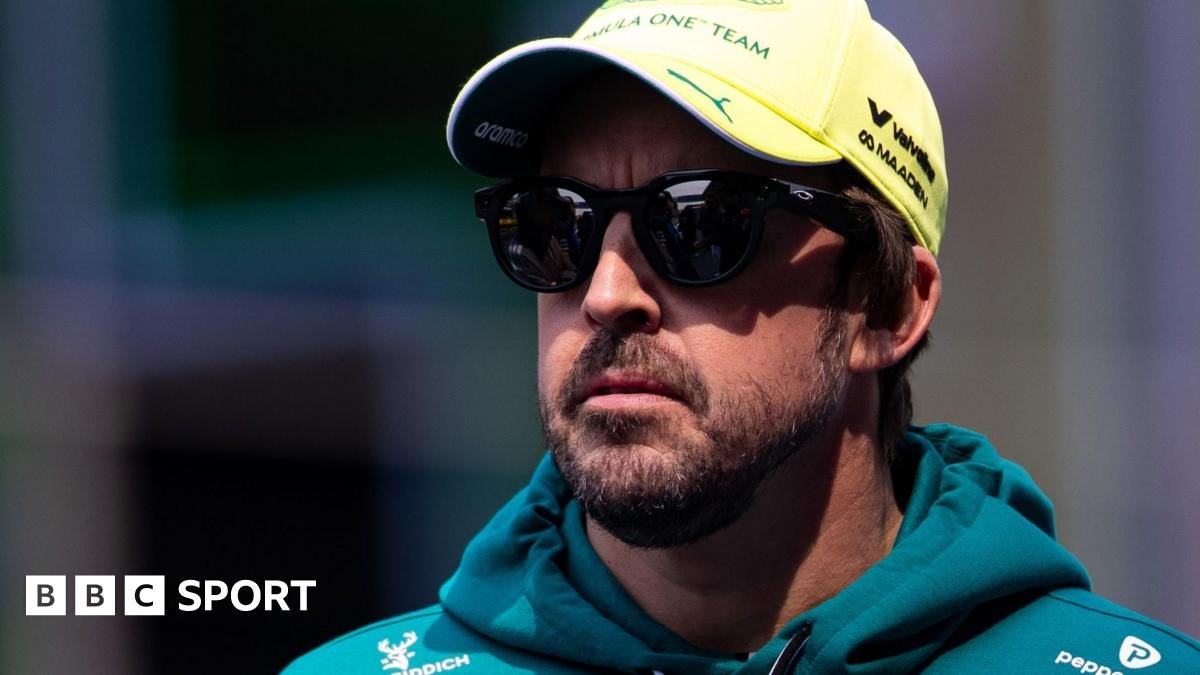
Alonso, who is in the final year of his contract with Aston Martin and has not said whether he wants to stay in F1 beyond 2026, is not due to take part in Friday’s first practice session.
The team’s reserve driver Jak Crawford will be driving the car in one of the team’s mandated rookie sessions this year.
Alonso has insisted he has faith in Honda’s ability to put things right but acknowledged that he does not know how long that will take. It is the second time he has been on the receiving end of Honda being unprepared in a new relationship in F1, after a difficult three years with McLaren in 2015-17.
Aston Martin have had a troubled start to the season as a result of major reliability and performance issues with their Honda engine, while the car is also behind on development after its design was started late.
They are last in the world championship after two races, the worst possible start to their new factory partnership with Honda, which won four drivers’ titles and two constructors’ titles with Red Bull from 2021-24.
Alonso has retired from both events in Australia and China and team-mate Lance Stroll retired in China and finished last, 15 laps behind the winner, in Melbourne.
Honda’s first-order issue is a severe vibration from the engine that has been leading to failures in the battery.
Its engineers have been working to isolate the battery, a critical part of the hybrid system, from the vibrations but these have still been causing problems for the rest of the car – Alonso retired in China because holding the steering wheel was proving too painful.
That came after team principal Adrian Newey said at the first race of the season that the vibrations were so bad they were risking permanent nerve damage for the drivers within 25 laps of running.
The Japanese Grand Prix is not only the home race for Honda, but it is held on their own Suzuka track, built on the orders of the company’s founder Soichiro Honda in the 1960s.
Shintaro Orihara, Honda’s trackside general manager and chief engineer, said: “In China, we made some progress in terms of battery reliability thanks to a reduction in the vibration affecting the systems, but we must find more solutions to establish the cause of the vibrations affecting the drivers.
“We have also focused our efforts in the gap between China and Japan to continue to improve our reliability, but still our performance is not where we want it to be, especially regarding energy management.
“Suzuka Circuit is a tough track for this, so we have been using the learnings from Australia and China to prepare better for the Japanese Grand Prix.
“We are not at the level where we wanted to be going into this weekend, but we will keep working hard to maximise our package. We are looking forward to seeing the home crowd and the Honda fans. I want them to see that we have made some progress since Bahrain [testing].”
Beyond the vibrations, Honda’s power-unit is down on power from both the internal combustion engine and electrical system, which can neither recover nor deploy energy at the full permitted 350kW rate.
As for the car, team principal Adrian Newey has admitted that they started work on its design late after he began work at the team in March last year, but has said he is confident it can become competitive as a chassis by the later part of the season.


