



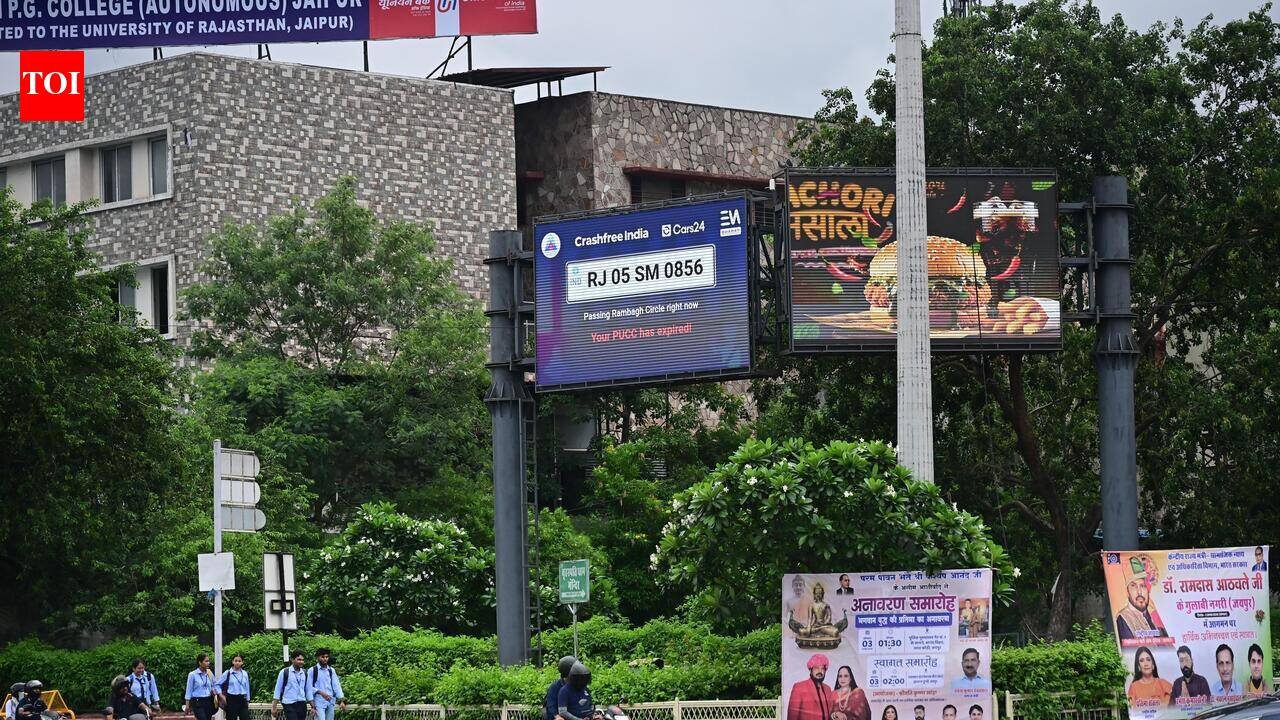
Jaipur: Following a trial run of AI-enabled traffic signals at Rambagh Circle, Jaipur police are preparing to roll out the Intelligent Traffic Management System (ITMS) to over 300 junctions citywide. The system utilises adaptive traffic signals that adjust green light durations based on real-time traffic flow, coupled with AI-enabled cameras that detect traffic violations and issue electronic challans.The pilot project, which ran from June 3 to July 11, received mixed reviews from commuters. “Signals here are frequently switched to manual mode during VVIP movement, forcing traffic to wait five to 10 minutes until the convoy passes,” said Naresh Sharma, a daily traveller on the route. He said that despite the system’s implementation, congestion at Rambagh Circle persisted.Commuters noted that traffic announcements made over loudspeakers were often inaudible due to the high levels of vehicular noise. “In many cases, motorists are unable to hear them at all, as most vehicles pass with their windows rolled up,” Sharma added. The situation is exacerbated, as repeated announcements contribute to noise pollution, rather than alleviating traffic issues.A student, Anant Verma, raised additional concerns about the “traffic awareness screens” at certain junctions, which scan vehicle number plates and publicly display pending traffic challans. Verma said, “Drivers often halt to read the notifications that appear on the display board, as if mobile phones weren’t enough to distract them.” Many commuters questioned the effectiveness of these screens and whether these represent a wise use of public funds.Despite the criticisms, Additional DCP (North) Hariprasad Somani reported positive outcomes from the pilot. Somani said ITMS reduced traffic clearance time at Rambagh Circle to six minutes during peak hours, as vehicles cleared the junction in 85 seconds during the day and 15 seconds at night during non-peak hours. “A JDA tender is awaited for the system to be enabled at other locations by Aug end,” Somani said.During the trial at Rambagh Circle, each AI-enabled camera processed about 4,200 vehicles and recorded nearly 450 traffic violations, including overspeeding, red-light jumping, and wrong-side driving. The next phase of ITMS will connect multiple junctions, allowing for coordinated traffic management across broader corridors. Future upgrades will prioritise green signals for ambulances, fire brigade vehicles, and VIP convoys, ultimately reducing delays for emergency responders, said police officials.


