Srinagar, Mar 04: Nearly six years after feeder segregation became central to India’s rural power reform push, Jammu and Kashmir has completed work on just 15 of the 75 agricultural feeders identified for separation, a 20 per cent execution rate, despite the entire project being sanctioned at a cost of ₹112 crore under the Revamped Distribution Sector Scheme (RDSS).
Official data accessed by Rising Kashmir shows that while all 75 feeders in the Union Territory were sanctioned under RDSS, 60 remain pending.
The slow pace stands out against the national backdrop. Across India, 82,777 feeders were identified as feasible for segregation; 60,335 have already been completed. States such as Gujarat, Haryana and Karnataka have achieved near-total segregation of identified feeders. Punjab has completed 6,705 out of 6,932 feeders. J&K, in contrast, remains at 15.
Unlike several states that began segregation under earlier schemes such as the Deen Dayal Upadhyaya Gram Jyoti Yojana (DDUGJY), Jammu and Kashmir had not completed segregation under previous programmes either. The current RDSS package was expected to close that gap. Instead, progress remains limited.
Nationally, feeder segregation works worth ₹39,795 crore have been sanctioned under RDSS for 31,109 feeders, with completion targeted by March 31, 2028. In J&K’s case, the sanctioned funds are in place. The execution, however, is lagging.
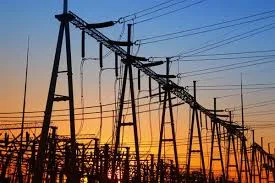
Feeder segregation separates agricultural supply lines from domestic and commercial lines.
The objective is to provide scheduled daytime power to farmers, reduce low-voltage complaints in rural households and enable solarisation of agricultural feeders.
The Government of India has emphasised segregation of mixed-load feeders, particularly those with over 30 per cent agricultural load, to stabilise rural power systems.
For Jammu and Kashmir, where winter hydropower output declines sharply, and dependence on power purchases rises, segregation is more than a technical exercise. Mixed feeders often result in unscheduled outages, voltage fluctuations and rostering disputes between agricultural and domestic consumers.
With 60 feeders still unsegregated, the intended structural benefits remain largely unrealised.
The Union Territory continues to face seasonal power shortages. Agricultural supply often competes with household demand in rural belts, especially during peak irrigation months and winter heating periods.
Feeder segregation is designed to ease precisely this conflict. Yet, the gap between sanction and completion suggests that reforms on paper are not translating into field-level transformation at the desired pace.
The official document notes that feeder segregation enables efficient load management, supports solarisation initiatives and improves reliability in rural areas. However, the current completion rate in J&K indicates that these objectives have yet to be implemented at scale.
RDSS was launched to improve the operational efficiency and financial sustainability of distribution utilities, alongside smart metering and infrastructure upgrades.
In a Union Territory where agriculture remains a key rural livelihood and where power subsidies and transmission losses are frequently debated, feeder segregation forms a critical pillar of reform.
As per the details, while financial sanction and project identification are complete, implementation remains partial, raising questions over timelines, monitoring mechanisms and administrative prioritisation.