






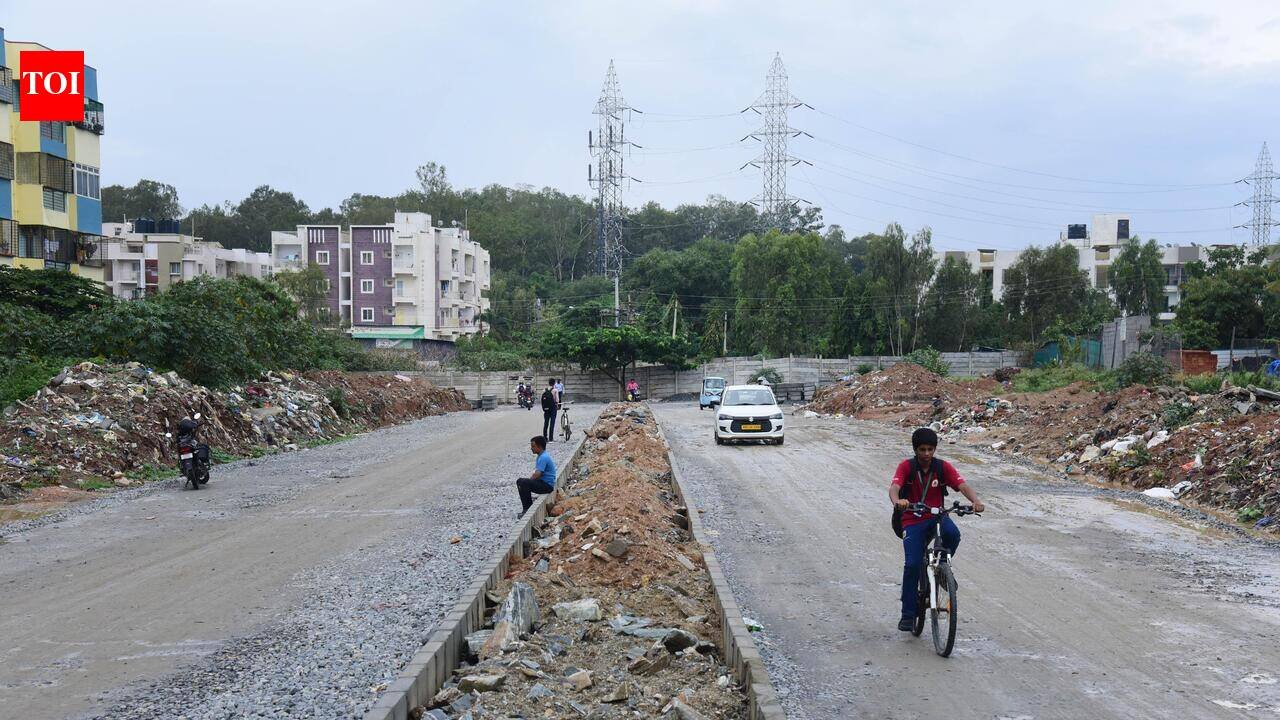
Bengaluru: For years, residents of Panathur have debated whether the area would get its long-awaited 150-ft Comprehensive Development Plan (CDP) road or retain its emerging urban forest. Now, authorities say the neighbourhood will get both. But the compromise comes at a cost — a 150-acre forest nurtured through decades of afforestation will be split into two parts to make way for the road.The development puts an end to months of speculation surrounding the future of Panathur Tree Park and the pending CDP road project. According to officials, the road will pass through forest land, with the tree park continuing on either side of the corridor. However, the larger question is how an infrastructure project was proposed on forest land.The first phase of Panathur Tree Park, spread across nearly 40 acres, is set to be opened to the public Wednesday. Beyond the proposed road alignment, another 100 acres of forest land will continue to remain under forest department, effectively leaving the green cover divided into two sections.The origin of the issue dates back several decades. Forest officials said the land was notified as forest land in 1987, following which afforestation activities were taken up. Over the years, thousands of trees were planted, transforming the area into a dense urban forest.According to forest officials, the CDP road was proposed around 2008. However, they claim the department was not approached at the time despite the alignment passing through forest land. “The road was proposed years ago, but nobody approached the forest department then. The road has been constructed from both ends and remains incomplete where it passes through forest land and a few other pending stretches,” a forest official said.The matter gained prominence after the forest department began developing the site as a tree park in 2020 under the Centre’s Nagar Van Yojana. Officials said investments were made to improve the area and create a public green space. “When we started developing the tree park, that is when road infrastructure authorities approached us seeking forest land for CDP road. Our question is, what were they doing until then?” the official asked.Forest officials maintain that alternative solutions could have been explored to preserve the continuity of the forest. They said suggestions such as an elevated corridor or an underpass were discussed so that the green cover would remain connected.“With today’s technology, there were ways in which the road could have come up without disturbing the forest. Perhaps it would have cost more, but the forest could have remained connected and untouched,” another official said.Under the current plan, a strip of forest land measuring about 25 metres in width and approximately 400 to 500 metres in length will be used for the road corridor. While the diversion affects only a portion of the overall forest area, officials said it will physically bifurcate a green space that has taken nearly 4-5 decades to develop.Fenced and securedDespite their reservations, forest authorities said they are now focusing on protecting the remaining forest area. Officials said the 100-acre stretch beyond the road corridor will be fenced and secured to prevent future encroachments or further diversion of land.“We will compound the remaining forest land so that it remains protected. This forest has already been divided once and we do not want additional pressures on it in the future. Development cannot happen through concrete infrastructure alone. Green infrastructure is equally important,” the official said.Bengaluru East City Corporation, which is constructing the 150ft CDP road, has received govt approval to compensate land in Belthangady for making way for the CDP road at Gunjur.For residents, the project represents a balancing act between improving connectivity and preserving one of east Bengaluru’s significant green pockets. While the long-pending CDP road is expected to ease movement between Panathur, Gunjur and surrounding areas, the opening of the tree park will provide public access to a forest that has been growing quietly for nearly four decades.


