



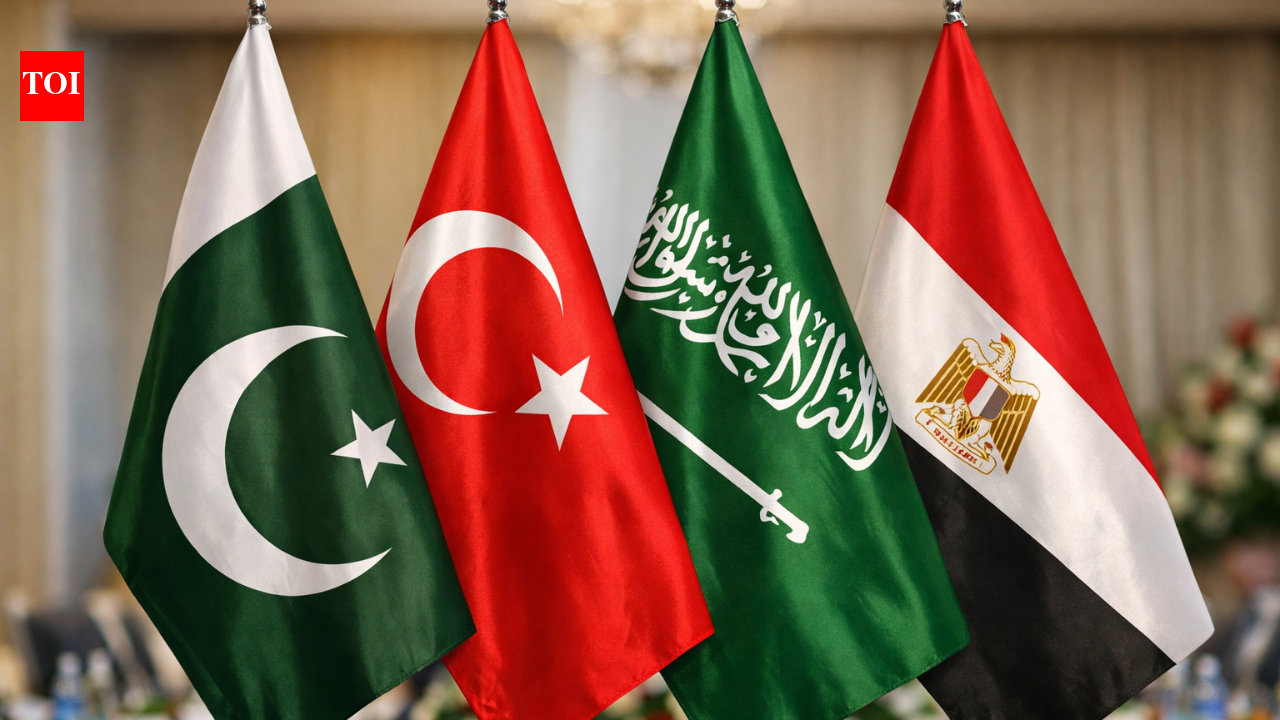
Is an “Islamic Nato” finally taking shape? The question is gaining traction as Pakistan trying hard in positioning itself as a diplomatic player in the ongoing conflict involving neighbouring Iran, now a month into escalating tensions with the US and Israel.Days earlier, Donald Trump publicly validated Pakistan’s outreach, sharing a post by Prime Minister Shehbaz Sharif, who said, “Pakistan welcomes and fully supports ongoing efforts to pursue dialogue to end the war in the Middle East, in the interest of peace and stability in the region and beyond,” he said.Pakistan, itself grappling with internal instability and recently been involved in military tensions with neighbouring Taliban-ruled Afghanistan, has now invited Turkey, Egypt and Saudi Arabia for a key meeting.Pakistan is set to host a quadrilateral meeting of foreign ministers from the four nations on March 30 to discuss regional developments, including the US-Iran war, according to state media. The meeting will be the first of its kind since the conflict began.TRT World reported that Hakan Fidan said the talks were initially planned in Turkey. “But since our Pakistani brother had to stay in his country, we shifted it to Pakistan,” Fidan said, according to TRT World.Islamabad has also emerged as a key intermediary in backchannel diplomacy between Washington and Tehran, reportedly delivering a 15-point peace proposal from the US to Iran.Months earlier, a trilateral engagement between Pakistan, Saudi Arabia and Turkey had sparked comparisons to a Nato-like framework. That grouping now appears to be widening with Egypt’s inclusion.The understanding, initially signed between Pakistan and Saudi Arabia in September, reportedly states that “any aggression” against one member would be treated as an attack on all, mirroring Article 5 of Nato, of which Turkey is a member and hosts the second-largest military after the US.According to Bloomberg, the expanding alignment reflects a growing convergence of strategic interests among Turkey, Saudi Arabia and Pakistan across South Asia, the Middle East and parts of Africa.Now, this “Nato-styled” grouping is positioning itself not as a war bloc, but as a platform pushing for stability and peace across the Middle East.


