


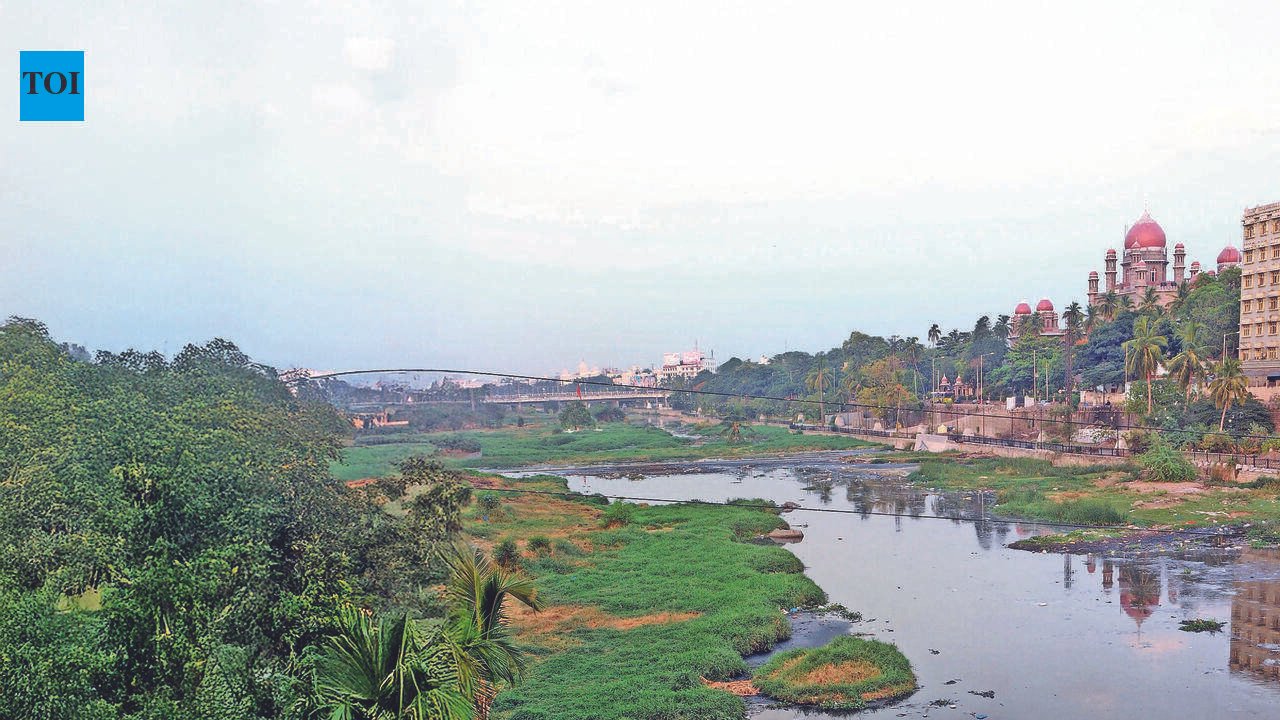
Hyderabad: A new study of seven major rivers has found widespread pharmaceutical contamination in urban waterways, with the Musi emerging as the most-polluted river system and a major hotspot for antimicrobial resistance. Tramadol, frequently referred to in public discourse as the ‘ISIS drug’ because terror suspects reportedly used it to fight fatigue, was found in the Musi at the highest average concentration among the rivers studied.The study, which was published in ‘Environmental Chemistry and Ecotoxicology’ on June 30, warned that antibiotics in such environments (rivers) could create conditions for drug-resistant ‘superbugs’, posing a public health concern for humans and animals.The research, which analysed 24 compounds across river systems in Telangana, Tamil Nadu and Kerala, found caffeine in all samples, indicating direct discharge of untreated domestic sewage. Analgesics such as acetaminophen, commonly known as paracetamol, showed the highest mean concentrations among therapeutic classes, followed by angiotensin receptor blockers used for hypertension and antimicrobial agents.The urban river stretches of the Musi in Hyderabad, Cooum and Adyar in Chennai showed far higher contamination than suburban and rural stretches of the Kaveri, Tamirabharani, Periyar and Anjarakandy. The study, authored by Mithun Karayi, and others, says urban rivers were functioning as conduits for untreated domestic sewage, industrial effluents and urban wastewater, creating conditions for the transport and persistence of pharmaceutical residues.The study linked its presence to possible waste from nearby pharmaceutical manufacturing and distribution facilities, pointing to the industrial signature of pollution in the river.Musi carries highest pharma burdenThe Musi, in Telangana, originates in the Ananthagiri Hills and flows eastward through Hyderabad before joining the Krishna river. Researchers collected 18 composite surface water samples from the Musi during winter, between Dec 2021 and Feb 2022, to establish baseline environmental concentrations.The findings place the Musi at the centre of the study’s pollution map. Caffeine was found in the river at an average concentration of 537 ng/L(nanograms per litre), while carbamazepine, a commonly tracked pharmaceutical marker, averaged 91.8 ng/L. Among antibiotics, the Musi recorded the highest average concentrations of sulfamethoxazole at 146.4 ng/L and trimethoprim at 34 ng/L, while erythromycin averaged 145.3 ng/L.The river also showed high levels of analgesics and hypertension drugs. Tramadol averaged 245.8 ng/L and acetaminophen 217.7 ng/L. Telmisartan, a heart medicine used to treat hypertension, was found at an average concentration of 1,160 ng/L. Benzotriazole, grouped under antimicrobial agents in the study inputs, averaged 658 ng/L, the highest among the rivers studied.The study used principal component analysis to identify the main pollution sources. It found three major contributors: untreated domestic sewage, pharmaceutical industrial discharges and urban wastewater inputs. Hyderabad’s position as a pharmaceutical hub was central to the Musi findings. The inputs say the city hosts over 250 pharmaceutical and biotechnology companies and over 300 manufacturing units, producing nearly 40% of India’s bulk drugs. The river receives untreated industrial effluents from 14 major industrial estates, including Jeedimetla and Bollaram, besides about 600 million litres of city sewage every day.The Musi was also found to be transporting a heavy annual load of pharmaceutical residues toward the Krishna river system and eventually the Bay of Bengal. The estimated annual flux included 1,635 tons of telmisartan, 928 tons of benzotriazole, 765 tons of atenolol, 347 tons of tramadol, 307 tons of acetaminophen and 205 tons of erythromycin.AMR risk highest in lower stretchThe study flagged the lower stretch of the Musi as having the highest potential for antimicrobial resistance development in the study area. Elevated risk quotients above one were reported for antibiotics such as azithromycin, erythromycin, sulfamethoxazole and trimethoprim.The Cooum also emerged as a high-risk urban river for antimicrobial resistance, but the Musi stood out due to the combination of pharmaceutical manufacturing, sewage inflow and high measured concentrations.The researchers also examined groundwater, where nine pharmaceuticals were detected. However, the estimated risk to human health through drinking water remained low, with risk quotients below one for all age groups. The study nevertheless flagged concern because the Musi water was used for drinking, and contamination in river systems could contribute to the spread of drug-resistant infections.The ecological risk was more severe. Telmisartan was found to pose a very high ecotoxicological risk, with risk quotients above 100 for aquatic life, particularly fish and daphnids, in urban sites. Other compounds such as triclocarban and diclofenac showed lower but measurable risks.The research also found a strong correlation between dissolved organic carbon and pharmaceutical levels in urban areas. This suggests that organic matter plays a role in the transport and persistence of these pollutants in densely populated river stretches.Researchers seek monitoring of drains, effluentsThe study calls for policy interventions focused on high-risk urban hotspots such as the Musi. The recommendations include prioritising the interception and treatment of open drains discharging into the Musi, mandating advanced treatment technologies for industrial clusters and institutionalising antimicrobial resistance surveillance in polluted urban stretches.The participating institutions include SRM Institute of Science and Technology in India, specifically the Department of Chemistry and the Environmental Science and Technology Lab at the Centre for Research in Environment, Sustainability Advocacy and Climate Change in Tamil Nadu; Masaryk University in the Czech Republic through RECETOX in the Faculty of Science; the University of Nebraska in the United States through the Nebraska Water Centre and Daugherty Water for Food Global Institute; and the University of Lodz in Poland through the UNESCO Chair on Ecohydrology and Applied Ecology.
