



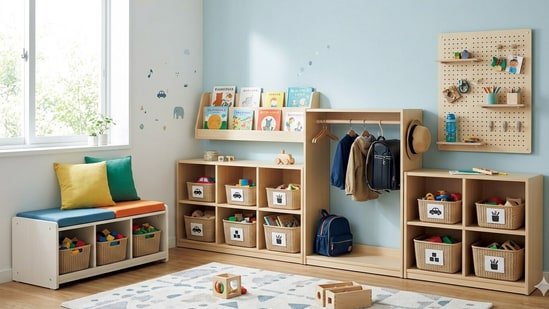
A child’s room can quickly turn chaotic and cluttered with toys scattered around and clothes left everywhere. Cleaning up the mess can become stressful and results in parents scolding their children. Yet despite repeated reminders, children anyway continue with the same unorganized habits, turning it into a constant back-and-forth struggle at home. What if the real issue is not the child, and but the way the space is designed?
Aligning a room’s design with a child’s habits, behaviour, and daily routine can make a significant difference. By making spaces more accessible, functional and child-friendly, organisation becomes easier.
Prakriti Kundaliya, founder of Wud Studio, shared with HT Lifestyle how thoughtful design can transform a children’s room. “As homes become more compact and multifunctional, the way children interact with their environment is often overlooked. When spaces aren’t designed for their scale or behaviour, clutter becomes inevitable. Increasingly, design studios are rethinking children’s spaces not as decorative corners, but as systems that quietly shape habits, independence and order,” she said.
So children’s rooms are less about poor discipline and more about poor design. When storage system is inaccessible for children, like they are too high, naturally children will not be able to be independent.
Here’s a guide from Prakriti on how to make children’s room more child-friendly:
1. Add open shelving
- Traditional closed storage often leads to ‘out of sight, out of mind.’
- Low, open shelves change this dynamic by making materials visible and accessible.
- Children can independently choose and return items, reducing reliance on adults while building a natural sense of order.
Paired with front-facing book displays, where covers are visible instead of spines, this approach also encourages reading, transforming storage into an invitation rather than a task.
2. Designing for daily routines
- One of the most overlooked pain points in homes is the everyday chaos of school routines.
- Bags, uniforms, and accessories rarely have a defined place within a child’s reach.
- Child-height hangers address this gap.
3. Flexible systems that grow with the child
- Children’s needs evolve quickly, and static storage often struggles to keep up.
- Pegboard systems introduce flexibility into the space, allowing hooks, shelves, and containers to be rearranged over time.
- What begins as a space for toys can gradually transition into a study or creative zone without requiring a complete redesign.
4. Multi-functional furniture that reduces clutter
- In smaller homes, every piece of furniture needs to work harder.
- A storage bench, for instance, combines seating with concealed storage ideal for shared spaces or transitional areas like entryways.
- By integrating function into form, such pieces reduce the need for excess furniture while maintaining visual calm.
5. Fewer toys, better systems


